
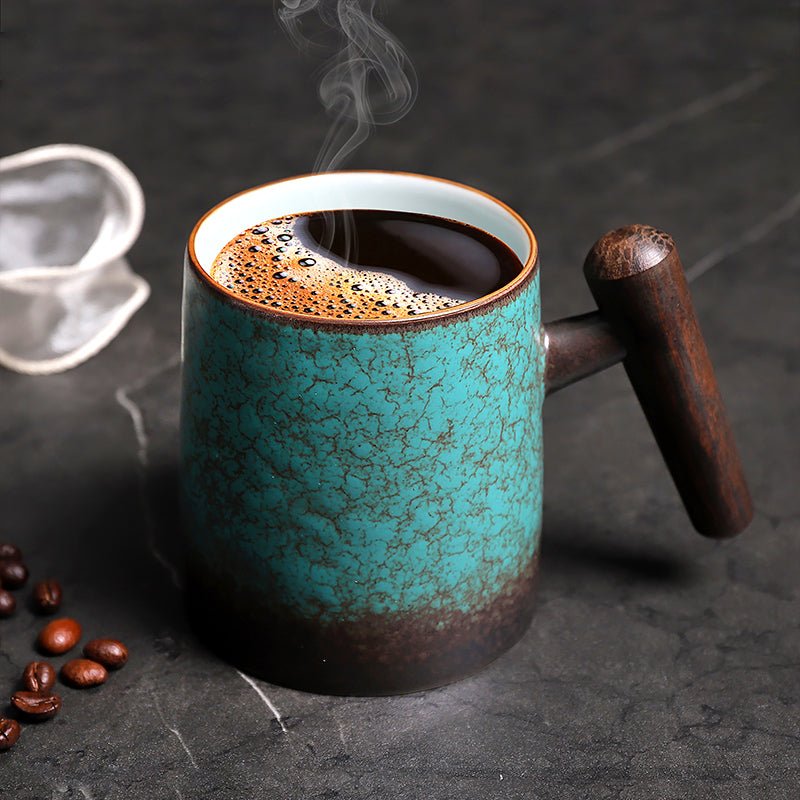
Lungo Coffee Cup Shape and Handle Guide: 170, 200, or 270 ml
Reading time: about 10 minutes
A cup can look perfectly proportioned on a product page, then feel wrong the first morning it lands beside a laptop: the finished drink sits close to the rim, or the handle opening does not suit the fingers used to carry it. This lungo coffee cup shape and handle guide compares the current compact options using claims we can stand behind—listed capacity, nominal headroom, visible profile, any dimensions currently listed, and handle details shown in the product imagery.
In our store, we separate a listing fact from an assumption. The verified capacities are 170 ml, 200 ml, and 270 ml. We do not turn those numbers into a universal lungo recipe, an equipment-fit promise, or a claim about heat retention. You can first view the broader unique coffee mugs collection, then use the comparisons below to narrow the current choices.
Our lungo coffee cup shape and handle guide: what changes at 170, 200, and 270 ml?
Capacity is the firmest numeric comparison shared across these three listings. It tells you which option leaves more nominal headroom for the same measured drink, but it does not tell you the cup’s comfortable fill line, physical footprint, or handle clearance.
| Current option | Listed capacity | Capacity difference | Shape and handle check |
|---|---|---|---|
| Retro Coffee Tea Cup | 170 ml | Lowest listed capacity in this set | Use the current photos to assess its retro profile, rim line, and handle-to-body spacing. |
| Pleated Coffee Tea Cup | 200 ml | 30 ml more than Retro and 70 ml less than Emerald | Inspect the pleated sidewall treatment and the area where the handle meets the body. |
| Emerald Coffee Tea Mug | 270 ml | 100 ml more than Retro and 70 ml more than Pleated | Listed as a mug; check its current height, maximum width, and handle projection. |
Retro and Pleated are cataloged as cups, while Emerald is cataloged as a mug. Those are product-listing labels, not a standardized size system. A larger capacity does not prove thicker walls, better heat retention, easier gripping, or greater stability.
How much nominal headroom does your measured drink leave?
Use a simple screening calculation: subtract your finished drink volume from the listed capacity. Measure the drink as you actually prepare it, including additions, rather than measuring only the initial pour.
- If your finished drink is 150 ml: Retro leaves 20 ml of nominal headroom, Pleated leaves 50 ml, and Emerald leaves 120 ml.
- If your finished drink is 180 ml: that total is 10 ml above Retro’s listed capacity, while Pleated leaves 20 ml and Emerald leaves 90 ml.
- If your finished drink is 200 ml: Pleated reaches its full listed capacity, while Emerald leaves 70 ml of nominal headroom.
These examples are not definitions of a lungo serving. We have not verified the measurement method or a comfortable fill line behind each listed capacity, so the arithmetic is a comparison tool rather than a usable-volume guarantee. More nominal headroom creates a larger numerical gap between your drink total and the stated capacity, but it does not make a cup spill-proof.
Which visible shape details matter on a kitchen counter or office desk?
Styled product names can set an expectation, but the current photographs provide the practical shape evidence. Compare the same five areas on each option instead of judging only from a front-facing image.
- Rim line: Look for a straight, flared, rounded, or irregular-looking edge. Do not estimate the exact rim diameter unless the listing supplies it.
- Sidewall profile: Note whether the body appears vertical, tapered, rounded, or visually segmented. This helps you compare appearance without assuming anything about thermal performance.
- Base footprint: Compare the visible base with the widest part of the body. A photo can show proportions, but it cannot establish exact coaster fit or stability.
- Surface treatment: On the Pleated option, inspect how the pleated details meet the rim, base, and handle area. Those recesses are also worth checking against the current care instructions.
- Handle relationship: Check how high the handle sits, how far it projects, and how much visible space remains between the handle and cup body.
If your situation is a smaller measured drink plus the retro visual language shown in the photos, the 170 ml Retro cup is the relevant next page. If visible texture and a middle capacity are the priorities, compare the 200 ml Pleated cup. If you want the largest capacity in this set and prefer Emerald’s current mug profile, review the 270 ml Emerald mug.
How should you judge handle form without a hand-fit guarantee?
The most reliable starting point is a cup you already enjoy holding. Put a ruler against that handle and create a physical benchmark before comparing online photos. This takes a minute and is more useful than guessing whether a photographed opening is large enough.
- Measure the inner opening: Record the narrowest usable width and the vertical opening height, not just the widest decorative point.
- Record the handle projection: Measure how far the handle extends beyond the body and, if desk or cupboard space is tight, the total width including the handle.
- Note your normal finger position: Write down whether you use one finger, two fingers, or a pinch grip. Do not assume a product photo guarantees the same arrangement.
- Check the attachment points: Look at where the upper and lower parts of the handle join the body and where your thumb would naturally rest.
A three-quarter photograph can show whether a handle looks rounded or angular and how it relates to the cup body, but perspective does not establish scale. If an inner-handle measurement is not listed, treat the image as style evidence only. Shoppers with large knuckles, specific grip preferences, or strict desk-clearance limits should not rely on a visual guess as a fit guarantee.
Which listed dimensions answer real fit questions?
The verified shared numeric specifications in this comparison are the three capacities. We are deliberately not filling gaps with estimated heights or diameters. If a live product page supplies a dimension, use that current figure; if it does not, do not calculate it from a styled photograph.
| Dimension to check | Why a shopper checks it | What it cannot guarantee |
|---|---|---|
| Overall height | Shelf, tray, and storage clearance | Compatibility with a brewer or other equipment |
| Maximum width including handle | Cupboard spacing and room on a crowded office desk | Finger clearance inside the handle |
| Rim diameter | Opening proportion and comparison with a cup you own | Wall thickness or comfortable fill level |
| Base diameter | Comparison with a preferred coaster or serving spot | Stability on every surface |
| Inner handle width and height | Comparison with your hand and existing mug | Comfort for every grip style |
Capacity is not a proxy for any of these measurements. A 270 ml mug is not automatically taller or wider in every direction than a 200 ml cup, and none of the three should be assumed to fit a particular brewer, tray, cup holder, or shelf without checking the complete dimensions.
Which current option fits your measured pour?
Your finished drink is around 150 ml
The Retro 170 ml cup leaves 20 ml of nominal headroom at that measured total. It fits the shopper who wants the lowest listed capacity in this set and likes the visible Retro styling. It is not the strong choice if you regularly add enough liquid to approach or exceed 170 ml, or if the live handle image does not match your benchmark.
Your measured total varies from 150 to 180 ml
The Pleated 200 ml cup occupies the middle position. It leaves 50 ml of nominal headroom at 150 ml and 20 ml at 180 ml, while its exterior treatment gives shoppers a visibly different shape detail to assess. Skip it if your finished drink goes beyond 200 ml or if you prefer a smoother-looking body.
Your finished total can reach about 200 ml
The Emerald 270 ml mug leaves 70 ml of nominal headroom at a 200 ml measured total. It is the logical next page for a shopper seeking the greatest capacity buffer among these three. It is not the best match for someone specifically seeking the lowest-capacity vessel or buying for a recipient who prefers petite cups.
If your measured drink regularly goes beyond 270 ml, this compact set may not be the right category. Compare larger formats in our 12 oz ceramic coffee mugs shape and handle guide. If 200 and 270 ml remain the useful comparison points but you want another shape-focused perspective, read the 200, 250, and 270 ml flat white cup guide.
What should you inspect at unboxing and before the first wash?
When our team checks a cup for display or gifting, the rim, handle junctions, and base receive attention before the decorative details. The same inspection takes only a few minutes at home.
- Confirm the item: Match the product name and listed capacity with your order details.
- Inspect the rim in side light: Look for chips, hairline cracks, or rough areas before use.
- Check both handle junctions: Examine the upper and lower attachment points for cracking or visible separation.
- Use a flat, dry counter: Set the empty cup down gently and check for unexpected rocking.
- Read the material and care information: Do not infer microwave or dishwasher suitability from the product category or photograph.
- Follow the stated washing method: If hand washing is required or preferred, use a soft, non-abrasive sponge around recessed details and the handle junctions.
For a gift, perform this check before wrapping. If you see structural damage, contact our store before the item is used or placed through a dishwasher cycle.
A seven-point cart check for shape, handle, and capacity
The practical value of this lungo coffee cup shape and handle guide is turning a styled image into a short, evidence-based decision. Keep this checklist beside the live listings:
- Measure your usual finished drink in milliliters.
- Calculate nominal headroom at 170, 200, and 270 ml.
- Decide how much unused listed capacity you are comfortable with.
- Compare the rim, sidewall, base, and surface treatment in current photos.
- Measure a handle you already like and compare any available dimensions.
- Check maximum width and overall height if storage or desk space is restricted.
- Read the current material and care details instead of assuming compatibility.
Use this decision order: measured volume, desired headroom, current dimensions, handle geometry, and then style.
Frequently asked questions
What capacity does this lungo coffee cup shape and handle guide recommend?
There is no universal capacity recommendation because lungo preparation and additions vary. Choose among 170, 200, and 270 ml by measuring your own finished drink and subtracting it from each listed capacity. Then confirm that the live shape, handle, and dimensions suit your setup.
Is the Retro 170 ml cup too small if I add milk?
It depends on the final measured total, not the drink label. A 150 ml finished drink leaves 20 ml of nominal headroom, while a total of 170 ml leaves none based on the listed capacity.
How much more nominal headroom does Emerald provide than Pleated?
For the same measured drink, Emerald provides 70 ml more nominal headroom because its listed capacity is 270 ml compared with Pleated’s 200 ml. This is an arithmetic comparison, not a claim about either product’s comfortable fill line.
Can product photos tell me if a handle fits two fingers?
Photos can show the handle’s general form and attachment points, but they cannot guarantee scale or finger fit. Compare listed inner-handle measurements with a cup you already own. If those dimensions are absent, treat the photograph as a style reference rather than a fit promise.
Are these options guaranteed to fit my brewer or be dishwasher safe?
No equipment-fit guarantee is made for these options, and capacity alone cannot establish compatibility. Check current overall dimensions against your setup and follow the care information on the live product page or packaging before using a dishwasher.
Measure one finished drink and one handle you already like, then keep those two notes beside the live listings. Compare the three options in the unique coffee mugs collection and choose only after the capacity, current dimensions, and handle image clear your checklist.
More from our blog
Read more
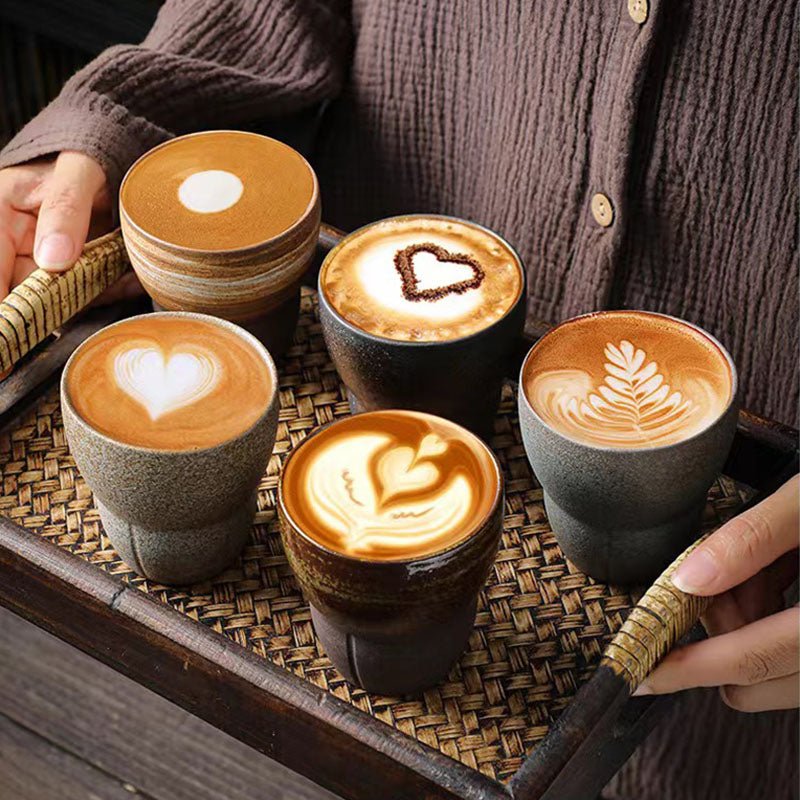
Decaf coffee cup shape and handle guide: 170, 200, or 270 ml
Compare the verified 170 ml Retro, 200 ml Pleated, and 270 ml Emerald options by capacity, visible form, and handle-fit checks. We cover desk use, gifting, care labels, and the limits to verify bef...
Leer más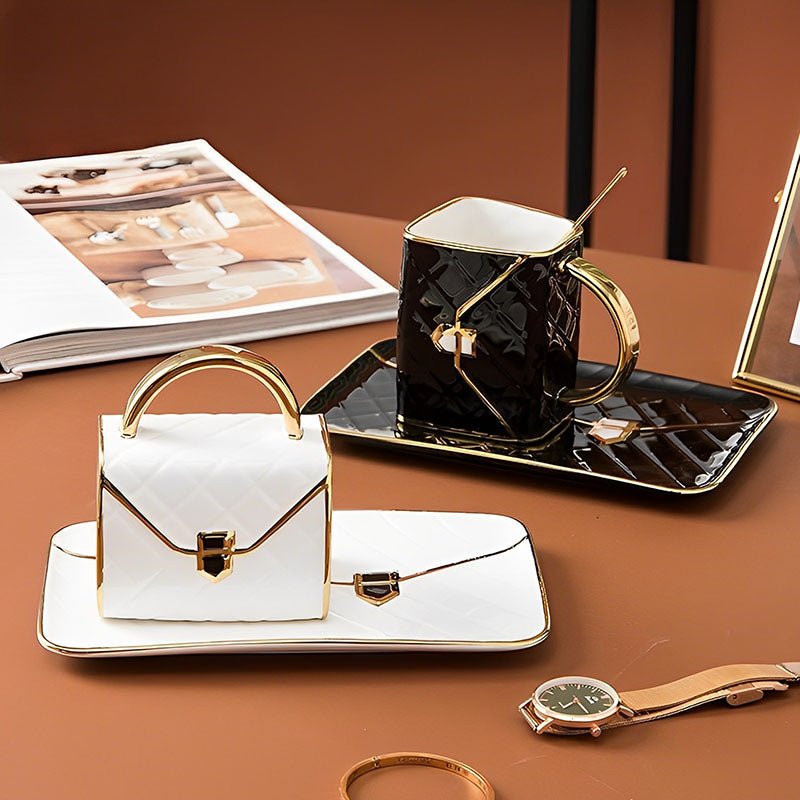
Cute Ceramic Coffee Mugs Shape and Handle Guide: 3 Current Options
Compare the Handbag, Pleated, and Gradient ceramic designs by visible silhouette and handle form, then verify listed dimensions, capacity, care labels, and desk or gift fit before buying.
Leer más
Dejar un comentario
Este sitio está protegido por hCaptcha y se aplican la Política de privacidad de hCaptcha y los Términos del servicio.