
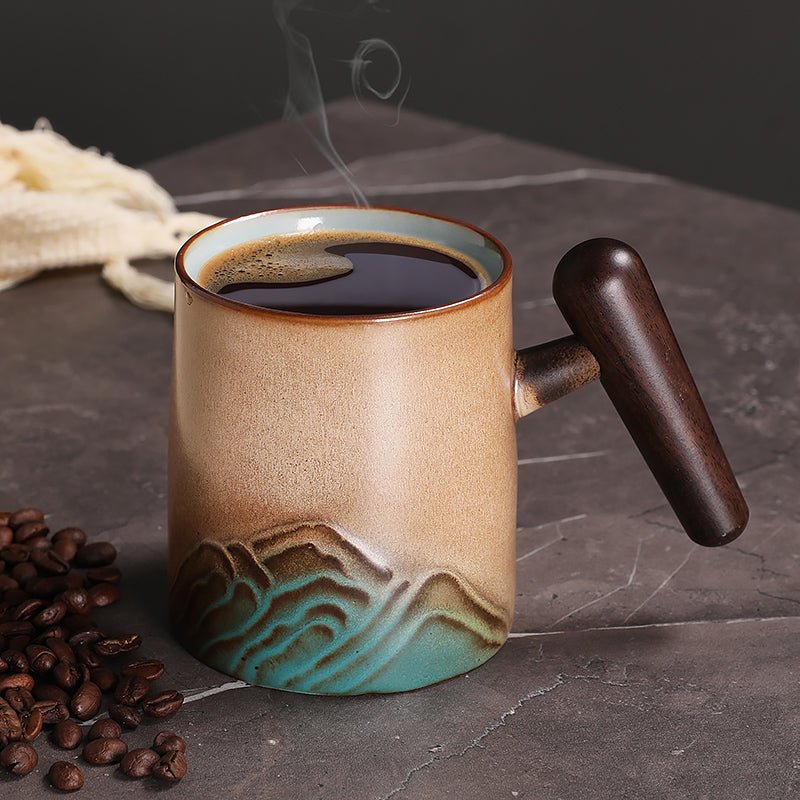
Large Cups for Tea: How to Choose a Mug That Actually Works
Reading time: about 10 minutes
A lot of tea buyers do not want a delicate little cup. They want one mug that holds a full brew, leaves room for milk or honey, and still feels steady on a desk next to a laptop. That is usually where large cups for tea either work very well or become annoying fast.
In our store, we see the same pattern again and again: shoppers like the look of a large mug, but the wrong shape turns it into a clumsy daily-use piece. The difference is rarely just capacity. It is balance, handle comfort, rim shape, and how the mug behaves once it is full.
If you want a fast starting point, compare a few styles side by side in our all products collection, then open a few focused options like The Flow Coffee Tea Mug, White Golden Waves Tall Coffee Tea Mug, and Green Waves Coffee Tea Mug.
What size makes a large tea mug feel comfortable?
For most tea drinkers, the sweet spot is not the biggest mug available. It is the mug that holds enough tea for a satisfying pour without becoming heavy or awkward when full. A useful starting range for many buyers is around 12 to 16 ounces, though some people prefer more and some want less. The real test is how the mug feels in your hand after five minutes, not the number on the listing.
When we look at large cups for tea, we pay attention to three practical details:
- Full weight - A mug can feel light when empty and tiring once it is filled with hot tea.
- Handle clearance - Two fingers should fit cleanly without scraping the glaze or forcing your knuckles against the body.
- Base stability - A mug that sits flat on a table is safer on a crowded kitchen counter or office desk.
If you want a broader sizing framework before you buy, our article on Large Cups for Tea: How to Choose the Right Size and Shape goes deeper into proportions and daily-use comfort.
Large does not automatically mean better. A very large mug is not ideal for delicate teas that you want to sip slowly at the exact right temperature. It can also feel bulky in a dishwasher rack or too wide for a narrow mug shelf. If you mostly drink small servings of green tea or very fragrant loose-leaf tea, a medium-large mug may be a better fit than a huge one.
Which shape keeps tea pleasant to drink?
Shape changes the experience more than most buyers expect. A wide mug cools faster because it exposes more surface area. A tall mug holds heat a little longer and often feels more efficient on a work desk. A straight-sided mug feels simple and predictable, while a tapered mug can be easier to cradle in the hand.
| Shape | Best for | Trade-off |
|---|---|---|
| Wide mug | Tea drinkers who like a cooler first sip and easy stirring | Tea loses heat faster |
| Tall mug | Desk use, slower sipping, and a more vertical feel in the hand | Can feel top-heavy if the base is small |
| Straight-sided mug | Simple daily use and easy stacking or cabinet storage | Less forgiving if the handle is undersized |
| Rounded mug | People who like a softer grip and a more relaxed look | May take up more shelf space |
For tea, the rim matters too. A thin, even rim usually feels better than one that is too thick or uneven. A thick rim can make the first sip awkward, especially with lighter teas where aroma is part of the experience. If you prefer a style with a taller profile, the White Golden Waves Tall Coffee Tea Mug is the kind of shape that helps you judge whether a vertical mug suits your routine.
Our own buying advice is simple: if you sip tea slowly at a desk, tall can work well. If you like to add milk, stir sugar, or watch the steam rise from a broader surface, a wider mug may be the better daily companion. For a more detailed comparison, our guide on Big Tea Mugs: How to Choose the Right Large Mug for Daily Tea covers those trade-offs in more depth.
Which mugs in our store fit different tea habits?
We do not think every tea drinker should buy the same silhouette. Some people want a plain everyday mug that disappears into the routine. Others want a mug that looks a little more considered on a table or in a gift box. That is why we prefer comparing styles instead of pushing one "best" option.
Here is the practical way we would look at the three pieces above:
- The Flow Coffee Tea Mug - Good if you want a simple daily mug that feels easy to use without overthinking it.
- White Golden Waves Tall Coffee Tea Mug - Better if you like a taller shape and want something that stands out a little more on a kitchen shelf.
- Green Waves Coffee Tea Mug - A strong pick if you want a mug that feels a bit more expressive while still staying in the large-mug category.
The right choice depends on how you actually drink tea. A mug for office refills does not need the same profile as a mug for a slow Sunday breakfast. A gift mug also has a different job: it has to look good when opened, sit well in the hand, and feel like a piece someone will use instead of storing in a cabinet.
If you want to compare more options beyond these three, the full collection is the easiest place to scan styles, then narrow down by shape and finish. For shoppers who care about the buying checklist more than the visual style, our article Big Coffee Cups: What to Check Before You Buy a Large Mug applies well to tea mugs too.
What should you inspect before you buy online?
Photos only tell part of the story. When we assess large cups for tea, we look for the small flaws that show up after the first few uses. Those are the details that matter most in real kitchens, especially if the mug will go through repeated dishwasher cycles or sit on a busy desk all day.
Check these points before you buy:
- Glaze consistency - Look for even color and finish. Tiny pinholes, rough patches, or cloudy areas can be early signs of lower finishing quality.
- Rim condition - The drinking edge should look smooth and even. A chipped or uneven rim is not just cosmetic; it changes how the mug feels at the lip.
- Handle join - The handle should attach cleanly without visible cracking, thin spots, or a sharp edge where your fingers rest.
- Base flatness - A mug that rocks on the table is a bad everyday mug, even if it looks great in photos.
- Interior finish - A clean interior glaze is easier to rinse and less likely to stain from strong tea.
We also watch for common defect modes that show up in this category: hairline cracks around the handle, glaze pinholes near the rim, and slight wobble from an uneven foot. None of those are things you want to discover after your first full pour.
If a listing gives care guidance, follow it. If a mug is labeled dishwasher-safe, the top rack is usually the safer place. If it is hand-wash only, that is a real trade-off, not a minor detail. For a broader sense of what to examine before checkout, our guide on Big Coffee Cups: How to Choose the Right Large Mug for Daily Use is useful because the same quality checks apply here.
How do large tea mugs compare with standard teacups?
Standard teacups and large mugs serve different habits. A teacup is usually better for smaller servings, tighter presentation, and formal settings. A large mug is built for practicality. It is less about ceremony and more about holding enough tea for a real break.
| Category | Best use | What it is not good for |
|---|---|---|
| Standard teacup | Formal service, smaller portions, and quick refills | Long desk sessions or buyers who want one larger pour |
| Large tea mug | Daily use, milk tea, office drinking, and relaxed breakfasts | Very delicate service or tea rituals that need smaller servings |
| Oversized mug | Big pours and all-day sipping | Small cabinets, lighter teas that cool too slowly, and compact dish racks |
The trade-off is straightforward. A large mug gives you convenience and fewer refills, but it is not the right tool if you care most about traditional presentation. If your tea routine is built around a kettle, a laptop, and a long morning, the mug usually wins. If your tea routine is formal or guest-facing, a smaller cup still has a place.
That is why we do not treat large cups for tea as a one-size category. We think of them as a daily-use category with a few distinct jobs: solo tea at home, tea between meetings, and tea as a gift that still needs to work after the wrapping paper is gone.
How should you care for a large mug so it lasts?
Large mugs take more wear than people expect. They get knocked against faucets, packed into tight cabinets, and run through dishwashers alongside heavier items. Good care is simple, but it has to be consistent.
- Rinse soon after use - Tea stains are easier to remove before they sit.
- Avoid sudden temperature changes - Do not move a hot mug straight into cold water.
- Load it carefully in the dishwasher - Keep it away from hard contact with plates and metal items.
- Check the base and handle periodically - If you see a new chip or crack, retire the mug from daily use.
- Dry it fully before storage - This helps prevent stale odors in closed cabinets.
In our experience, the mugs that last longest are the ones with a stable foot, a clean glaze, and a handle that does not force you to grip too tightly. That sounds basic, but basic is what you want for something you use every day.
If your priority is gifting rather than self-use, our holiday-focused guides such as Christmas Tea Cups for Gifts, Daily Use, and Holiday Tables can help you think through presentation as well as utility.
Frequently asked questions
What size counts as a large cup for tea?
For many shoppers, anything above a standard teacup and into the mug range feels large enough for tea. A practical daily-use range is often around 12 to 16 ounces, but the right size depends on how much you actually pour and how long you like to sip. Bigger is not always better if you want the tea hot from start to finish.
Are tall mugs better than wide mugs for tea?
Tall mugs usually hold heat a bit longer and work well on desks or smaller tables. Wide mugs are easier to stir and tend to cool faster, which some tea drinkers prefer. If you drink slowly, tall can help; if you want a more open drinking surface, wide is often better.
What defects should I watch for in a mug listing?
Look closely for pinholes in the glaze, hairline cracks near the handle, uneven rims, and a base that appears slightly tilted. Those are the kinds of issues that can turn a nice-looking mug into an everyday annoyance. Close-up photos matter here.
Can large tea mugs work for gifting?
Yes, if the shape is balanced and the design feels intentional. A mug that looks good in the hand and feels stable on the table is much more likely to get used after the gift is opened. For gifting, appearance matters, but comfort and durability matter just as much.
Are large mugs good for every type of tea?
Not really. They are great for breakfast tea, milk tea, and everyday loose-leaf or bagged tea. They are less ideal if you prefer very small servings, highly formal presentation, or a brewing style that depends on small vessels.
If you want the quickest next step, compare one tall mug, one simpler everyday mug, and one styled option, then choose the shape that matches your actual tea routine. Start with The Flow Coffee Tea Mug, White Golden Waves Tall Coffee Tea Mug, and the full collection side by side.
Read more
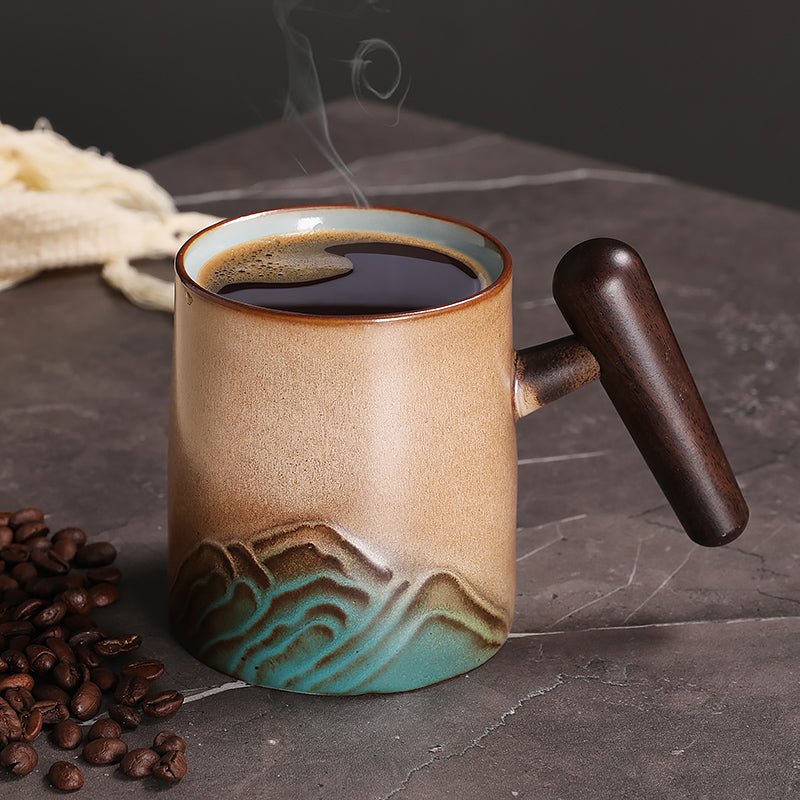
Enamel Coffee Mug Buying Guide: What to Check Before You Buy
A practical guide to choosing an enamel coffee mug for daily coffee, office use, or gifting. We cover construction, size, care, trade-offs, and which styles make the most sense before you buy.
Leer más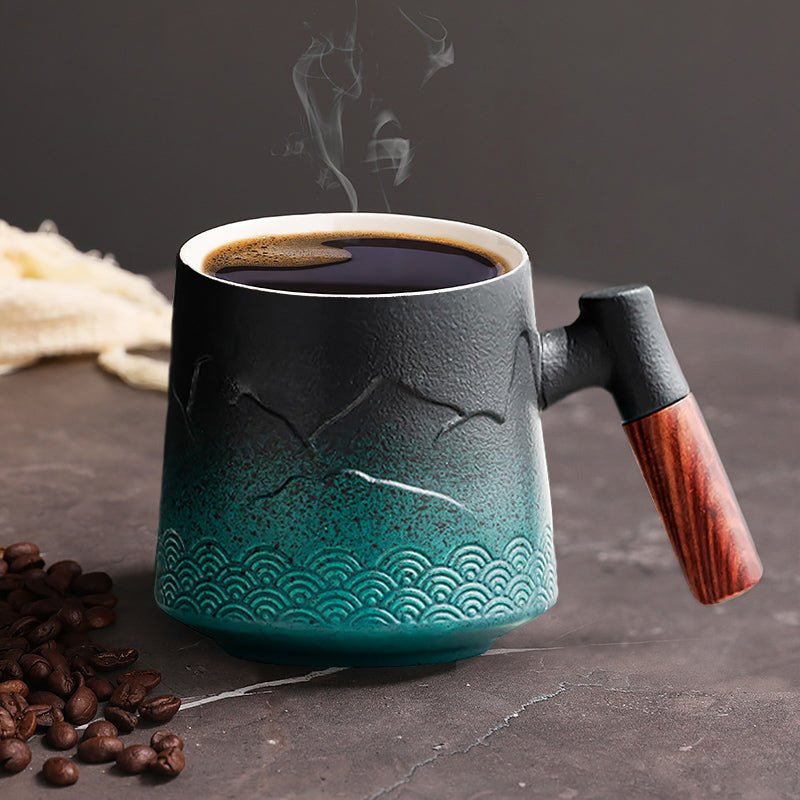
Mug Wood: What to Check Before You Buy a Wooden-Handle Mug
Mug wood buyers usually care about comfort, grip, and daily care more than decoration. We break down what to check, what to avoid, and which styles fit real coffee routines.
Leer más
Dejar un comentario
Este sitio está protegido por hCaptcha y se aplican la Política de privacidad de hCaptcha y los Términos del servicio.