
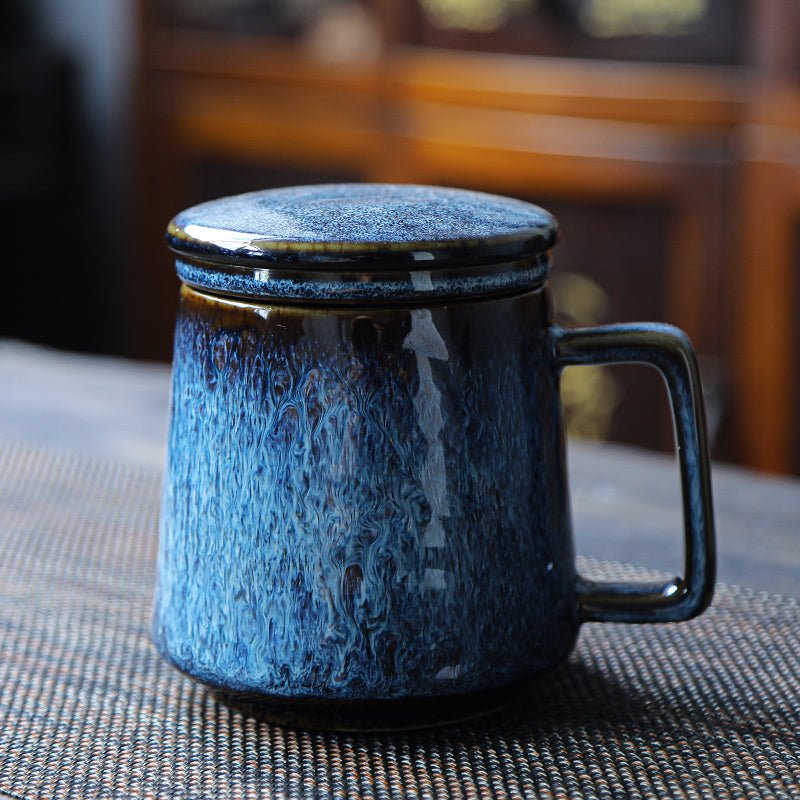
Heavy Ceramic Coffee Mugs Capacity Guide: 400 to 480 ml
Reading time: about 8 minutes
A coffee mug can look generous on a product page and still leave too little room once coffee, milk, and a walk from the kitchen counter to the desk enter the picture. Our heavy ceramic coffee mugs capacity guide starts with the measurements that settle that problem: 400 ml, 440 ml, and 480 ml.
Those are the listed capacities of three current options in our store: The Rock Coffee Tea Mug at 400 ml, the Spittoon Coffee Tea Mug at 440 ml, and The Flow Coffee Tea Mug at 480 ml. You can also compare these designs with the rest of our unique coffee mugs collection.
We handle capacity questions in our store by working backward from the finished drink, not just the amount of coffee that leaves the brewer. The useful number is the total after milk, water, foam, or other additions. You also need some empty space near the rim if the mug will move between rooms.
Heavy ceramic coffee mugs capacity guide: what changes between 400 and 480 ml?
The full range spans 80 ml. That is enough to accommodate a modest milk addition or provide more carrying room, but it is not such a large difference that the three mugs belong to completely separate serving categories.
| Current mug | Listed capacity | Difference from 400 ml | Practical capacity position |
|---|---|---|---|
| The Rock Coffee Tea Mug | 400 ml | Baseline | Lowest-capacity option of the three |
| Spittoon Coffee Tea Mug | 440 ml | 40 ml more | Middle option for added room |
| The Flow Coffee Tea Mug | 480 ml | 80 ml more | Largest listed capacity in this comparison |
A listed capacity should not be confused with a comfortable moving fill. Filling any mug to its stated limit can leave little or no room at the rim, depending on how the manufacturer measured it. We therefore do not present an undocumented working capacity as a product specification. Instead, the comparisons below show the simple difference between your finished drink and each listed capacity.
Which mug fits a 300, 350, 400, or 450 ml serving?
Measure the drink after every ingredient has been added. A 300 ml coffee plus 60 ml of milk is a 360 ml serving, not a 300 ml serving. The same rule applies when hot water is added to a concentrated coffee.
| Finished serving | Room in 400 ml | Room in 440 ml | Room in 480 ml |
|---|---|---|---|
| 300 ml | 100 ml | 140 ml | 180 ml |
| 350 ml | 50 ml | 90 ml | 130 ml |
| 400 ml | No nominal room | 40 ml | 80 ml |
| 450 ml | Does not fit as one pour | Does not fit as one pour | 30 ml |
These figures are subtraction from the listed capacities, not a promise about the exact position of the liquid below the rim. Still, they make the trade-off clear. A 300 ml drink works numerically in all three mugs. At 400 ml, The Rock reaches its listed capacity, while the Spittoon and The Flow retain 40 ml and 80 ml of nominal room.
If you normally think in fluid ounces rather than milliliters, our 12 oz ceramic coffee mugs capacity guide provides a more focused reference for that serving routine.
How do these capacities affect daily refill patterns?
The right capacity is not always the largest one. It is the size that holds your usual serving without forcing an awkward partial refill or leaving more unused mug than you want on the desk.
- One 250 to 300 ml morning drink: all three listed capacities provide room. Choose among the designs based on the amount of extra space you prefer.
- One 350 ml coffee or tea: The Rock leaves 50 ml by the listed figures, the Spittoon leaves 90 ml, and The Flow leaves 130 ml.
- One 400 ml finished drink: The Spittoon or The Flow is the more practical capacity match if the mug needs to be carried. The Rock has no nominal room left.
- One 450 ml drink: The Flow is the only listed option large enough for one pour, and even then the calculated margin is just 30 ml.
- A 600 ml pot shared across two pours: each mug can take two 300 ml servings, so the extra capacity may matter less than the design you prefer.
At an office desk, fewer refills can be convenient, but a nearly full mug is less forgiving during the walk from the coffee station. At home, where the pot remains on the kitchen counter, a smaller first pour and an easy top-up may be preferable.
Which current mug fits each serving routine?
The Rock: 400 ml for moderate pours
Reader situation: your finished coffee or tea is usually between 250 and 350 ml, and you do not routinely add a large amount of milk or water. Why it fits: The Rock is the lowest-capacity option in this group, but it still leaves 50 ml after a 350 ml serving by the listed figures. Next step: review the current details and available options on The Rock product page.
It is not the best fit for a 400 ml drink that must be carried across a room, because that amount matches the full listed capacity. It also cannot take a 450 ml serving as one pour.
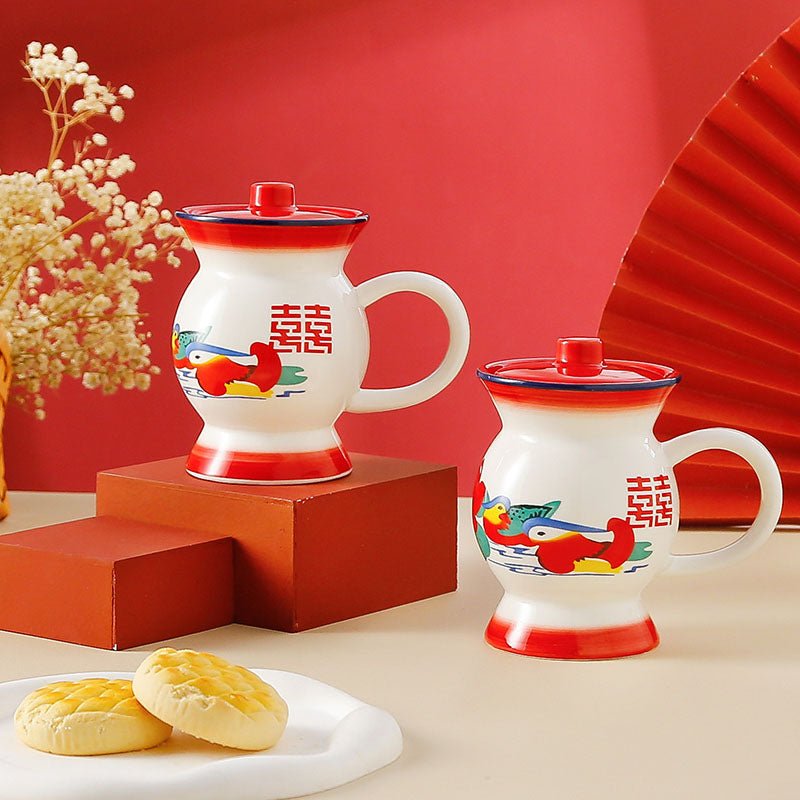
Spittoon: 440 ml for a little more working room
Reader situation: your routine lands around 350 to 400 ml, or your base coffee regularly receives a modest addition. Why it fits: the Spittoon adds 40 ml over The Rock, leaving 40 ml of nominal room with a 400 ml drink. Next step: check the listing for the 440 ml Spittoon Coffee Tea Mug.
This middle capacity is not enough for a 450 ml finished serving. It is also not a guarantee of spill-free carrying at 440 ml; a drink matching the listed capacity leaves no calculated margin.
The Flow: 480 ml for larger finished drinks
Reader situation: you commonly prepare 400 to 450 ml at once, including any milk or added water. Why it fits: The Flow has the largest listed capacity here, with 80 ml remaining after a 400 ml serving and 30 ml after a 450 ml serving. Next step: see the current options on The Flow product page.
The Flow is not automatically the better choice for a 200 or 250 ml drink. A large amount of unused capacity may make the serving look smaller, and buyers who value a close-fitting cup may prefer one of the lower-capacity options.
How do milk, ice, and rim space change the size you need?
Add-ins can move a drink into the next capacity bracket quickly. A 300 ml base with 60 ml of milk becomes 360 ml. That leaves 40 ml in The Rock, 80 ml in the Spittoon, and 120 ml in The Flow according to their listed capacities.
Ice needs a different calculation because it displaces liquid and the amount varies by cube size and quantity. For an iced drink, place the usual ice in a measuring vessel, add the prepared beverage, and read the combined level. A 480 ml ceramic mug may provide more room than the other two, but it is not a substitute for an insulated travel tumbler if long cold retention, a lid, or cup-holder compatibility is the priority.
External width and base shape are separate from capacity. Two mugs can hold similar amounts while taking up different space beside a keyboard or coffee machine. Shoppers comparing counter and desk placement can use our ceramic wide bottom coffee mugs capacity guide for that specific consideration.
What should buyers check besides the milliliter number?
Capacity describes liquid volume. It does not tell you the mug's exact physical weight, wall thickness, exterior dimensions, or suitability for a particular appliance. A larger listed capacity should not be treated as proof that one mug is heavier than another.
- Care instructions: check the current product page before using a dishwasher or microwave. We do not treat ceramic material alone as proof that every finish or design is suitable for either appliance.
- Temperature changes: avoid moving ceramic directly between extreme temperatures. Sudden thermal change can stress ceramic drinkware.
- Cleaning: rinse coffee or tea residue promptly and use a non-abrasive sponge unless the listing provides different care directions.
- Desk and travel use: a heavy ceramic mug is intended for a stable surface, not for replacing a sealed commuter cup. None of the three capacity figures indicates a lid or vehicle cup-holder fit.
- Gift selection: use the recipient's normal finished drink as the starting point. A larger number can sound generous during gift unboxing, but unused capacity is not useful if the recipient consistently drinks small servings.
If wall feel and substantial construction matter as much as volume, read our separate thick ceramic coffee mugs capacity guide. Keeping those questions separate prevents capacity from being mistaken for thickness or exact weight.
Frequently asked questions
Which size in this heavy ceramic coffee mugs capacity guide fits a 400 ml drink?
The 440 ml Spittoon leaves 40 ml above a 400 ml serving by the listed figures, while the 480 ml Flow leaves 80 ml. The 400 ml Rock matches the drink volume exactly, so it provides no nominal margin for movement.
Can a 440 ml mug comfortably hold a 440 ml drink?
The listed numbers match, but that does not establish a comfortable carrying fill. If 440 ml is your usual finished serving, the 480 ml Flow provides 40 ml of calculated room and is the more forgiving capacity choice.
Is a 480 ml ceramic mug too large for regular coffee?
Not if your finished drink is commonly 400 to 450 ml or you want extra room below the rim. For a consistent 200 to 250 ml serving, much of the capacity will remain unused, so The Rock or another smaller style may feel better matched.
Are these ceramic mugs safe for a dishwasher or microwave?
Use the care information on each current product page before placing a mug in a dishwasher or microwave. Ceramic by itself does not confirm that every glaze, finish, or decorative treatment has the same care requirements.
Use this capacity checklist before ordering
- Measure your complete drink after adding milk, water, foam, or other ingredients.
- Decide how much room you want for carrying the mug from the kitchen or office coffee station.
- Compare that total with 400 ml for The Rock, 440 ml for the Spittoon, and 480 ml for The Flow.
- Open the relevant product page to confirm current options and care information.
- For more shapes beyond these three, compare the current unique coffee mug collection using the same measured-serving method.
Read more
Cacao Cup Capacity Guide: 250, 390, and 400 ml Compared
Compare CoffeifyMug's current 250, 390, and 400 ml options by serving routine, refill frequency, visible opening, desk space, and practical daily fit.
Leer más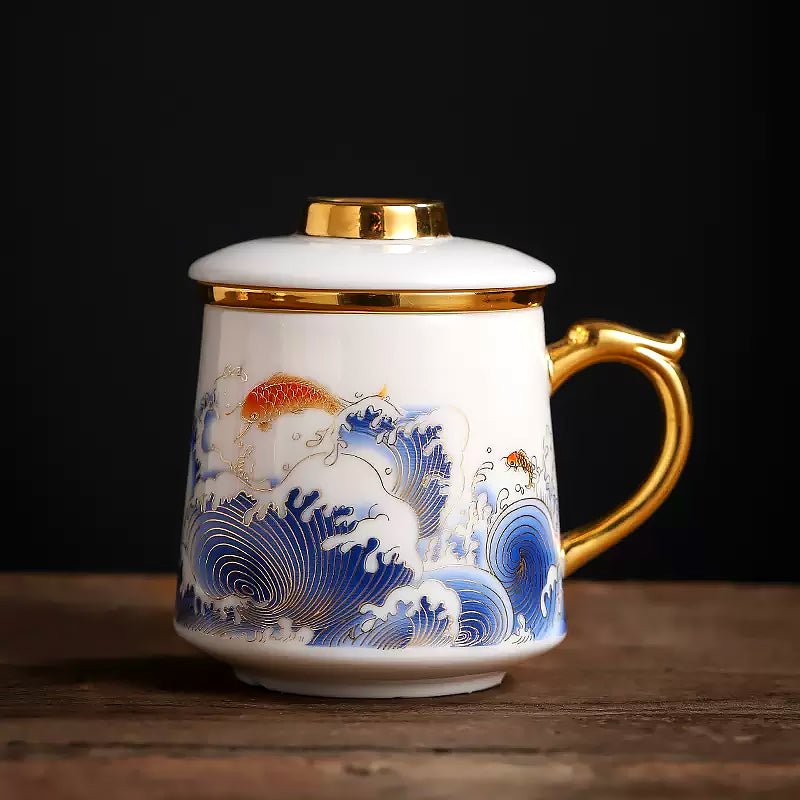
Ceramic Glazed Coffee Mugs Capacity Guide: 400, 440, 480 ml
Compare 400, 440, and 480 ml glazed ceramic mugs by practical fill space, refill habits, milk and ice allowance, desk use, and current CoffeifyMug product fit.
Leer más
Dejar un comentario
Este sitio está protegido por hCaptcha y se aplican la Política de privacidad de hCaptcha y los Términos del servicio.