
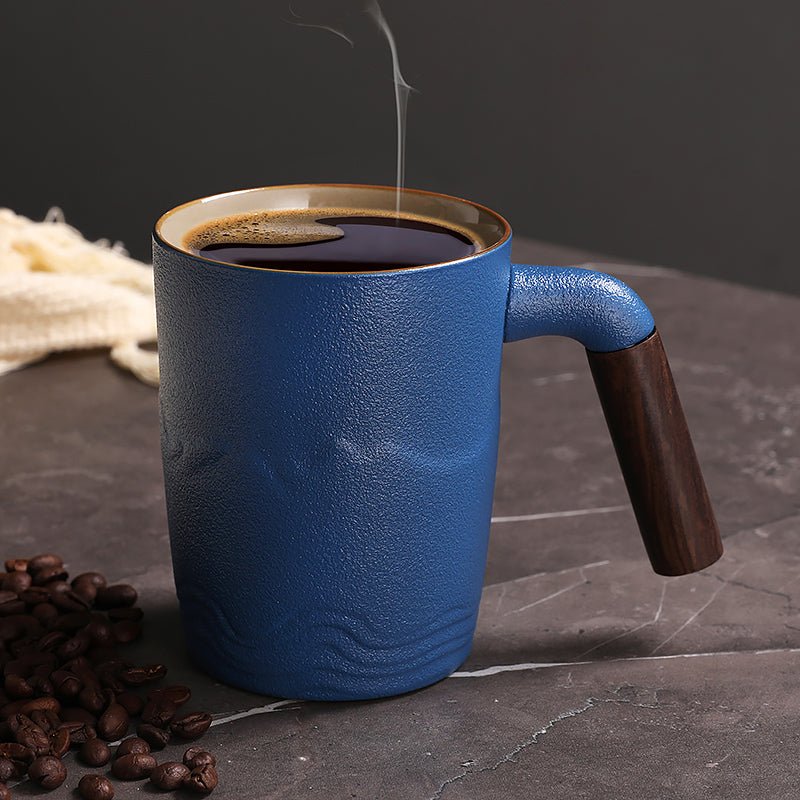
Hand Thrown Coffee Mugs: How to Choose the Right One
Reading time: about 8 minutes
A mug that rocks slightly on the counter, has a handle that pinches two fingers, or sends heat straight through the wall gets noticed fast during the first week of use. That is where hand thrown coffee mugs stand apart: the small differences in shape, balance, and glaze change how the mug feels at the sink, at the desk, and during the first sip.
We handle mugs like these for a living, so we pay attention to the details buyers actually feel. Some people want a cup that looks crafted and a little irregular. Others want a better grip for a long commute from kitchen to office desk. The right choice depends less on the word handmade and more on how the mug behaves in daily use.
What makes hand thrown coffee mugs different from mass-made mugs?
Hand thrown mugs are shaped on the wheel or finished with hand-built steps, so you usually see small variations in wall thickness, rim shape, handle placement, and glaze flow. Those differences are not flaws by default. They are the reason many buyers prefer them over uniform factory cups.
In our store, we look at three things first: how the mug sits in the hand, how it feels at the lip, and whether the base sits flat without wobbling. If one of those is off, the mug can still look beautiful but feel awkward every morning.
- Grip: A good handle should let two or three fingers through without forcing a tight squeeze.
- Rim: A smoother rim gives a cleaner sip, especially for black coffee or tea.
- Base: A stable foot ring matters on a kitchen counter, a desk, or a crowded breakfast tray.
These mugs are a strong fit for people who want character and a more tactile feel. They are not the best choice for buyers who want every mug to stack perfectly, match exactly, or survive rough treatment in a shared break room.
Which shape should you choose for daily coffee?
Shape matters more than most buyers expect. A wider mug cools faster and feels easier to sip at a desk. A taller mug keeps heat a little longer and often fits better in one hand while you work. If you are comparing capacities, our 12 oz coffee mug guide is useful for smaller daily pours, while a larger shape makes more sense for longer mornings or bigger drip coffee servings.
For a secure, practical grip, the Ball Handled Coffee Tea Mug is a smart place to start. The rounded handle feels different from a flat loop handle, and that matters if you carry a hot mug from counter to desk several times a day. If you want a more playful silhouette that still works for coffee and tea, the Handbag Coffee Tea Mug stands out as a giftable option with a memorable profile.
We generally see three buyer patterns:
- Light drinkers: Smaller mugs feel less wasteful and are easier to finish before the coffee goes cold.
- Desk users: A medium mug with a balanced handle is usually the most comfortable during long work sessions.
- Tea drinkers: Slightly wider openings help tea cool to a drinkable temperature faster.
If you prefer a larger daily mug, our article on 16 ounce coffee mugs can help you judge whether the extra volume is worth the footprint on your shelf or desk.
What should you inspect before buying hand thrown coffee mugs online?
Photos only tell part of the story, so we check the listing for the details buyers can feel after delivery. The most useful product pages tell you about the material, glaze finish, care needs, and handle design. That is especially true if you are buying a mug as a gift and cannot inspect it in person.
| What to check | What good looks like | Why it matters |
|---|---|---|
| Rim | Smooth, even, and comfortable on first contact | A rough or sharp rim is the fastest way to make a beautiful mug feel cheap |
| Foot ring | Flat enough to sit steadily without wobble | A mug that rocks on the counter is annoying and easier to chip |
| Handle | Enough space for your fingers with no pinching at the joint | This affects comfort more than mug capacity does |
| Glaze | Even coverage, no obvious runs in the drinking zone | Glaze texture changes the look, the feel, and sometimes the cleanup |
| Care notes | Clear guidance on dishwasher, microwave, or hand wash use | Different handles and finishes have different limits |
If you care about decorative finishes as much as shape, our guide to Hand Painted Coffee Mugs: What to Check Before You Buy is a good companion read. The same inspection mindset applies: look for the rim, the glaze, and any finish details that will matter after a few dishwasher cycles.
Common defect modes to watch for are easy to miss in a quick scroll. Glaze pinholes can appear in photos but look more obvious in person. A handle may look large enough until you realize it is mounted too close to the body. A thick glaze drip near the foot ring may be harmless, but it can also create an uneven resting point if the mug was fired a little off.
Which hand thrown mug style fits gifts, desk coffee, or slower home brewing?
Different buyers want different trade-offs. A gift mug should look special on first unboxing. A desk mug should be stable and comfortable to carry one-handed. A slow home-brew mug can be a little heavier if that weight makes it feel grounded and durable.
If you want to compare options across our store, start with the full collection and then compare how each mug feels in the hand. That is usually faster than chasing shape alone.
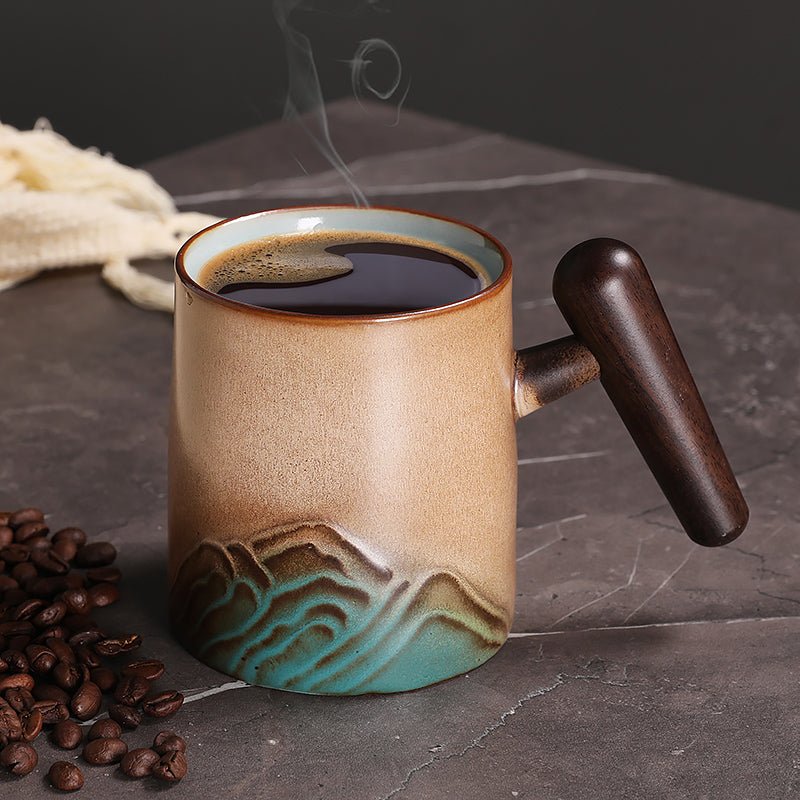
The Mountain Sea II Coffee Tea Mug with Wooden Handle is a strong example of a mug that leans into tactile contrast. The wooden handle changes the feel in use, and that can be a plus if you want a cooler-grip point when the mug is full. It is not the right pick for someone who wants a dishwasher-every-day mug unless the care instructions specifically support that routine.
Here is how we would match the style to the buyer:
- Gift buyer: Pick the mug with the most memorable shape and the cleanest finish.
- Office buyer: Choose a mug that does not feel top-heavy and fits easily beside a keyboard.
- Home brewer: Prioritize a comfortable rim and a body that holds heat without becoming awkward to hold.
Hand thrown mugs are not ideal for buyers who need stackable uniformity, ultra-light travel use, or a full matching cafe-style set. If you want that level of consistency, a more standardized mug may suit you better.
How do you care for hand thrown coffee mugs without wearing them out?
The care routine should match the materials, not just the look. Ceramic hand thrown mugs often tolerate normal daily washing well, but textured glazes, special finishes, and mixed-material handles can change the rules. If a mug has a wooden handle or another non-ceramic component, we treat it as hand wash first unless the maker says otherwise.
Practical care habits matter more than fancy products:
- Let the mug cool before washing if you have poured boiling water into it.
- Use a soft sponge instead of an abrasive pad on glazed surfaces.
- Do not shove a mug against hard items in the sink or dishwasher basket.
- Keep wooden handles dry and out of prolonged soaking.
- Avoid sudden temperature swings, especially right after the mug has been heated.
That last point matters more than many shoppers expect. A mug pulled from a cold cabinet and filled with near-boiling water can take more stress than one that has been warmed gradually. Over time, repeated shock is what tends to show up as tiny cracks, rim chips, or finish wear.
We also advise checking the underside. The base is the area that scrapes shelves and countertops most often. If the foot ring is rough or unfinished, it can leave marks on wood or ceramic surfaces. That is not a deal-breaker, but it is worth knowing before the mug becomes your everyday favorite.
Frequently asked questions
Are hand thrown coffee mugs dishwasher safe?
Sometimes, but not always. Dishwasher safety depends on the clay body, glaze, handle material, and how the mug was finished. If the listing allows it, top-rack washing is the safer routine, and hand washing is still the better choice for textured pieces or mugs with wood details.
What size hand thrown coffee mug is best for daily use?
For most daily coffee drinkers, a mid-size mug is the most practical starting point because it balances heat retention and comfort. Smaller mugs suit short pours, while larger mugs are better for long work sessions or bigger drinks. If you are unsure, compare the mug against your usual pour volume before buying.
Do hand thrown coffee mugs chip more easily than factory mugs?
Not automatically. The risk usually comes from how the mug is handled, stored, and washed. A hand thrown rim or foot ring can chip if it is knocked against a sink edge or packed too tightly with other dishes, so careful storage matters.
Can I use hand thrown coffee mugs for tea as well as coffee?
Yes. Many buyers use the same mug for both, especially if the shape is comfortable and the opening is wide enough for tea to cool at a reasonable pace. A mug labeled for coffee and tea is often the most flexible choice if you switch drinks during the week.
What should I avoid if I want a low-maintenance mug?
Avoid mixed-material mugs, very textured glazes that trap residue, and any piece with unclear care instructions. If you want the easiest routine, choose a simple ceramic mug with a stable base, a comfortable handle, and a finish that is easy to wipe clean.
If you are comparing options now, use a short checklist: grip, size, glaze, care instructions, and whether the mug fits your actual routine. Then open the product pages for the Ball Handled Coffee Tea Mug, the Handbag Coffee Tea Mug, and the Mountain Sea II Coffee Tea Mug with Wooden Handle to compare shape, grip, and care side by side.
Read more
Large Ceramic Mugs: What to Check Before You Buy
Large ceramic mugs should feel steady, comfortable, and easy to live with after the first pour. We break down the handle, weight, glaze, and shape details that matter before you order.
Leer más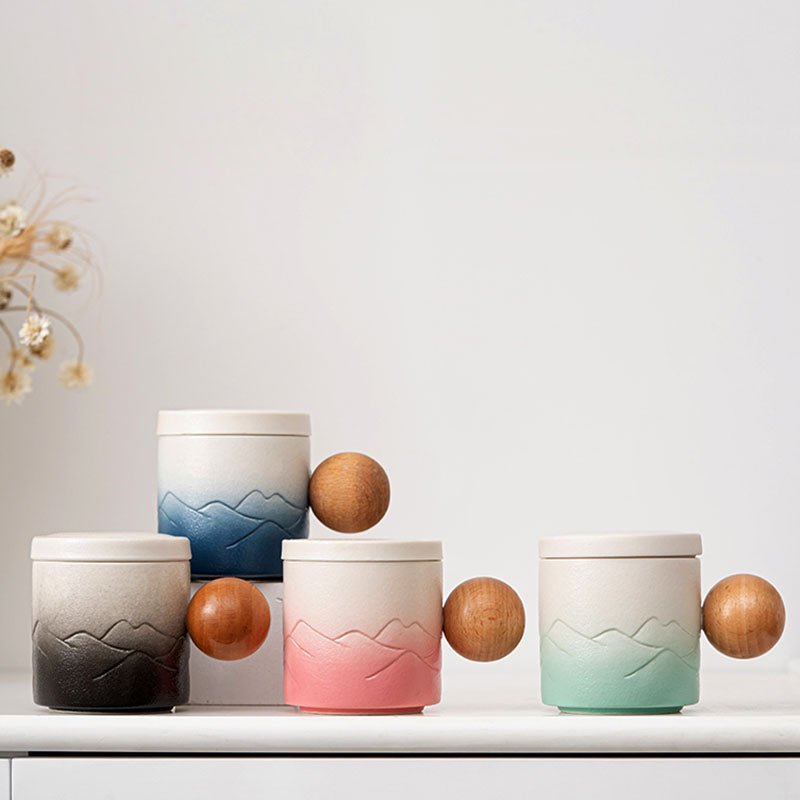
Mother's Day Coffee Mugs That Feel Giftable and Get Used Daily
A practical guide to choosing mothers day coffee mugs that look good on the counter and hold up in daily use. Compare giftable styles, sizes, and the details that matter before you buy.
Leer más
Dejar un comentario
Este sitio está protegido por hCaptcha y se aplican la Política de privacidad de hCaptcha y los Términos del servicio.