
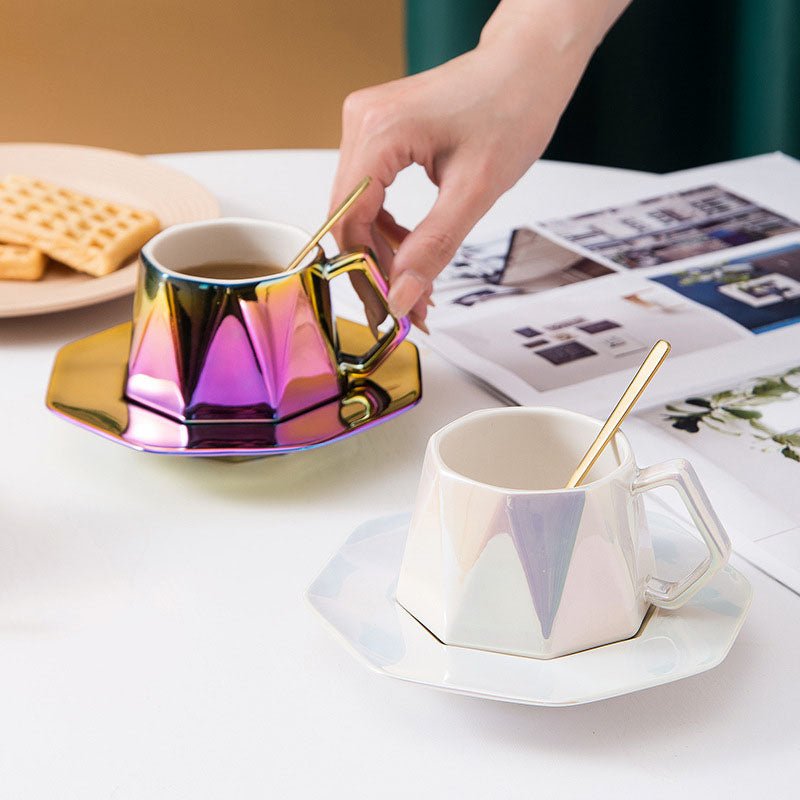
Gift Care Tips for the Rhombus Ceramic Coffee Mug
Reading time: about 11 minutes
A ceramic mug usually starts showing wear at the rim first. Then the base picks up fine scratches from rough counters, or the handle gets a small knock in a crowded sink. We see those issues often in our store with mugs that get used every morning, especially pieces that double as home decor and daily drinkware.
That is why these gift care tips matter from the start, not after the first chip. If you are buying the Rhombus Ceramic Coffee Mug for yourself or giving it to someone who likes distinctive drinkware, a few simple habits will keep the glaze looking cleaner and the edges in better shape for longer.
This article is written from our side of the counter. We sell ceramic mugs to shoppers who compare style, practicality, and gifting value, and we know the trade-offs. A rhombus-profile mug looks more design-forward than a plain round cup, but it also deserves a little more care during washing and storage than a basic utility mug tossed around in a break room.
Why does a rhombus-shaped ceramic mug need different care?
The shape changes how the mug gets handled. A standard straight-wall mug is easy to stack, easy to grip from any angle, and usually easier to fit into a crowded cabinet. A rhombus-style ceramic mug has sharper lines and a more sculpted silhouette, which is exactly why many coffee lovers and home decor shoppers prefer it. It feels less generic on an open shelf and more intentional in a gift box.
That same shape creates a few practical differences:
- The angled body can bump neighboring mugs more easily in tight cabinets.
- The rim and outer edges show chips faster if they hit plates, metal cutlery, or stoneware.
- The base may pick up surface wear if it gets slid across rough counters instead of lifted.
In our experience, this is the kind of mug people keep on a kitchen shelf, breakfast nook, or office desk because it looks good even when it is not in use. That is a strength, but also a clue. It is best treated like a quality ceramic piece, not like a camp mug, travel tumbler, or something you throw into a tote bag with keys and chargers.
If you are still comparing shapes before you buy, our unique coffee mugs collection is useful for seeing how decorative mug profiles differ from simpler everyday forms.
What is the safest way to wash it after coffee or tea?
The safest routine is also the simplest: wash it soon after use, use mild dish soap, and stick to a soft sponge or cloth. Coffee oils, tea tannins, and milk residue are much easier to remove before they dry down into a film. Once residue hardens, people reach for harsh scrubbers, and that is where the finish often starts looking tired.
For daily cleaning, we recommend:
- Empty the mug and give it a quick rinse instead of letting coffee sit in the bottom for hours.
- Wash with warm water and a non-abrasive sponge.
- Clean the rim carefully, because lip contact and dark drink residue build up there first.
- Check the handle join and lower outer edge, where drips often dry unnoticed.
- Dry it with a soft towel or let it air dry fully before storing.
Those details sound small, but they add up. The difference between a mug that still looks gift-worthy after months of use and one that looks cloudy often comes down to repeated rough scrubbing and careless drying.
A couple of practical notes matter here. Ceramic glaze is smooth, but it is not immune to abrasion. Steel wool, scouring powders, and the rough side of an old kitchen sponge can leave fine marks over time, especially on glossy surfaces. If a stain does set, soak the mug briefly in warm soapy water first instead of attacking it dry.
These gift care tips are also worth passing along if the mug is part of a housewarming or birthday gift. People appreciate a beautiful mug more when they know exactly how to keep it looking the way it did at unboxing.
Can you use a dishwasher, or is hand washing better?
This is one of the most common buyer questions, and the honest answer is that hand washing is the gentler choice. A dishwasher is convenient, but convenience is not the same as low wear. Inside a machine, mugs can rattle against plates, get nudged by utensils, and go through repeated heat cycles that are fine for many dishes but still harder on decorative ceramic drinkware than a careful hand wash.
Here is the real trade-off:
| Care option | What it does well | What to watch for |
|---|---|---|
| Hand washing | Better protection for glaze, rim, and edges | Takes a little more effort after each use |
| Dishwasher use | More convenient for busy routines | Higher chance of contact chips and cosmetic wear |
If you do use a dishwasher, make the setup intentional:
- Place the mug where it will not knock into heavier stoneware or glassware.
- Avoid wedging it tightly between dishes.
- Use a normal cycle rather than the harshest high-heat setting if you have a choice.
- Unload it carefully instead of pulling it out by the rim while other items are still pressing around it.
We usually tell customers this: if the mug is one of your favorite shelf pieces or a gift you want to preserve, hand wash it. If your priority is speed and you are comfortable with normal cosmetic wear over time, occasional dishwasher use may be acceptable, but it is still the riskier path.
How do you prevent chips, hairline cracks, and base wear?
Most ceramic damage happens outside the drinking moment. It happens in sinks, in cabinets, on office desks, and during rushed cleanup after dinner. The usual trouble spots are the rim, the handle connection, and the foot or base ring that meets the counter.
Here are the habits that make the biggest difference:
- Do not drop it into a sink. Even a small impact against a spoon or plate can nick the rim.
- Do not stack it under heavier mugs. Uneven pressure around the rim and handle raises the chance of chips.
- Lift instead of slide. Dragging the base across stone, tile, or textured counters can mark the bottom edge.
- Avoid thermal shock. Do not move the mug from a very hot fill straight into cold water.
- Check tiny damage early. A small chip around the lip or base is a sign to handle it more carefully from that point on.
Hairline cracks deserve special attention. Sometimes they begin after a sharp tap on the sink edge or after fast temperature changes. If you notice a line running from the rim downward or through the base, stop using the mug for hot drinks. That kind of crack can spread, and it is better to retire the piece than push it further.
Base wear is another detail generic care guides often skip. The bottom ring of a ceramic mug takes constant friction from counters, desks, and shelves. A smooth wood shelf is easier on it than rough stone or unfinished surfaces. If you keep a mug beside your laptop and tend to nudge it around during the day, that friction can show up faster than you expect.
Good mug care is rarely about one big rescue step. It is about avoiding small repeated impacts that quietly shorten the life of a ceramic piece.
What storage setup helps it stay display-worthy?
If you bought this mug because it has more personality than a plain cup, storage matters. A sculptural mug can look great on an open shelf, coffee bar, or glass-front cabinet, but those same display spaces can expose it to extra dust, bumping, and handle snags.
The safest storage habits are straightforward:
- Store it upright, fully dry, and with a little space around it.
- Keep it away from cast iron, mixing bowls, and dense stoneware that can knock against the sides.
- Do not hook the handle over packed mug racks if it leaves the body swinging into nearby items.
- Choose one dedicated shelf spot rather than moving it around constantly.
For office use, the same logic applies. A ceramic mug can live happily on a desk, but the riskiest spot is near the edge or beside a tangle of charging cables. We have seen plenty of good mugs lost to one sleeve catch or one laptop cord pull. If the mug is staying at work, give it a stable coaster area and avoid carrying it together with a stack of notebooks or devices.
Gift buyers should think about this too. A mug that arrives beautifully wrapped still needs a sensible home after the unboxing. If the recipient loves decorative kitchen pieces, the Rhombus design works well as part of a styled shelf. If their cabinets are packed tightly and they treat mugs as purely functional, a simpler round shape may actually suit them better.
What should you avoid if you want it to last?
This mug is not meant for every setting, and saying that clearly helps shoppers choose better. It is not the best fit for camping, commuting, gym bags, or rough shared break rooms where cups get knocked together all day. It is also not a substitute for an insulated travel tumbler if heat retention and spill control are your main goals.
Avoid these common mistakes:
- Leaving coffee or tea residue sitting overnight day after day.
- Using abrasive pads to remove rings and stains.
- Storing spoons or metal stirrers inside the mug for long periods.
- Cramming it into a crowded dishwasher or overfilled cabinet.
- Treating it like a rugged on-the-go cup instead of a ceramic home mug.
That trade-off is not a flaw. It is simply the reality of choosing a ceramic mug for style, texture, shelf appeal, and gift value. For many shoppers, that is exactly the point. A mug like this offers more visual character than a plain mass-market cup and is still easy to clean, but it rewards a bit of care in return.
If you are still deciding between decorative and more utility-focused options, browsing our unique coffee mugs collection can help narrow down which style best matches your daily routine.
Which gift care tips should you share with the recipient?
If you are giving this mug as a present, include a short care note. It does not need to sound formal. The most useful gift message is the one the recipient will actually remember the next morning while making coffee.
We suggest keeping it to a few plain instructions:
- Wash with a soft sponge and mild soap.
- Rinse soon after coffee or tea to prevent stubborn rings.
- Dry fully before shelving it.
- Keep it away from heavy dishes and crowded sinks.
- Hand wash if you want the finish to stay looking newer longer.
That extra step works especially well for housewarming gifts, desk gifts, and holiday gifts where presentation matters. The mug feels more personal, and the recipient gets useful guidance without needing to look anything up later.
If you are building a mug gift around a distinctive style, the Rhombus Ceramic Coffee Mug is a strong choice for someone who notices shape and display value, not just function. If you want to compare other giftable silhouettes before choosing, our unique coffee mugs collection gives a better sense of what suits minimalist kitchens, cozy coffee corners, or more playful gift sets.
Frequently asked questions
How do I remove coffee stains from a ceramic mug without scratching it?
Start with warm water, mild dish soap, and a soft sponge. If the stain has set, let the mug soak briefly first rather than scrubbing with an abrasive pad, which can dull the glaze over time.
Is the Rhombus Ceramic Coffee Mug good for everyday use?
Yes, it works well for everyday coffee or tea at home or on a desk. It is best for people who want a ceramic mug with visual character and are comfortable with normal gentle care.
Can I give this mug to someone who usually uses a dishwasher?
Yes, but be honest about the trade-off. Dishwasher use is convenient, while hand washing is the better option for reducing rim wear, contact chips, and long-term cosmetic dulling.
What is the most common way ceramic mugs get chipped?
In our experience, the biggest cause is contact damage in crowded sinks and cabinets. The chip often comes from knocking against plates, cutlery, or heavier mugs rather than from actual drinking use.
Who is this mug not the best fit for?
It is not ideal for someone who needs a rugged travel cup, a bag-friendly mug, or drinkware that gets handled roughly. A stainless steel tumbler or more utility-focused mug would suit that buyer better.
If you are choosing between decorative ceramic styles, use a simple check before you buy: do you want a mug that looks good enough to leave on the counter, are you willing to hand wash or load it carefully, and does the recipient value design as much as function? If the answer is yes, start with the Rhombus Ceramic Coffee Mug, then compare nearby options in our unique coffee mugs collection to find the best match for your kitchen or gift list.
More from our blog
Read more

Planet Coffee Tea Mug for Coffee Lovers, Home Decor Enthusiasts
The planet coffee tea mug for coffee lovers,home decor enthusiasts stands out best for shoppers who want one mug to handle daily drinks, shelf appeal, and easy gifting. This guide covers the real s...
Leer más
Common Ceramic Cup Mistakes to Avoid When Buying a Rhombus Mug
A Rhombus Ceramic Coffee Mug can look perfect online and still feel wrong on a real kitchen counter or desk. Here’s how to avoid the ceramic cup mistakes that lead to awkward grips, cleanup hassles...
Leer más
Dejar un comentario
Este sitio está protegido por hCaptcha y se aplican la Política de privacidad de hCaptcha y los Términos del servicio.