
Giant Tea Mug Buying Guide for Comfortable Daily Use
Reading time: about 8 minutes
A giant tea mug sounds simple until one arrives with a tiny handle, a heavy base, or a rim so thick it cools tea too slowly. In our store, that is usually where the regret starts: the mug looks good online, then feels clumsy on a desk, too bulky near the sink, or awkward to wash after a few daily cycles.
We look at these mugs the way real buyers use them: at the kitchen counter, beside a laptop, on a couch with a book, or as a gift that has to survive the unboxing and the first dishwasher run. That is the lens for this guide, and it is the same perspective we use when we help shoppers compare styles in our shop.
What should a giant tea mug actually feel like in daily use?
A good giant tea mug should feel roomy without feeling unwieldy. The cup itself can be oversized, but the experience should still be controlled: easy to lift, stable on a flat surface, and comfortable enough that you do not think about it every time you take a sip.
We usually tell shoppers to check three things first:
- Handle clearance. You should be able to get at least two fingers through the handle without twisting your wrist.
- Base stability. The mug should sit flat on a counter or desk without rocking.
- Rim comfort. A clean, even rim matters more than people expect. Too thick and the sip feels bulky. Too thin and the edge chips more easily.
Capacity matters, but comfort matters more. Oversized mugs often start around the larger everyday range and move up from there, yet the filled weight is what decides whether you keep using it. A giant tea mug that looks generous but strains your wrist after a full pour is not a practical buy.
Which material is best for a giant tea mug?
Material changes the whole experience. It affects heat retention, hand feel, cleaning, and how the mug ages after repeated use. For tea, the right material depends on whether you want a sturdier everyday cup or a lighter, more refined sip.
| Material | What it feels like | Trade-off | Best for |
|---|---|---|---|
| Stoneware | Dense, steady, and good at holding warmth | Heavier in the hand | Desk tea, long reading sessions, daily use |
| Porcelain | Lighter and cleaner in the mouth | Can feel more delicate if the walls are thin | Gift giving, lighter-feel tea service, smaller hands |
| Ceramic | Versatile and familiar | Quality varies a lot by glaze and firing | General everyday tea drinking |
| Glass | Lets you see the color of the tea | Usually loses heat faster and shows marks more easily | Herbal tea, visible infusions, lighter pours |
In practice, we see stoneware chosen most often for a giant tea mug because it feels stable on a desk and does not feel fragile after repeated washing. Porcelain is a strong choice if you want something lighter in the hand, but it is worth checking the wall thickness and the handle shape. Thin walls can be elegant, yet they do not always suit a mug that is meant to be filled to the top.
One detail many shoppers miss is glaze behavior. A glossy glaze can look beautiful, but if the finish is uneven, you may notice pinholes, minor pooling around the base, or fine crazing over time. Those are not always deal-breakers, but they are the sort of wear patterns that show up after regular use and dishwasher cycles.
Which shape works best for tea on a desk or sofa?
Shape changes both comfort and spill risk. A giant tea mug with a broad opening cools faster and is easier to add milk or honey to, while a taller shape tends to hold heat a little longer and can feel more compact in a cabinet.
Here is how we think about shape in real life:
- Wide mouth. Better for tea bags, loose-leaf infusers, and quick cooling when you want to drink sooner.
- Straighter walls. Usually feel more stable and less top-heavy on a desk.
- More tapered profile. Often looks more refined, but may not hold heat quite as evenly across the full volume.
- Lower center of gravity. Helpful if you set your mug near a keyboard, notebook, or remote control.
The defect modes we notice fastest are practical ones: a handle that pinches, a base that rocks, a glaze seam near the handle that feels rough, or a rim chip that appears after a few hard taps in the sink. Those are the details that separate a mug you keep reaching for from one that ends up in the back of the cabinet.
Which mugs in our store make sense for oversized tea?
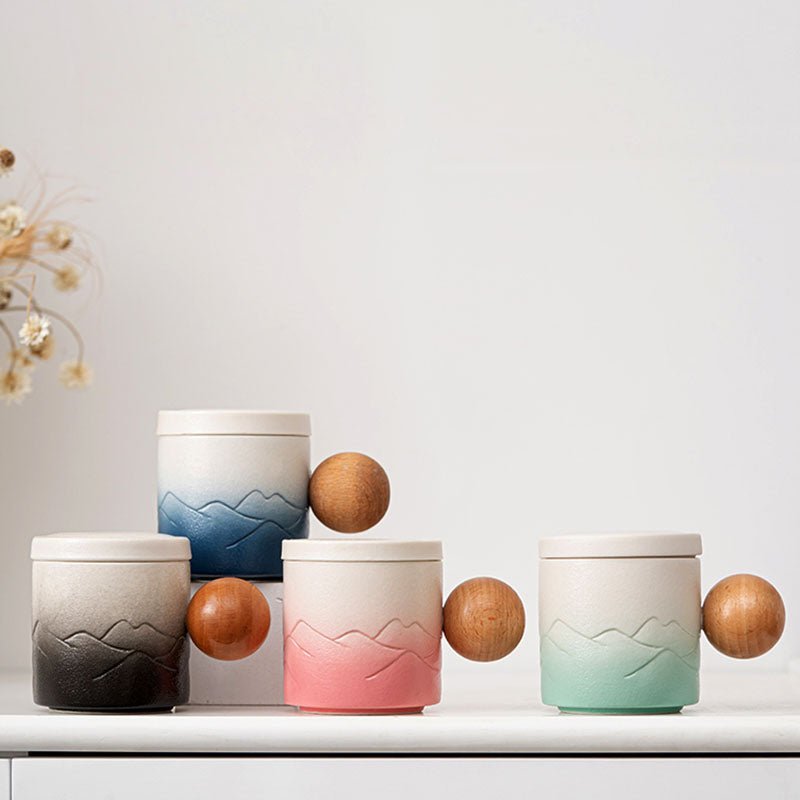
If you want a quick starting point, we suggest comparing the Crane Coffee Tea Mug, the Landscape Coffee Tea Mug, and the Gradient Coffee Tea Mug. Each one serves the same basic purpose, but the visual feel is different, and that matters more than people expect when the mug lives on a desk or open shelf.
In our store, we see shoppers split into three camps:
- Design-first buyers. They want a mug that looks deliberate on a counter, not just oversized.
- Daily tea drinkers. They care more about handle comfort and washing than about the color story.
- Gift buyers. They want something that feels thoughtful straight out of the box.
If you want to compare the broader range before choosing a single style, browse our collection of all mugs. That is the easiest way to see the full assortment side by side, especially if you are deciding between a display piece and a plain daily-use mug.
For more buying logic behind oversized mugs, we also cover the practical checks in Giant Tea Mug: What to Check Before You Buy and the broader selection process in Big Tea Mug Buying Guide for Size, Comfort, and Daily Use.
What should you check before you buy a giant tea mug online?
Online photos can hide the details that decide whether a mug stays in rotation. A giant tea mug should be judged on function first, then looks second.
- Check the dimensions. Make sure the mug fits your cabinet shelf, dishwasher rack, and hand size.
- Check the handle opening. If the handle looks decorative rather than functional, that is a warning sign for daily use.
- Check the inside finish. A smooth, even interior is easier to clean and less likely to stain than a rough glaze.
- Check the care instructions. If you rely on a dishwasher, you want a mug that can handle repeated washing without losing its finish.
- Check the base. A flat base matters for desks, side tables, and any spot where a wobble turns into a spill.
If you want a deeper checklist, our post Giant Tea Mugs: How to Choose the Right Large Mug goes further into the trade-offs we see most often when people compare oversized cups. It is the kind of read that helps if you are trying to decide between form, comfort, and everyday cleanup.
When is a giant tea mug not the right choice?
A giant tea mug is not the best answer for every tea drinker. If you brew delicate tea that benefits from smaller pours and tighter temperature control, an oversized mug can be more volume than you need. If you travel often, it is also the wrong category entirely, since the size that feels comforting at a desk usually becomes awkward in a bag.
There are a few other situations where we would steer you elsewhere:
- Small hands. A large mug can feel secure on paper and still feel tiring in practice.
- Low cabinet clearance. Bigger mugs take over shelf space quickly.
- Heavy tea habits. If you only want a short, intense pour, a smaller cup may suit you better.
If you are still deciding between oversized options, Big Mugs for Tea: How to Choose the Right Large Mug is the next read we would point you to before you buy. It is useful if you want the balance between size and hand feel to be right the first time.
Frequently asked questions
How big is a giant tea mug?
There is no single standard, but shoppers usually mean a mug that is clearly larger than a normal everyday cup and can hold a generous tea pour without feeling crowded. The best way to judge it is by capacity, handle comfort, and whether the mug still feels easy to lift when full.
Is a giant tea mug good for milk tea or herbal tea?
Yes, especially if you like a bigger pour or add milk, honey, or lemon. It is also useful for herbal tea because the wider opening gives the tea room to cool a little faster before you drink it.
Can a giant tea mug go in the dishwasher?
Many can, but you should always check the care instructions for the specific mug. If the mug has decorated surfaces, metallic accents, or a delicate glaze, repeated dishwasher cycles can change the finish sooner than hand washing would.
Is a giant tea mug a good gift?
It can be a strong gift if the person likes tea, desk drinks, or cozy home pieces. The safest gift choice is usually a mug with an easy-to-hold handle, a stable base, and a finish that looks good even when it is sitting empty on a shelf.
What is the biggest downside of an oversized tea mug?
The main downside is weight and bulk when it is full. If the handle is too small or the mug is too top-heavy, it can stop feeling relaxing and start feeling inconvenient, which defeats the purpose of buying a larger mug in the first place.
If you want the fastest path to the right pick, start with our collection of all mugs, compare the three styles above, and choose the one with the best handle clearance, the cleanest rim, and the easiest care routine for your kitchen. That is the shortlist we would use ourselves before placing an order.
Read more
Latte Art Cup: How to Choose Shape, Size, and Material
A latte art cup is not just about looks. The rim width, bowl shape, and material affect how espresso, milk, and foam sit in the cup, and the right choice depends on whether you pour at home, serve ...
Leer más
Large Coffee Mugs with Handles: Daily Use Buying Guide
Large coffee mugs with handles only feel right if the grip, balance, and base all work together. This guide shows what to check, which styles fit daily use, and where our current picks make sense.
Leer más
Dejar un comentario
Este sitio está protegido por hCaptcha y se aplican la Política de privacidad de hCaptcha y los Términos del servicio.