
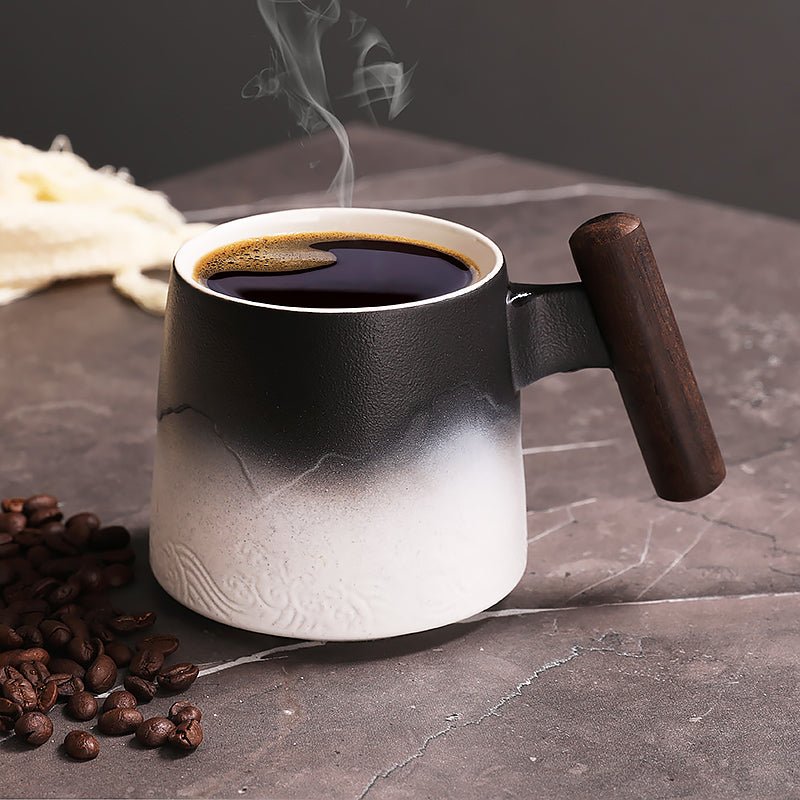
Design Your Own Coffee Mug: What to Check Before You Order
Reading time: about 9 minutes
A custom mug looks simple until you try to make it usable. We see the same mistakes repeat: artwork too close to the handle, text that disappears on a curved surface, and a size that looks fine online but feels wrong on a desk after the first refill.
If you want to design your own coffee mug, start with how it will actually be used: a quick espresso at home, long office hours, a gift unboxed at a desk, or a daily mug that has to survive the dishwasher. The right choices are practical, not flashy.
What should you decide before you design your own coffee mug?
Before layout, settle the basics. That keeps the design from looking good on a screen and awkward in the hand.
- Size: decide if the mug is for short coffee pours, a standard daily cup, or a bigger desk refill.
- Material: ceramic, stoneware, and porcelain each feel different and age differently.
- Finish: glossy white shows color clearly, while matte or darker glazes can mute fine detail.
- Artwork placement: one centered panel is cleaner than trying to cover every inch of the mug.
- Use case: gift, office mug, daily home cup, or branded merch all call for different design choices.
In our store, the mugs that get used the most are rarely the loudest ones. They are the ones with a clear focal point, enough empty space, and text that can still be read from arm's length across a kitchen counter or office desk.
| Design choice | Best for | Trade-off |
|---|---|---|
| Simple front graphic | Daily use and office desks | Less visual impact from the side |
| Full wrap design | Statement gifts and brand merch | Easy to overcrowd on a small mug |
| Minimal text only | Names, inside jokes, short messages | Can feel plain if the font is too light |
Which mug material should you start with?
Material changes the feel more than most buyers expect. A mug can look identical in photos and still feel completely different in the hand.
Ceramic is the safest starting point for most custom mugs. It usually gives a clean surface for print, a familiar weight, and a comfortable feel for home or office use. Stoneware feels heavier and more substantial, which some buyers like for a desk mug, but the thicker walls can make the cup feel bulkier. Porcelain tends to look refined and polished, but it is often a less forgiving choice if the mug will get knocked around in a busy kitchen.
There is also a trade-off with finish. Glossy glaze usually helps color read clearly, while matte finishes can look stylish but sometimes show fingerprints, scuffs, or subtle print shifts more easily. On the category side, the common issues we see are small glaze pinholes, tiny rim chips from shipping, and artwork that looks slightly dull because the base color is not strong enough for the design.
If the mug needs to travel in a backpack or sit in a car cup holder, a regular coffee mug is not the best product. A travel tumbler or insulated cup is the better fit. Our mugs are best for desks, kitchens, and gift boxes where the cup stays upright and gets used like a mug, not carried like a water bottle.
If you want to browse the range we currently handle, start with our products page or our all collection.
What size should you choose for everyday coffee?
Size affects comfort, heat retention, and how often someone reaches for a refill. A mug that is too small can feel underwhelming. A mug that is too large can cool off before the last sip if the drinker moves slowly.
For deeper size comparisons, our guides on the 10 oz Coffee Mug: Size, Fit, and What to Check Before You Buy, the 11 oz Coffee Mug: Size, Fit, and What to Check Before You Buy, and the 16 Ounce Coffee Mug Buyer’s Guide: Size, Material, and Fit show how each size behaves in real use.
- 10 oz: good for smaller pours, espresso drinks, or buyers who prefer a compact mug with less bulk on the desk.
- 11 oz: the familiar everyday size for many home and office mugs, with enough room for coffee without feeling oversized.
- 12 oz: a balanced middle ground if the mug will hold coffee with milk or a little extra room for topping up.
- 15 oz: better for long meetings, big pour-over servings, or anyone who wants fewer trips back to the coffee pot.
- 16 oz: useful for larger servings, but it can feel heavy once filled and may take up more cabinet space.
Handle fit matters too. A mug should leave enough room for a natural grip, not a cramped pinch. The base should sit stable on a desk, especially if the mug is taller and carries more liquid. Those small shape details are the difference between a mug someone keeps and a mug that stays at the back of the cupboard.
How should artwork be placed so it looks right in real hands?
Good mug design is not just about what looks good on a mockup. It is about how the mug looks after someone wraps a hand around it, rotates it toward a coworker, or sets it down beside a laptop.
Our companion guide on Coffee Mug Design: How to Choose a Mug That Looks Good and Works Daily covers the everyday shape and comfort side in more detail. For custom layouts, we also point buyers to Personalized Coffee Mug Ideas That Actually Look Good because the best artwork usually starts with restraint.
- Keep the main text short. A name, a phrase, or a simple logo usually ages better than a paragraph.
- Leave clear space near the handle and rim. Designs that run too close to the edges often look crowded once the mug is printed and held.
- Use enough contrast. Thin gray text on a pale mug can disappear under kitchen lighting.
- Think about the hand position. A design that sits only on the "front" may be hidden when the right-handed drinker holds the mug.
- Check curve distortion. Straight lines and small type can warp around the mug more than buyers expect.
Common failure modes are easy to spot once you have handled enough mugs. Small script fonts blur first. Full-wrap designs can leave a visual seam at the back. Artwork placed too low can disappear into the table line. These are not design disasters, but they are the kind of details that separate a polished custom mug from one that feels rushed.
What details matter for gifts, office desks, and brand merch?
The right design depends on the setting. A gift mug, a desk mug, and a branded merch mug all solve different problems.
- Gift mug: keep the message personal and easy to read. A name, date, or short line usually lands better than a long quote.
- Office mug: use a layout that looks clean from several angles. The mug should still feel appropriate in a shared break room.
- Brand merch: make the logo readable at a glance. If the identity only works when someone studies the mug closely, it will not do much work.
- Everyday home mug: prioritize comfort, balance, and a design that will not feel dated after a few months.
We think that practical mugs are the easiest to live with. That means a comfortable handle, a stable base, a finish that handles routine washing, and a print layout that does not need explaining every time someone picks it up. If you are comparing options, start with the style that matches the real setting, not the one that looks busiest in a mockup.
If you want to compare available options directly, our all collection is the fastest place to browse what fits your use case, and our products page is the place to narrow by current offering.
How do you check the proof before you place the order?
A proof is where good custom mug orders are saved. We recommend treating it like a final fit check, not a formality.
- Read every word slowly. Misspellings are the most expensive mistake because they are fully baked into the finished mug.
- Look at placement near the handle and rim. If the artwork is too close, it can feel unbalanced in the hand.
- Check image crop and edge spacing. Wrap designs need breathing room so important parts do not get lost near the back seam.
- Compare the design against the mug size. A layout that looks centered on a large mockup can feel tiny on a smaller cup.
- Confirm care expectations. If the mug will be washed often, choose a design that stays legible even after routine dishwasher cycles.
- Ask whether the decoration changes microwave use. Some finishes and specialty accents are not ideal for reheating.
After purchase, care matters just as much as design. If you want the mug to last, our Coffee Mug Care Tips to Make Your Mug Last Longer explain the habits that keep rims, glaze, and artwork in better shape over time. That matters because a mug that chips on the first hard tap or fades after rough washing is not a good buy, no matter how nice it looked on day one.
Frequently asked questions
What size should I choose if I want an everyday custom mug?
An 11 oz or 12 oz mug is usually the easiest everyday choice for most coffee drinkers. It feels familiar in the hand, fits standard coffee servings well, and does not crowd a desk the way a larger mug can. If the person drinks big pours or sits through long meetings, move up to 15 oz or 16 oz instead.
Are custom coffee mugs dishwasher safe?
Some are, but not every mug and not every decoration behaves the same way. The safest approach is to check the care notes for the specific mug and treat specialty finishes, metallic accents, and delicate prints with more caution. If a mug will go through the dishwasher often, simpler artwork is usually the safer choice.
What artwork looks best on a coffee mug?
Short text, a simple logo, or one strong image usually works best. Busy layouts can look fine on screen and still feel crowded once the mug curves around the hand. We find that high-contrast designs with a clean border tend to hold up best in kitchens and office break rooms.
Are design-your-own mugs good gifts?
Yes, if the design is personal without being cluttered. A name, date, inside joke, or short message often lands better than a long quote or a crowded collage. For gifts, the packaging and the first impression matter as much as the mug itself.
Should I choose a mug or a travel tumbler?
Choose a mug if the drink will stay on a desk, kitchen counter, or dining table. Choose a travel tumbler if it needs to move through a car, bag, or commute. They solve different problems, and a travel-ready vessel is the better option if portability matters more than presentation.
If you are ready to design your own coffee mug, start by comparing size and use case, then browse our all collection to match the layout to the mug that will actually get used.
More from our blog
Read more

Ceramic Starbucks Coffee Mug: What Buyers Should Check Before Buying
A practical buying guide for a ceramic Starbucks coffee mug, covering size, handle comfort, glaze quality, and care so you can pick one that works on a kitchen counter or office desk.
Leer más
Otagiri Coffee Mugs: What to Check Before You Buy
Otagiri coffee mugs can be charming, collectible, and practical, but size, glaze condition, and care vary by piece. Here’s what we check before we recommend one.
Leer más
Dejar un comentario
Este sitio está protegido por hCaptcha y se aplican la Política de privacidad de hCaptcha y los Términos del servicio.