
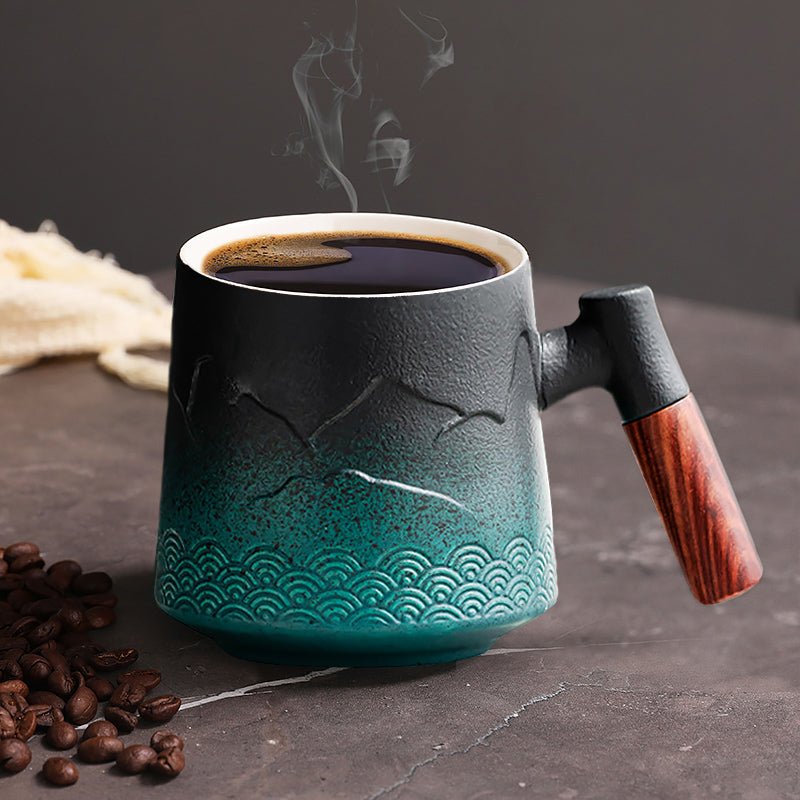
Coffee Mugs with Company Logo: What Buyers Should Check
Reading time: about 9 minutes
A coffee mug on a desk looks simple until the logo sits too close to the handle, the color reads too dull under office lighting, or the cup feels awkward in the hand. That is usually the point where coffee mugs with company logo stop being a generic giveaway and start being something people actually keep using.
We handle this category with a practical eye: how the mug feels at a desk, how the mark holds up after repeated washing, and how it looks when someone opens a gift box in front of a client. If you are comparing options, start with our products page or browse the full range in all mugs. For a deeper buyer checklist, our posts on Company Logo Coffee Mugs: What Buyers Should Check Before Ordering and Logo Coffee Mugs: What Buyers Should Check Before Ordering are a good place to compare the basics.
Which buyers actually get value from company-logo mugs?
Not every order has the same job. A mug for a shared break room needs different traits than a mug being handed out at a sales meeting. In our store, we usually see four kinds of buyers, and each one cares about something slightly different.
- Office teams: They want a mug that feels sturdy, is easy to recognize at a glance, and does not look tired after a few dishwasher cycles.
- Client gifts: They need a cleaner presentation, a logo that reads well at arm's length, and packaging that does not feel cheap when unboxed.
- Events and trade shows: They usually care about visual impact, easy stacking, and a design that holds up in bulk handling.
- Internal onboarding or appreciation gifts: They often want something useful first, branded second, which means comfort and durability matter more than decoration tricks.
If your order is mostly a practical kitchen item, do not overcomplicate it. A mug that sits well on a desk and feels balanced in the hand usually beats a flashy shape that looks good in a photo but gets left in the cabinet. That is why we often steer buyers back to the basics before they choose artwork size or finish. Our article on company logo coffee mugs covers the core questions we ask before any order moves forward.
What mug size, material, and shape should you choose?
Size sounds minor until the mug is on a real desk. A smaller cup can feel refined, but it may be too short for long meetings. A larger one holds more coffee, yet it can look bulky next to a laptop and swallow small logo artwork. That trade-off is why we encourage buyers to think about use first, then branding.
| Option | Best for | Trade-off |
|---|---|---|
| Standard ceramic mug | Daily office use, gifts, general branding | Reliable and familiar, but not the right choice if you need a very premium unboxing experience |
| Smaller cup profile | Espresso-style servings, compact desks, lighter gifts | Less print area and less room for a large mark |
| Larger mug profile | Long meetings, bigger pours, heavy coffee drinkers | Bulkier in the hand and more likely to overpower a small logo |
| Straight-sided body | Cleaner logo placement and easier wraparound printing | Can feel more utilitarian than a shaped mug |
| Tapered body | More stylized presentation | Less usable print space and more layout pressure near the curve |
Material matters too. Ceramic is still the default for a reason: it feels substantial, it suits most desk setups, and it usually gives a clean print surface. A glossy finish tends to make logo edges read sharper, while a textured surface can make fine details harder to see. For buyers who want a safer all-purpose choice, that is usually enough. For buyers who need a very specific premium feel, the shape and finish deserve as much attention as the logo itself.
If you want a broader sizing reference before you pick a mug style, our guides on 12 oz coffee mugs and 16 ounce coffee mugs cover the practical differences we see most often.
How should the logo be placed so it still reads cleanly?
Logo placement is where many orders either feel polished or look off-center. A good mug gives the mark enough space to breathe. A weak layout crowds the logo against the handle, the rim, or a seam area where the eye keeps getting pulled away from the brand.
- Keep the logo clear of the handle zone so the design does not disappear when someone grips the mug.
- Leave margin above the rim and below the curve so the artwork does not feel cut off.
- Use clean vector artwork when possible. Low-resolution files are where fuzzy edges and broken type usually start.
- Choose contrast that still works in real office light, not just on a bright screen.
- Check whether the design needs a one-color print or a full-color treatment before you place the order.
We see the best results when the mark is simple enough to survive daily use. Tiny taglines, hairline strokes, and stacked text can look sharp in a mockup and still become hard to read on the actual mug body. If your brand depends on fine detail or gradients, that is worth acknowledging up front instead of trying to force a complex design onto a small curved surface.
For buyers still deciding between broad branding styles, our articles on Custom Coffee Mugs with Logo and Custom Logo Coffee Mugs help compare the common layout choices before you commit.
What should you check before ordering for office use, gifts, or events?
The safest orders are the ones that match the use case. A mug for daily office rotation should be easy to wash and hard to misplace. A mug for a gift should photograph well and feel intentional when opened. A mug for a live event should be simple to pack, stack, and hand out without damage.
- Care instructions: If the mug will live in a shared office kitchen, make sure the decoration method supports the cleaning routine you expect. Handwashing can be fine for a gift, but it is usually less practical for shared daily use.
- Logo durability: Ask how the logo is applied and what happens after repeated washing. A good-looking first print is not enough if the decoration starts to lose clarity too early.
- Packaging: If the mug is a client gift, the unboxing matters. Loose or overly minimal packaging can make a nice mug feel less finished.
- Inventory consistency: For larger orders, the mugs should look like the same product from one box to the next. Shade variation and placement drift are common frustrations in bulk drinkware.
- Fit for the recipient: Some people prefer a lighter, more compact mug. Others want a bigger handle and more capacity. The right answer depends on who will actually use it.
That is also why we recommend reading the buying notes in Coffee Mugs with Logo: What Buyers Should Check Before Ordering before you place a bulk order. It helps separate the nice-to-have details from the ones that matter on delivery day.
What can go wrong with logo coffee mugs?
The common failures are usually not dramatic. They are small problems that add up to a mug nobody is proud to hand out. We check for them because they are easy to miss in a product photo and obvious once the mug is sitting on a desk.
| Common issue | What it looks like | Why it matters |
|---|---|---|
| Poor contrast | The logo blends into the mug color | The branding becomes hard to read from a normal viewing distance |
| Off-center placement | The mark sits too close to the handle or rim | The mug looks rushed, even if the print quality is fine |
| Overly detailed artwork | Fine text or thin lines look soft or crowded | The logo loses clarity on a curved surface |
| Care mismatch | The mug is washed in a way the decoration was not meant for | The print can age faster than the buyer expects |
| Wrong scale | The logo is too small to notice or too large to feel balanced | The mug either looks blank or looks like a billboard |
There is also a limitation worth saying plainly: coffee mugs with company logo are not the best choice if you need extremely precise color matching across every production run or if your artwork depends on photographic detail. For those cases, a different branded item or a more specialized print method may suit you better. A mug can still do the job, but only if the design is adapted to the format instead of forced onto it.
That is the practical view we keep in our store. A good branded mug is not the one with the most decoration. It is the one that survives a week of office use, still looks presentable after washing, and does not create questions from the person receiving it.
Frequently asked questions
What size coffee mug with company logo works best for office desks?
A standard ceramic mug is usually the safest desk choice because it fits easily beside a laptop, keyboard, and notebook without taking over the workspace. Larger mugs are better for long meetings or people who drink more at once, but they can feel bulky on crowded desks. If the mug is for shared office use, balance comfort, storage space, and how the logo will read at arm's length.
Are coffee mugs with company logo dishwasher safe?
That depends on the mug and the decoration method, so we do not assume it by default. If the mugs will be washed often in an office kitchen, verify the care instructions before ordering. For gift orders, handwashing may be acceptable, but it is less convenient for everyday use.
What file should I send for a logo mug order?
Vector artwork is usually the cleanest starting point because it scales well on curved drinkware. If you only have a raster file, make sure it is high resolution and not compressed. Thin lettering, tiny taglines, and complex gradients may need simplification so the logo reads clearly on the mug body.
Can a full-color logo work on a coffee mug?
Yes, but only if the design is built for that format and the color contrast stays strong on the mug color you choose. Full-color artwork can look great on some mugs and feel crowded on others. We usually recommend checking how the logo will look on the actual ceramic surface, not just in a digital mockup.
What should I check before ordering in bulk?
Check size consistency, logo placement, care instructions, and packaging. For bulk orders, the real test is whether every mug feels like part of the same set when it arrives. If you are comparing options, start with our all mugs collection and use the checklist above to narrow down the best fit.
If you are ready to compare styles, open the products page, match the mug size to the setting, and check the logo against the handle, rim, and care instructions before you place the order.
Read more
Coffee Mug Set of 4: What to Check Before You Buy
A practical guide to choosing a coffee mug set of 4 for daily use, gifts, or office setups, with sizing, material, and care details that matter before you buy.
Leer más
Coffee Mug Holder Stand: How to Choose the Right One for Your Space
A coffee mug holder stand can free up counter space, keep daily mugs easy to grab, and make a small coffee corner look organized. We break down fit, materials, and the trade-offs so you can choose ...
Leer más
Dejar un comentario
Este sitio está protegido por hCaptcha y se aplican la Política de privacidad de hCaptcha y los Términos del servicio.