
Coffee Mug Warmers: How to Choose the Right Mug and Setup
Reading time: about 8 minutes
A mug that starts hot and ends lukewarm before the first meeting is usually the point where people start shopping for coffee mug warmers. In our store, we see them used for slow mornings, desk work, and kitchen counters where one cup gets sipped over an hour or more.
The useful part is simple: a warmer helps hold a drink near serving temperature. It does not rescue a badly insulated cup, and it will not turn cold coffee into freshly brewed coffee. That is the first trade-off to understand before you buy.
What do coffee mug warmers actually do well?
Coffee mug warmers are best at extending the useful life of a hot drink. They are practical for a home office, a workshop bench, a reception desk, or any setup where you keep returning to the same cup instead of finishing it quickly.
They are not a full replacement for a kettle, microwave, or thermos. If you want a drink to stay hot while you move around the house, a vacuum-insulated travel mug is usually the better tool. If you want to keep a ceramic mug pleasant to sip from while you work, a warmer makes more sense.
That is why mug shape matters as much as the warmer itself. The warmer can only do its job if the mug sits flat and stable on the plate. A cup with a narrow foot, a curved base, or a wobbly bottom wastes heat and creates frustration.
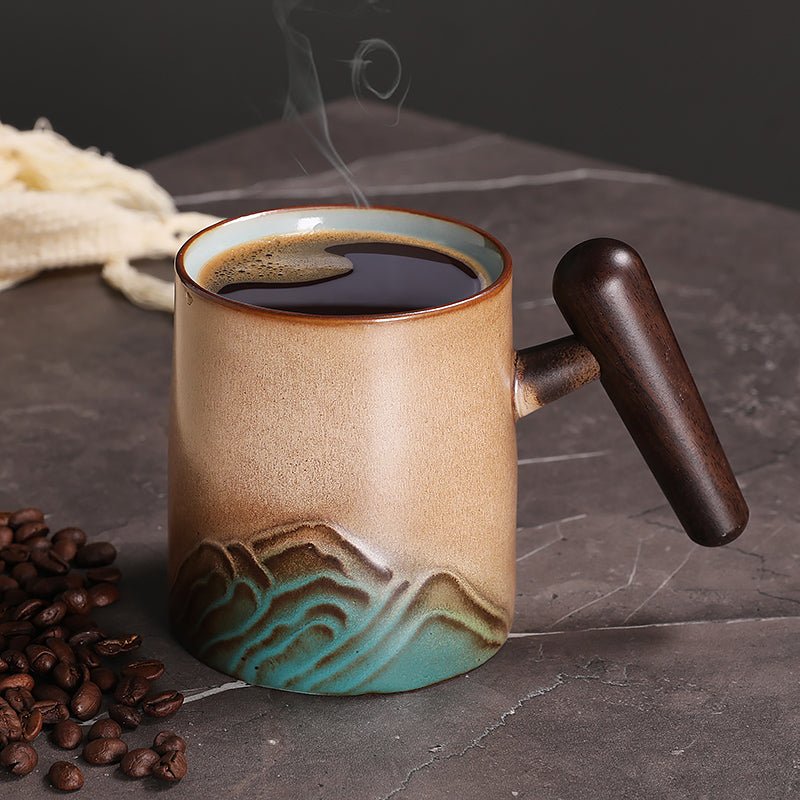
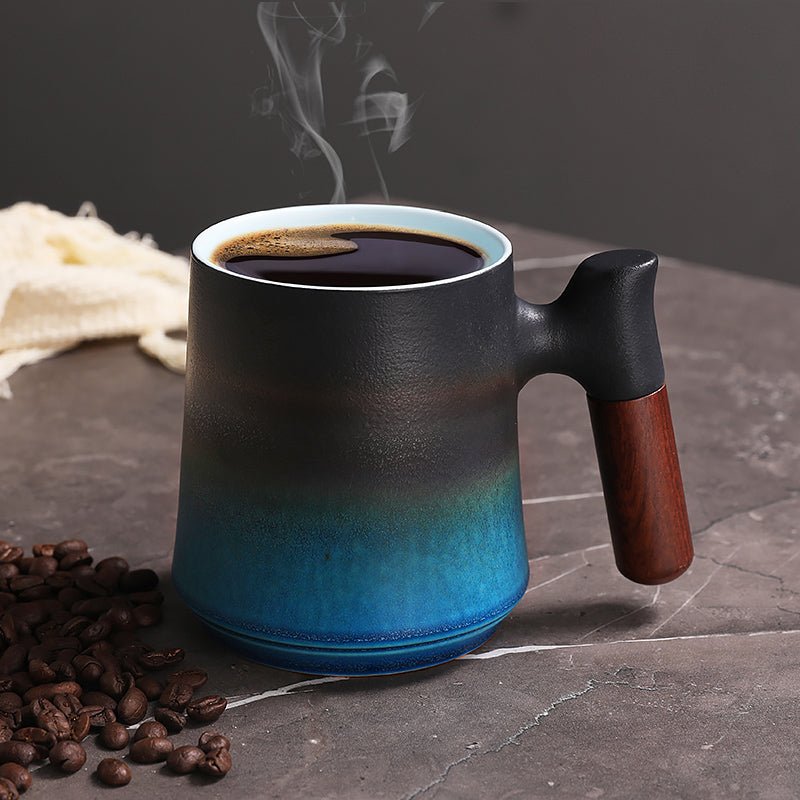
For shoppers comparing styles, our ceramic options like Landscape Coffee Tea Mug, The Gradient Coffee Tea Mug, and Retro Coffee Tea Cup are the kind of everyday mugs people usually reach for with a warmer because they are straightforward, desk-friendly, and easy to place down without drama. If you want to compare the full range first, start at our collection of all mugs.
Which mugs stay stable and heat evenly on a warmer?
The best match is usually a ceramic mug with a flat, solid base and enough contact area to sit fully on the warming plate. That is more important than a flashy shape. A mug can look great on a shelf and still be a poor match for a warmer if the base is rounded or too small.
We usually tell buyers to check three things:
- Base shape: flat is better than tapered, flared, or pedestal-style.
- Capacity: standard 10 oz, 11 oz, and 12 oz mugs are common desk choices because they are easier to balance on smaller warmer plates.
- Handle clearance: a mug should be easy to lift without nudging the warmer or catching the cord.
If you are deciding between sizes, our size guides can help you compare fit and daily use more carefully: 10 oz coffee mug size guide, 11 oz coffee mug size guide, and 12 ounce coffee mug buying guide. If you want the short version, smaller and straighter mugs tend to sit better than tall, top-heavy shapes.
There is also a limit to what a warmer can compensate for. A very thick ceramic mug may feel sturdy, but it can take longer to warm through. A very thin mug heats faster, but it can cool faster once you move it off the plate. The right choice depends on whether you care more about heat retention, presentation, or daily convenience.
What should you check on the warmer itself before buying?
Not all coffee mug warmers behave the same way. Some are meant for light, occasional use. Others are better for a desk where the cup stays put for hours. The difference is usually in the plate size, controls, and build quality.
- Plate diameter: a wider plate gives you more room for standard ceramic mugs and reduces the chance of tipping.
- Control layout: a simple on/off model is fine for many buyers, while others prefer temperature settings or an auto shutoff feature.
- Surface finish: smooth plates are easier to wipe clean after a spill, especially if you drink sweetened coffee or tea.
- Cord length: short cords can force awkward placement near a monitor, outlet strip, or kitchen edge.
- Heat consistency: the common failure mode is a warmer that heats unevenly, so one side of the mug stays cooler than the other.
We also pay attention to what the warmer is not good for. It is a poor fit for travel mugs, double-wall tumblers, and many insulated cups because those are designed to block heat transfer. That is a feature, not a flaw. If the mug is vacuum insulated, the warmer cannot easily do its job.
Another practical point: a warmer with a messy plate or a sticky coating becomes annoying fast. Sugary drinks can leave residue, and coffee drips can bake onto the surface if you ignore them. A quick wipe after use is usually enough to keep the warmer looking decent and functioning normally.
How do you use a mug warmer without making a mess?
The best routine is simple, and it avoids the usual small annoyances that make people stop using the warmer after a week. We handle plenty of mugs that get used on desk setups, and the pattern is clear: dryness and stability matter more than people expect.
- Start with a mug that has a flat, clean base.
- Make sure the underside is dry before you set it on the warmer.
- Place the mug centered on the plate instead of leaving it half on, half off.
- Wipe the warmer after spills, sugar drips, or condensation.
- Do not use cracked mugs, chipped bases, or cups that rock when you set them down.
If your mug goes through the dishwasher, let it dry fully before it returns to the warmer. Water trapped around the base can make the mug slip or leave rings on the plate. That is a small detail, but it is one of the common reasons a nice setup starts feeling sloppy.
We also recommend not treating a mug warmer like a storage pad. It is there to support a drink, not to hold pens, spoons, lids, or snack bowls. The simpler the setup, the better it usually works.
Which setup makes sense for a desk, kitchen counter, or gift?
The right setup depends on how the cup is actually used. A home office buyer cares about cord length and a mug that sits quietly near a keyboard. A kitchen buyer may care more about easy cleaning and a warmer that is simple to wipe down. A gift buyer usually wants something that feels useful without being fussy.
For a desk setup, we would choose a stable ceramic mug and a compact warmer with a straightforward control. For a kitchen counter, a slightly larger mug is fine if the base is still flat and easy to center. For gifting, pairing a reliable mug shape with a warmer-friendly style is safer than buying something sculptural and hard to balance.
This is also where presentation matters. A mug like The Gradient Coffee Tea Mug reads a little more modern, while Retro Coffee Tea Cup has a more nostalgic feel. If you want to browse beyond a single style, our full mug collection is the fastest way to compare options that can work with a warmer.
And if you are comparing mug capacity rather than appearance, use the size articles first. They are useful because the wrong size can make the whole warmer setup feel awkward, even if the warmer itself is fine. A mug that is too large can be clumsy on a small plate, while a very small cup can feel unstable.
Frequently asked questions
Do coffee mug warmers work with ceramic mugs?
Yes, ceramic mugs are usually the easiest match as long as the base is flat and stable. In practice, a simple ceramic mug is often a better choice than an insulated cup because it transfers heat more predictably. We still recommend checking the bottom shape before you buy.
Can I use a travel mug on a coffee mug warmer?
Usually no, especially if it is vacuum insulated or double-walled. Those mugs are designed to keep heat from moving through the walls, which is great for portability but poor for a warmer plate. If you want heat retention on the move, a travel mug is the better product, not a warmer.
What size mug works best with a warmer?
Most buyers do best with standard everyday sizes such as 10 oz, 11 oz, or 12 oz. Those sizes tend to be easier to balance and less likely to overhang a compact warmer plate. The shape still matters more than the number on the label.
Do mug warmers reheat coffee from cold?
They can help warm a drink that has started to cool, but they are not the fastest way to bring cold coffee back up to serving temperature. If the coffee is already cold, a microwave is usually more effective. A warmer is mainly for holding a hot drink at a better sipping temperature.
What should I avoid if I want the warmer to last?
Avoid cracked mugs, wet bottoms, and sugary spills left on the plate for too long. We also would not place paper cups, plastic containers, or unstable mugs on one and expect consistent results. A clean, flat-bottom ceramic mug is the most reliable day-to-day choice.
If you are ready to narrow it down, start with the mug shape first, then check the plate size, then compare your favorite styles in our mug collection. That order saves you from buying a warmer that looks right but does not fit the cup you actually use every day.
Read more
NASA Coffee Mug Buying Guide: What to Check Before You Buy
A practical guide to choosing a NASA coffee mug that looks good, feels comfortable in hand, and still holds up on a real desk or kitchen sink. We cover size, print durability, care, and the trade-o...
Leer más
Wood Mug Buying Guide for Daily Coffee and Tea Use
A practical guide to choosing a wood mug for daily coffee, tea, and desk use. We cover the trade-offs, what to check before buying, and which CoffeifyMug options fit different routines.
Leer más
Dejar un comentario
Este sitio está protegido por hCaptcha y se aplican la Política de privacidad de hCaptcha y los Términos del servicio.