
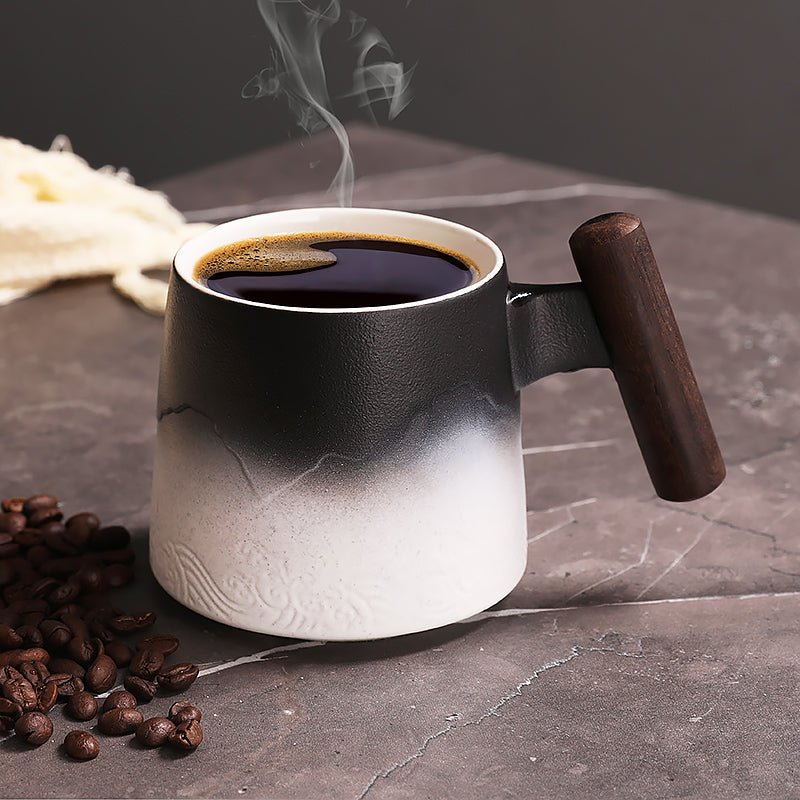
Coffee Mug Size Guide: How to Choose the Right Fit Before Buying
Reading time: about 8 minutes
A mug can look right on the shelf and still feel wrong once the first pour goes in. A 12-ounce cup that seems roomy empty can end up too close to the rim after a full drip brew, cream, and a splash of milk.
In our store, we treat coffee mug size as a fit question, not just a volume number. The shape, handle, wall thickness, and fill level matter as much as the ounces on the listing. That is why we usually ask what the drink is, how fast you finish it, and where the mug will live: a kitchen counter, an office desk, or a gift shelf.
If you want a baseline first, our plain-English guides to average coffee mug size and standard coffee mug size are the cleanest starting points before you compare actual mugs.
What does coffee mug size really change?
Size changes more than capacity. A wider mug exposes more surface area, so a hot drink can lose heat faster than it would in a taller, narrower shape. A heavier stoneware body feels more solid in the hand, but it also adds weight when the mug is full. And a mug with a tight handle can feel small even if the capacity is generous.
Here is what we watch for when we handle mugs in our store:
- Heat retention: A smaller opening usually helps a drink stay hot a little longer than a wide bowl shape.
- Headroom: If you pour to the brim, you have less room for cream, foam, or a safe carry to the couch.
- Comfort: Two-finger handle clearance feels better than a cramped grip, especially with a full mug.
- Storage: Tall mugs and oversized handles can be awkward on short cabinet shelves or crowded office racks.
- Machine fit: A mug may be the right ounce count but still sit poorly under a single-serve brewer or on a mug warmer plate.
A useful rule: the printed ounce number is only a starting point. The real experience is shaped by the mug's interior curve, rim width, and how much usable space remains once the drink is actually poured.
Which coffee mug size matches your drink?
We usually break the common sizes into practical use cases rather than treating every mug as interchangeable. If you are comparing the two most common choices, our dedicated guides to the 10 oz coffee mug and 11 oz coffee mug explain the differences buyers notice after the first few uses.
| Approximate size | Best for | What it does well | Trade-off |
|---|---|---|---|
| 8 oz | Espresso drinks, smaller drip pours, tea | Compact, easy to finish while the drink is still hot | Not enough room for large milk-based drinks or a generous top-off |
| 10 oz | Daily coffee, smaller home brews, controlled portions | Balanced size that feels useful without being bulky | Can feel tight if you like cream, foam, or a bigger pour |
| 11 oz | Gift mugs, office mugs, everyday drip coffee | Familiar size with enough room for a standard serving | Still not a true large mug if you want a lot of extra volume |
| 12-14 oz | Large coffee, hot chocolate, tea with room to spare | Less likely to feel cramped when you add milk or whipped topping | Can feel oversized in smaller hands and on tight shelves |
| 16 oz+ | Big desk drinks, second pours, extra-large servings | Maximum capacity for people who want one mug and one refill | Often too heavy, too wide, or too cold by the last third of the drink |
For most shoppers, the middle of the range wins. A 10 oz or 11 oz mug gives you enough room for a typical morning cup without turning into a bulky bowl. If you are shopping for a housewarming or a work gift, 11 oz is often the least risky choice because it feels familiar to most buyers.
Is a bigger mug always better?
No. Bigger capacity helps in some situations and hurts in others. A larger mug gives you more room for cream, foam, or a second pour, but it also gives the drink more surface area. That can mean faster cooling, especially if the mug has a wide mouth and thin walls.
We see the same trade-off over and over: shoppers want more capacity, but they do not want a mug that feels heavy, bulky, or lukewarm before the last sip.
A larger mug is useful if you:
- drink coffee slowly at a desk and want room for a long pour
- add a lot of milk, oat milk, foam, or toppings
- prefer fewer refills during a long work session
- make hot chocolate, chai, or tea in generous portions
A smaller or medium mug is usually better if you:
- drink black coffee and want it hot from first sip to last
- have small hands and dislike a bulky handle
- store mugs in a crowded cabinet or narrow shelf
- use a mug warmer with a limited plate size
So no, bigger is not automatically better. For a lot of buyers, the best coffee mug size is the one that keeps the drink pleasant for the time you actually take to finish it.
What should you check besides ounces?
Ounces matter, but they do not tell the whole story. A good mug can still be frustrating if the handle is awkward, the base wobbles, or the interior shape steals usable space. We also pay attention to the finish, because a mug that looks polished in photos can show defects once it is on the counter and in the dishwasher.
Check these details before you buy:
- Rim width: A wider rim can make a mug feel bigger than the number suggests.
- Handle clearance: Make sure two fingers fit comfortably if you carry coffee with one hand.
- Material: Stoneware feels sturdy and a little heavier; porcelain usually feels lighter at the same capacity; ceramic covers a broad range of finishes and weights.
- Wall thickness: Thick walls usually feel more substantial, but they can also add weight and take up part of the usable interior.
- Care instructions: If the mug has metallic trim, specialty decals, or delicate printing, do not assume it is microwave-safe.
- Common defect modes: Watch for rim chips, glaze pinholes, hairline crazing, a crooked handle join, or a base that rocks on a flat counter.
Dishwasher cycles are another real-world test. A mug that survives a few washes without dulling, cracking, or showing a weak handle join is usually a better daily pick than one that only looks good on day one. If you want a mug for everyday use, choose a finish that can handle repeat washing and the occasional knock against a sink or rack.
Which coffee mug size works best for home, office, and gifting?
The right size changes depending on where the mug will be used. At home, people usually want comfort and heat. At work, they want stability and enough volume to avoid constant refills. For gifts, the safer choice is usually the size that feels familiar the moment it is unboxed.
- Home kitchen: 10 oz or 11 oz is a strong default for daily drip coffee and tea.
- Office desk: 11 oz or 12 oz works well if you want a practical mug that still fits beside a keyboard and notebook.
- Gift giving: 11 oz is the easiest all-around choice because it suits most routines without feeling extreme in either direction.
- Milk-heavy drinks: 12-14 oz gives more room for lattes, cocoa, and topped drinks.
- Small-batch espresso drinks: 8 oz makes more sense if you want a compact cup and do not need extra volume.
If you are comparing styles now, browse our collection or jump straight to all products to compare shapes, handles, and capacities side by side. Size alone does not tell the whole story, but it does narrow the field quickly.
For buyers who are still split between two common sizes, our related post on normal coffee mug size can help if you want the most familiar everyday fit.
Frequently asked questions
Is 11 oz the standard coffee mug size?
It is one of the most common retail sizes, but there is no single universal standard. An 11 oz mug usually feels like a normal everyday cup for drip coffee or tea, which is why it shows up so often in gift sets and branded drinkware. If you want a familiar default, it is a safe place to start.
How full should I fill a coffee mug?
Leave some headspace, especially for hot drinks. A mug filled to the rim is harder to carry, more likely to slosh, and less practical if you add milk or foam. For daily use, we prefer a fill level that leaves enough room for a steady walk from the kitchen to the desk.
Is a 10 oz mug too small for daily coffee?
Not at all if you usually drink black coffee or a smaller pour. A 10 oz mug can be an excellent daily size because it stays manageable in the hand and does not feel oversized on a counter or shelf. It becomes limiting only if you like large milk-based drinks or want a mug that doubles as a big cocoa cup.
What mug size is best for lattes or hot chocolate?
For drinks with milk, foam, or toppings, 12-14 oz is usually the more comfortable range. It gives you room for the drink and the headspace you need to carry it safely. If you want a very large serving, 16 oz can work, but it is not ideal if you want the drink to stay hot for a long stretch.
Should I choose stoneware or porcelain for a coffee mug?
Material affects feel more than capacity. Stoneware usually feels heavier and sturdier, while porcelain tends to feel lighter at the same size. If you want a mug that feels solid in the hand, stoneware is often a better fit; if you prefer a lighter daily cup, porcelain may suit you better.
If you are still narrowing it down, compare the mug's stated capacity, handle comfort, and care instructions, then use our collection to line up the sizes that actually fit your routine.
More from our blog
Read more
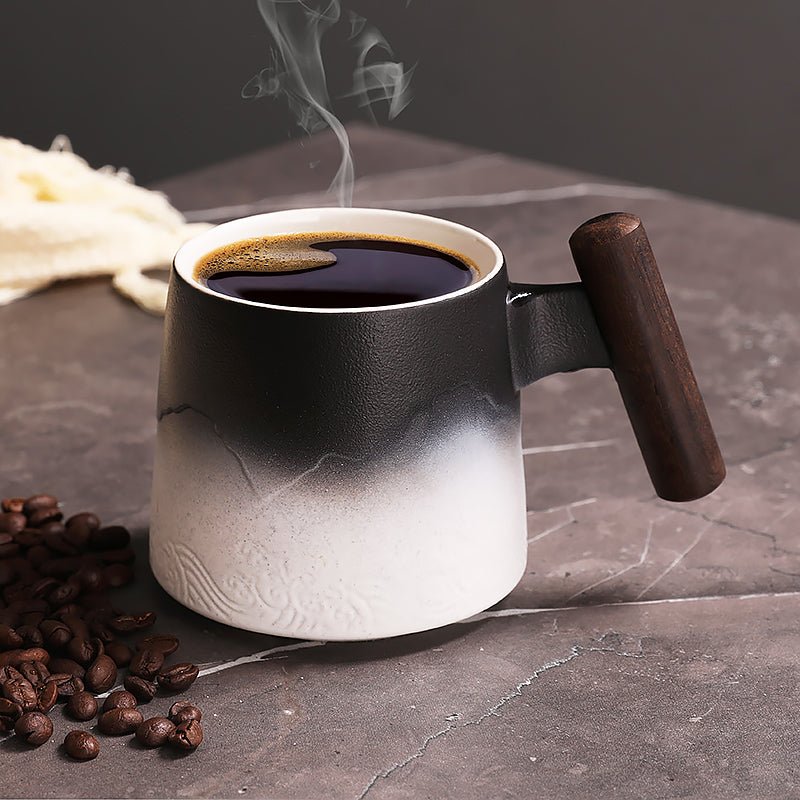
14 Ounce Coffee Mugs: Size, Fit, and Buying Guide
A practical guide to 14 ounce coffee mugs with size, material, and fit details that matter in daily use. We cover where this size works well, where it falls short, and what to check before you buy.
Leer más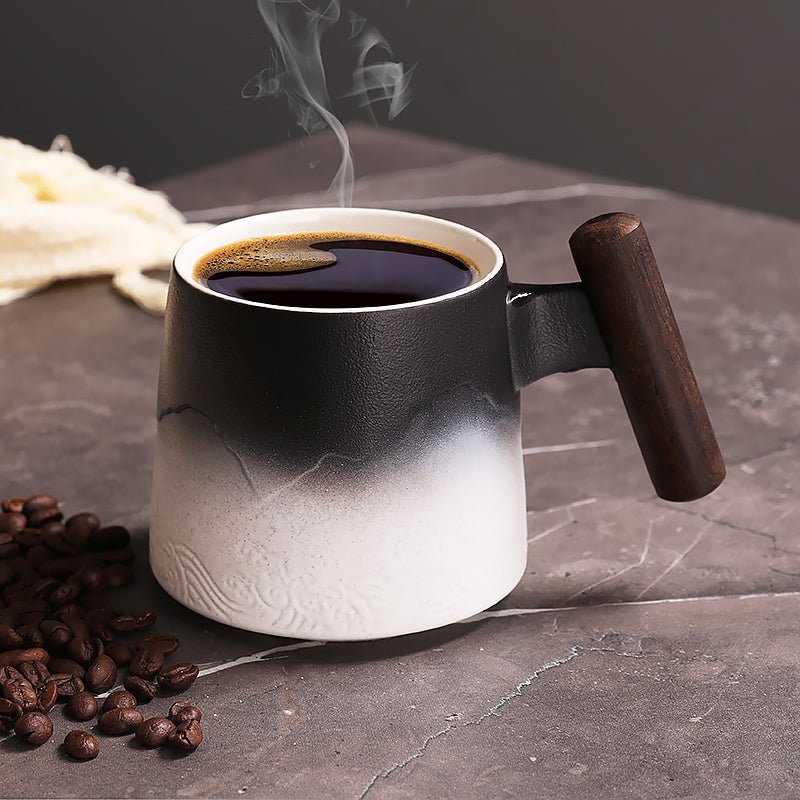
Coffee Mugs for Women: How to Choose the Right Size and Finish
A practical buyer’s guide to coffee mugs for women, with real size, shape, material, and care trade-offs. Use it to narrow down a mug that feels right at the desk, at home, or as a gift.
Leer más
Dejar un comentario
Este sitio está protegido por hCaptcha y se aplican la Política de privacidad de hCaptcha y los Términos del servicio.