
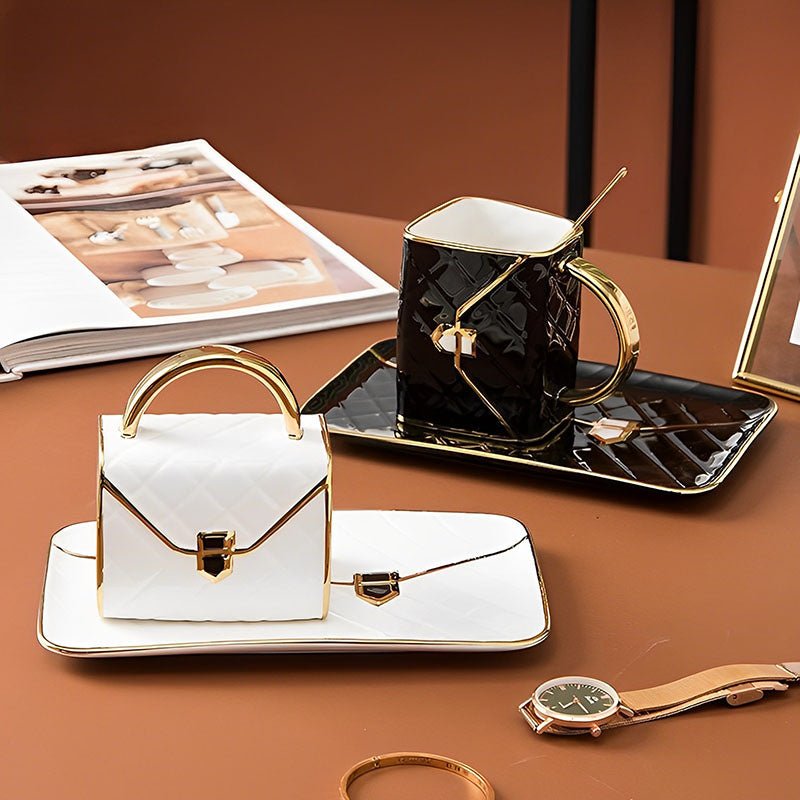
Coffee Mug Shelf Display Ideas for Kitchens That Stay Clear
Reading time: about 9 minutes
A mug shelf looks tidy right up until the first oversized handle clips the cabinet above it or the front row turns into a tight line of cups that are hard to grab. We see this a lot in kitchens and office break areas: the shelf is supposed to display the mugs, but it also has to work for daily use.
That is the difference between a nice photo and a shelf that stays useful after the first busy week. A good coffee mug shelf display should make the room feel organized, keep the mugs easy to reach, and avoid the little frustrations that show up fast: bumped handles, water marks on wood, dust on open shelving, and cups that wobble because the base is slightly uneven.
In our store, we look at mug display the same way shoppers do. The question is not just what looks good. It is what fits, what gets used, and what still feels clean after a few dishwasher cycles and a few rushed mornings.
What should a coffee mug shelf display solve first?
Before you choose colors or a theme, decide what the shelf has to do. A display shelf in a kitchen is not the same as a decorative shelf in a dining room. If the mugs are for everyday coffee, convenience matters more than perfect symmetry. If the shelf is mostly for show, spacing and color balance become more important.
We usually break it down into three practical jobs:
- Daily-use storage: keep the mugs easy to grab, easy to return, and easy to wash without rearranging the whole shelf.
- Visual display: use shape, height, and color to make the shelf look intentional instead of crowded.
- Gift display: make the mugs feel special, which means fewer pieces on the shelf and more open space around each one.
If you only have one shelf, simplicity wins. A shelf with six mugs that all clear the underside of the cabinet and leave room for the handle is better than a crowded row of ten that looks full but feels annoying to use.
Which mug shapes work best on an open shelf?
Shape matters more than most shoppers expect. A tall mug can make a shelf feel cleaner because it gives the eye a vertical line. A shorter, wider mug can feel sturdier and more casual, but it also eats up shelf depth faster. Handle placement matters too. If the handle sticks out too far, the shelf starts to look messy even when the mugs are technically aligned.
That is why tall profiles are often the easiest place to start. Our White Golden Waves Tall Coffee Tea Mug works well if you want a lighter, brighter look on an open shelf. It gives the display a clean vertical shape without needing a lot of visual noise around it.
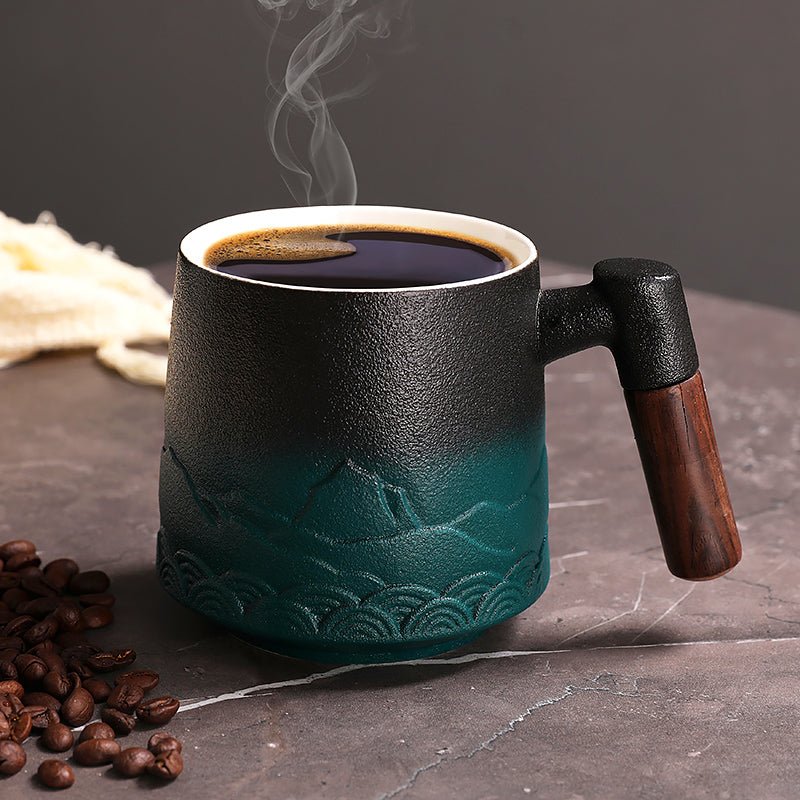
If your shelf leans more natural or grounded, the Mountain Tall Coffee Tea Mug fits that kind of display better. It reads well in kitchens with wood shelves, muted counters, or a coffee station that already has a calmer color palette.
For a seasonal shelf, the Christmas Coffee Tea Mug is an easy swap. Seasonal mugs are best used as accents, not as the whole display, because they can make a shelf look dated if you leave them out year-round.
The trade-offs are real. Tall mugs need more vertical clearance. Wider mugs are less subtle. Highly detailed prints can look busy if you line up too many of them together. In other words, the best mug for a shelf is not always the most decorative one. It is the one that still looks good from two feet away and still clears the shelf above it.
If you want to compare more shapes before you commit, our all mugs collection is the easiest place to start. You can compare profiles side by side instead of guessing from a single product photo.
How do you keep the display usable every day?
The cleanest shelf displays are usually the ones that are easiest to maintain. That sounds obvious, but a lot of shelves fail because they are arranged like decor and used like storage. The result is a pretty first impression and a frustrating second one.
Here is the approach we recommend in real kitchens:
- Put the mugs you use most at the easiest reach height.
- Keep heavier mugs on a lower shelf so they are less awkward to lift down with one hand.
- Leave space between handles so they do not knock each other when you pull one out.
- Turn the front of the mug toward the room if the print or glaze is part of the display.
- Let mugs dry fully before placing them back on wood shelves, especially if the shelf finish is sensitive to water marks.
On ceramic mugs, the wear points we notice most are the rim, the handle base, and the glazed surface near the bottom edge. That is where small chips and hairline cracks tend to show first if a mug gets banged against another cup or set down too hard. If a piece already has a wobble, do not give it the front row. It will look off and it will be more likely to tip.
Dishwasher use is fine for many everyday mugs, but a shelf display should still account for daily handling. If a mug is going to be washed often, dried often, and put back on an open shelf, it should be one you actually want to live with. That is why we like display pieces that still feel practical after a routine week, not just on the day they arrive.
One more honest limitation: a coffee mug shelf display is not the best setup for oversized travel mugs, insulated tumblers, or wide cups that only clear the shelf above by a few millimeters. Those belong in deeper storage or on a counter station where the shape makes sense.
What shelf setups work best in real kitchens?
Open shelving, narrow wall ledges, and under-cabinet rails all behave differently. A mug that looks balanced on a wide shelf can feel cramped on a shallow ledge. This is why our team looks at the shelf itself before we think about style. If the shelf is wrong, even the right mug will look crowded.
If you are still deciding how to build the shelf, our Coffee Mug Shelf Guide: Fit, Materials, and Display Tips is a useful next read. For layout ideas in smaller rooms, the Coffee Mug Shelf Display Ideas for Real Kitchens and Small Spaces covers the room-planning side in more detail.
| Shelf setup | Best use | Watch out for |
|---|---|---|
| Open kitchen shelf | Everyday mugs, clean lines, easy access | Dust buildup and crowded handles |
| Wall ledge above a coffee station | Decorative mugs and a small rotating display | Limited height under upper cabinets |
| Under-cabinet shelf or rail | Light, narrow mugs with strong handle clearance | Not ideal for tall mugs or bulky shapes |
| Office shelf | One or two personal mugs plus a gift-ready piece | Looks messy fast if the shelf also holds supplies |
The table above is the practical version of the decision. If the shelf is shallow, do not choose a mug only because the print is pretty. If the shelf is high and visible, then the mug silhouette matters more. If the shelf is used by several people, clarity wins over a curated look.
What mistakes make a shelf look messy fast?
Most bad shelf displays are not a style problem. They are a spacing problem. The shelf gets filled because there is room for more mugs, and then the handles start colliding, the front row loses its shape, and the whole display looks accidental.
- Mixing very tall mugs with short mugs without leaving visual breathing room.
- Pushing cups so far back that the front row blocks the one behind it.
- Using chipped, stained, or wobbly mugs as the display front line.
- Displaying delicate seasonal mugs in a high-traffic spot all year.
- Ignoring the finish of the shelf itself, especially if it shows water spots or scratches easily.
We also see people overcommit to one style. A wall of similar mugs can look neat in a catalog, but in a real kitchen it can feel flat. A better display usually mixes one strong shape with a little empty space. That is why a single accent mug often does more for the shelf than three more pieces squeezed into the same row.
If your shelf is mainly for display, keep the best-looking pieces in front and rotate the rest. If your shelf is mainly for storage, let function lead. The shelf should support your routine, not force you to work around it.
Good shelf displays do not try to make every mug do the same job. The daily mug, the favorite gift mug, and the seasonal mug all belong on the shelf differently. Treat them that way and the display stays easier to use.
Frequently asked questions
How many mugs should be on one coffee mug shelf display?
Start with fewer mugs than you think you need. If the shelf is mostly decorative, leave enough space for each mug to read as its own shape. If the shelf is for daily use, fit the mugs to your routine first and let the spacing follow from that.
Should mug handles face in or out on a shelf?
For display, handles facing out usually look cleaner because the silhouette is easier to read. For a crowded shelf, alternating handle direction can reduce bulk and make it easier to slide a cup out without hitting the one next to it. The main rule is simple: do not let handles collide.
Can I use everyday mugs in an open shelf display?
Yes. In most homes, that is the most practical setup. Put the mugs you actually use on the easiest shelf to reach, and keep the more delicate or seasonal pieces higher up where they are less exposed.
What kind of mug works best on a small shelf?
A taller, narrower mug usually gives a cleaner look on a small shelf because it takes up less visual width. The trade-off is that it needs more headroom, so check the clearance above the mug before you buy.
How do I keep shelf mugs from getting dusty?
Use fewer pieces and keep the row easy to remove for cleaning. Open shelves will collect dust faster than closed cabinets, so choose mugs you are willing to wipe occasionally. A shelf that is easy to clean will stay attractive much longer than one packed full of hard-to-reach cups.
If your shelf is shallow or your mugs are oversized, start with three checks: shelf depth, handle clearance, and how often the mug will actually be used. Then browse our all mugs collection and compare the taller profiles first if you want a cleaner coffee mug shelf display that still works on a busy morning.
More from our blog
Read more
Coffee Mug Humor: How to Pick a Funny Mug People Will Use
Funny mugs work best when the joke is readable, the size fits daily use, and the finish can handle real kitchen cleanup. We break down what to check before buying and which styles our store carries.
Leer más
Beautiful Coffee Mugs for Everyday Use: What to Choose
A practical guide to beautiful coffee mugs that still work on a real kitchen counter, at a desk, or as a gift. We compare shapes, finishes, and everyday trade-offs so you can pick one that looks go...
Leer más
Dejar un comentario
Este sitio está protegido por hCaptcha y se aplican la Política de privacidad de hCaptcha y los Términos del servicio.