
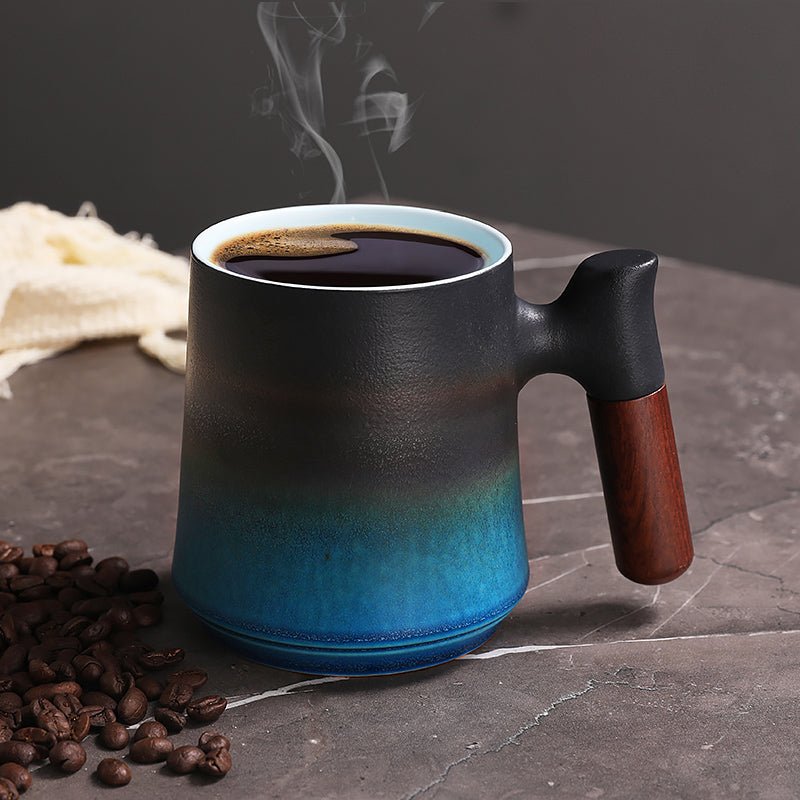
Coffee Mug Set of 8: What to Check Before You Buy
Reading time: about 9 minutes
Eight matching mugs solve a very specific problem: the cabinet stops fighting back when guests arrive, the office break room looks organized, and nobody has to drink out of the one chipped cup left in the back row. A coffee mug set of 8 makes sense when you want enough pieces for daily use, but not so many that they become dead weight in storage.
In our store, we see the same buying pattern over and over. People start by wanting a simple set, then realize the details matter more than the count. Handle comfort, rim shape, glaze quality, and how the mugs sit on a shelf will affect your experience long after the box is opened. If you want to compare styles first, start with our full mug collection, then look at a clean everyday example like The Gradient Coffee Tea Mug.
Who actually needs a coffee mug set of 8?
A coffee mug set of 8 works best for households and spaces that need matching drinkware on repeat. It is a practical size for a family that drinks coffee, tea, or cocoa every day, and it also fits small offices, short-term rentals, and gifting situations where consistency matters.
We usually recommend eight mugs to buyers who want a balance between capacity and cabinet space. Six can feel too tight once guests show up. Twelve can be overkill if your shelves are already full. Eight is the middle ground that covers normal use without taking over the kitchen.
- Best for: families, shared kitchens, office kitchens, guest-ready homes, and registry gifts.
- Not ideal for: espresso-only drinkers, people with very small cabinets, or shoppers who want travel mugs instead of home mugs.
- Also a fit for: buyers replacing mismatched mugs and wanting one uniform look on open shelving.
If your household mostly drinks smaller pours, our 8 Ounce Coffee Mugs: How to Choose the Right Small Mug article is a useful companion. It helps you decide whether a smaller capacity will feel better for your routine than a larger everyday cup.
What should you check before you buy?
The mug count is the easy part. The real value is in the details you feel every morning. We check the same things a shopper notices after the box is opened, then again after the first dishwasher cycle.
- Capacity: A mug that is too small forces a second pour. A mug that is too large can feel heavy when filled. Pick the size that matches your normal drink, not the biggest drink you make once a week.
- Handle clearance: You want enough room for a comfortable grip. Tight handles get annoying fast, especially if you drink coffee before breakfast.
- Rim shape: A smooth, even rim matters more than people expect. It changes the sip and is one of the first places a rough finish shows up.
- Base stability: A mug should sit flat on the counter. A wobbly base is a small defect that turns into a daily nuisance.
- Glaze quality: Look for even coverage, especially inside the cup and around the handle join. Thin spots and pinholes can make a set feel unfinished.
- Care routine: If you want low-friction cleanup, confirm the care instructions before buying. A mug set that needs handwashing may still be worth it, but only if you are buying for the right reason.
For buyers comparing everyday capacity more closely, our 8 oz Coffee Mug: What to Check Before You Buy guide goes deeper into size and comfort. That is useful if your first question is not the style of the mug, but the amount it should hold.
Ceramic, stoneware, or something else?
Most buyers shopping for a coffee mug set of 8 end up choosing ceramic or stoneware. Those materials feel familiar, clean up well, and work for everyday kitchen use. They also give you the weight many people want in a home mug. A lighter mug can feel easier to lift, but it may not have the same solid hand feel.
There is a trade-off, though. Ceramic and stoneware can chip if they are knocked into a sink or stacked carelessly. That is normal wear for this category, not a defect by itself. If you want mugs for camping, carrying between rooms, or tossing into a bag, a home mug set is not the right tool.
We also see buyers compare glazed ceramic finishes with more decorative styles. A polished glaze is easier to wipe clean. A textured surface may look more interesting on open shelves, but it can hold onto fingerprints and dry water marks more visibly. For buyers who want a fuller breakdown of this category, our Ceramic Coffee Mug Set Buying Guide for Everyday Use covers the practical differences we see in real kitchens.
| Material | What it feels like | Common trade-off |
|---|---|---|
| Ceramic | Balanced weight, familiar daily use | Can chip if handled roughly |
| Stoneware | Heavier, sturdy hand feel | Takes up more shelf weight and can be bulkier |
| Lightweight alternatives | Easy to lift and move | Often less substantial for home coffee service |
If you love matching mugs but hate the idea of handwashing a fragile piece, stay with a straightforward ceramic set and skip decorative features that make care harder than it needs to be. Metallic accents, for example, can rule out microwave use, so read the listing carefully before you buy.
Which styles work best for daily use?
Style matters because it changes how the mug fits your hand, shelf, and table. A set can be attractive and still be the wrong pick if the handles are awkward or the cups feel cramped in storage. Here is how we think about three styles from our store.
| Style | Best use | Trade-off |
|---|---|---|
| The Gradient Coffee Tea Mug | Clean everyday use with a modern look | Works best if you like a simple, coordinated table |
| Retro Coffee Tea Cup | Homes that want a little character on the shelf | More visual personality, so it may not suit a very minimal kitchen |
| Ball Handled Coffee Tea Mug | Shoppers who care about grip and a distinct handle profile | The shape can take more cabinet space than a slimmer mug |
A coffee mug set of 8 is not the best choice if your top priority is compact stacking. Rounder silhouettes and oversized handles look good, but they can eat shelf space. If your cabinet is already crowded, pick a shape that nests cleanly and sits upright without tipping.
We often tell buyers to compare a set of 8 against a set of 6 before deciding. If you are still unsure about the sweet spot, our Coffee Mug Set 6: How to Choose the Right Everyday Set article is useful because it shows where a smaller set makes more sense.
How do you keep a set of 8 working on real kitchen shelves?
The nicest mug in the world is still frustrating if it does not fit the life around it. We think about shelf height, dishwasher loading, and how fast people actually grab cups in the morning.
- Check your shelf depth: A set of 8 should not force you to stack cups too tightly or wedge them behind other dishes.
- Think about stacking: If the mugs are stackable, you save space. If not, leave room for a single row and avoid crowding the handles.
- Plan for dishwasher loading: Two mugs that touch inside the dishwasher can trap water spots or chip along the rim if the rack is crowded.
- Match the set to your drink routine: Coffee, tea, and hot chocolate all put different demands on the mug. A wider cup may be better for tea bags and cream, while a more compact mug can feel right for black coffee.
In our experience, break rooms and guest kitchens are the toughest environments for mugs. They get used by different people, put away in a hurry, and washed more aggressively than a single-person home kitchen. That is why we pay attention to the foot ring, the balance point, and how well the glaze finishes around the bottom edge.
What do we look for in our store before a mug set earns shelf space?
We look at mugs the way a customer will use them. That means holding them with one hand, setting them down on a real counter, and checking how the finish behaves after normal use rather than in a perfect photo setup.
The most common issues we watch for are practical, not dramatic. A handle can be slightly off-center and still function, but it feels wrong in the hand. A base can be technically flat and still have a wobble that shows up on a smooth countertop. A glaze can look fine at first glance and still show pinholes or uneven color once the light hits it from the side.
We also pay attention to consistency across all eight pieces. If one mug looks noticeably different from the others, the set loses the clean, matched feeling people usually want. Small variation can happen with glazed drinkware, especially with more decorative finishes, but there is a difference between character and inconsistency. Buyers should expect the first and the last cup in the box to feel like part of the same set.
For a coffee mug set of 8, the right question is not just “Does it look good?” It is “Will this still feel good after a month of daily use, repeated washes, and a crowded counter?”
That is the standard we use when we choose products for our store. It is also the standard you should use before committing to a set that will live on your kitchen shelf every day.
Frequently asked questions
Is a coffee mug set of 8 enough for a family?
Yes, for many families it is the right balance. Eight mugs usually covers daily use plus a few guests without forcing you to buy a larger set that takes over the cabinet. If your household entertains often, eight is usually more practical than six.
What size coffee mug is best for everyday use?
That depends on what you actually drink. Smaller cups work well for black coffee and tea, while larger mugs suit milk-based drinks or someone who likes a bigger pour. If you want to compare size more carefully, read our 8 oz guide before buying.
Are ceramic mugs better than glass or stainless steel for home use?
For most kitchens, ceramic is the easiest everyday choice because it feels balanced and fits casual coffee service well. Glass can be attractive but usually feels less forgiving in a busy kitchen. Stainless steel is better for portability, not for a classic mug-on-the-counter setup.
How do I stop mugs from chipping in storage?
Give each mug enough space so the handles do not knock together. Avoid overstacking, and do not force them into a cabinet opening that is too tight. A stable shelf and a careful dishwasher load do more for longevity than most people expect.
Should I buy a coffee mug set of 8 if I only drink one cup a day?
Yes, if you want matched mugs for guests or a consistent kitchen setup. No, if you are short on cabinet space and do not need extras. In that case, a smaller set or a single favorite mug may be the better purchase.
If you are ready to compare shapes and finishes, start with our full mug collection and narrow it down by handle style, cabinet space, and how you actually clean your dishes.
Read more
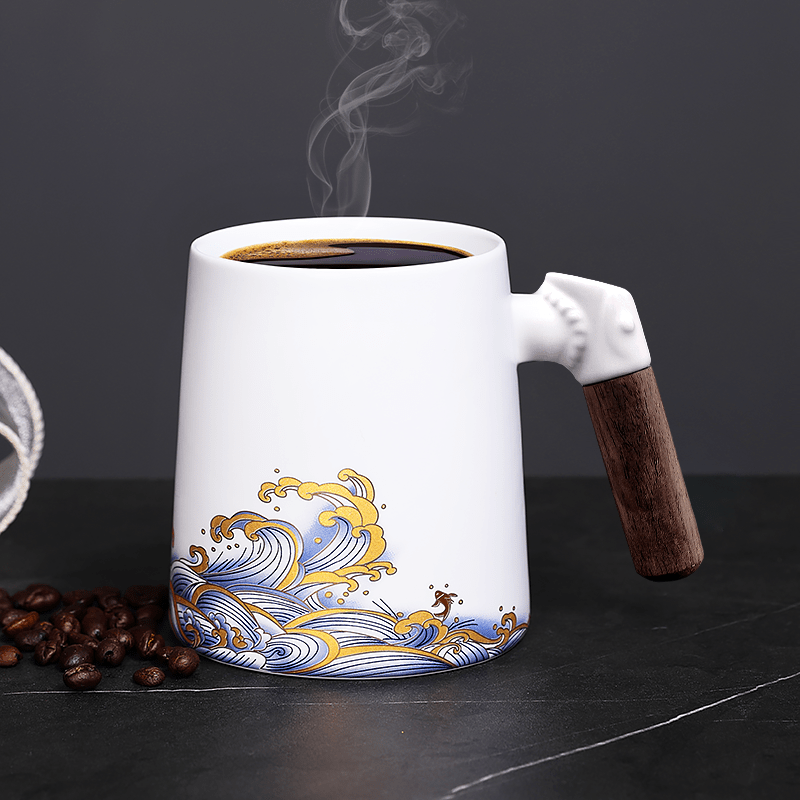
Black and White Coffee Mugs: How to Choose the Right One
Practical guidance for shoppers comparing black and white coffee mugs, including finish, size, material, and care trade-offs. We also point out which styles work best on a kitchen counter, office d...
Leer más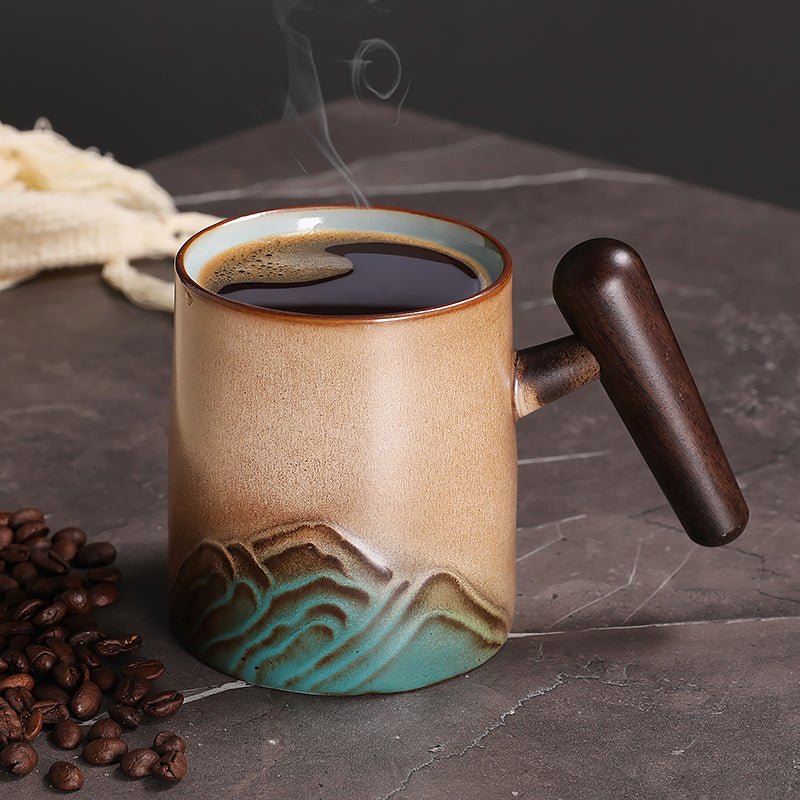
Big Mug of Coffee: How to Choose the Right Large Mug for Daily Use
A big mug of coffee should feel comfortable full, fit your routine, and survive daily use. Here is how to compare size, material, and care before you buy.
Leer más
Dejar un comentario
Este sitio está protegido por hCaptcha y se aplican la Política de privacidad de hCaptcha y los Términos del servicio.