
Coffee Mug Set of 4 Buying Guide for Daily Use
Reading time: about 9 minutes
A four-mug shelf looks simple until the first morning rush. One mug feels too small, another handle digs into your fingers, and the set that looked good online turns awkward once it hits a real counter, a sink, and a dishwasher cycle.
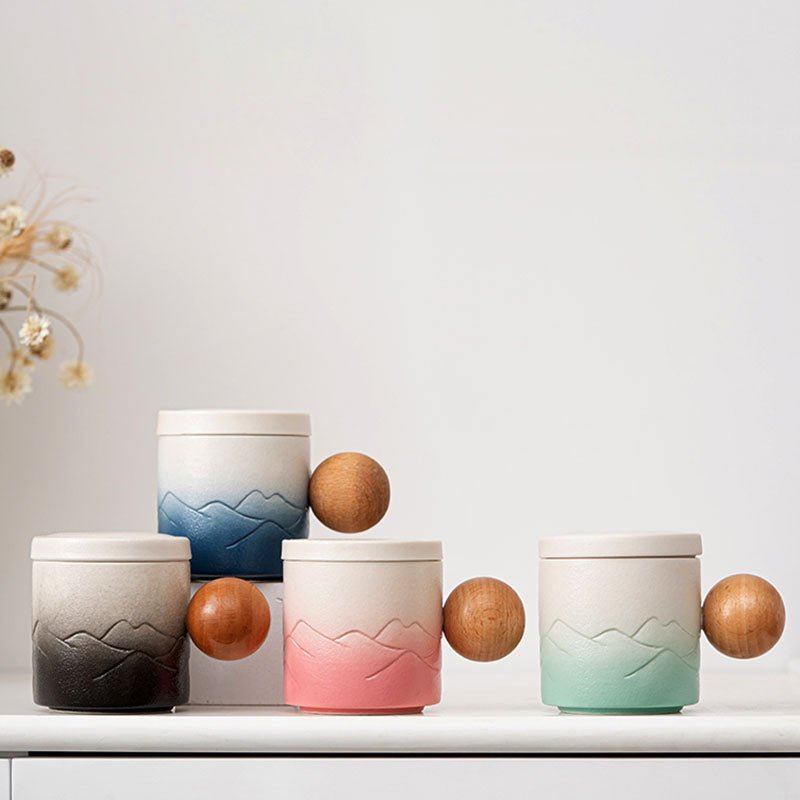
That is the point where a coffee mug set of 4 either earns its place or becomes clutter. In our store, we look at mug sets the same way shoppers do: how they feel in the hand, how they stack, how they clean up, and whether they still look good after regular use. If you want a quick starting point, we keep a mixed selection in our full collection, and a few designs that work well for daily use include the Mountain Sea II Coffee Tea Mug with Wooden Handle, The Cloud Coffee Tea Mug Wooden Handle, and The Rock Coffee Tea Mug.
If you want a broader buying checklist before choosing a set, our post on Coffee Mug Set of 4: What to Check Before You Buy covers the basics. For shoppers comparing everyday ceramic options, Ceramic Coffee Mug Set Buying Guide for Everyday Use is also worth a look.
Why does a coffee mug set of 4 make sense for daily use?
A four-piece set usually hits the sweet spot for a small household, a couple who hosts now and then, or an office break area that needs a few reliable cups without taking over the cabinet. It is enough for everyday rotation, but not so many that the mugs start collecting dust.
We like four-piece sets for a simple reason: they are easy to manage. You can keep one in use, one drying, one clean, and one waiting on the shelf. That rhythm matters more than people expect. A set that is too large often creates overflow in the cupboard, while a set that is too small means you are always scrambling when guests show up.
A coffee mug set of 4 also works well as a gift because it feels complete without being excessive. It is a practical housewarming buy, an office refresh, or a kitchen upgrade that does not require rethinking your whole shelf layout.
What should you check before ordering a set?
The safest way to buy is to treat the mug itself, not the photos, as the product. A good-looking set can still fail on comfort, finish, or cleanup. Here is what we check first in our store when we compare mug sets for real use:
| What to check | Why it matters | What usually goes wrong |
|---|---|---|
| Handle shape | It should leave room for two fingers and feel stable when full | Handles that are too tight or too thin can feel awkward quickly |
| Rim finish | A smooth rim makes hot drinks more pleasant to sip | Rough glaze or a slightly chipped edge is a common return reason |
| Base stability | A flat, even base sits securely on counters and trays | Wobbly mugs are annoying and can feel cheap even if the design is attractive |
| Wall thickness | Thicker ceramic usually feels sturdier and holds heat longer | Very thin walls can cool too quickly and feel fragile |
| Care routine | Wooden handles, matte finishes, and hand-painted details often need gentler washing | Soaking, rough sponges, and repeated hard cycles can wear the finish faster |
Those details sound small, but they decide whether a set feels good after a week of coffee, tea, cocoa, and the occasional reheated refill. They also help you spot common defect modes before checkout: a rough foot ring, a handle that does not sit evenly, a glaze line that looks uneven, or a mug that feels unbalanced when held by the ear.
Which mug style fits your kitchen or office best?
Style matters because the set usually lives in plain sight. A mug that looks right in a product photo can feel out of place on a minimalist counter, while a very plain set can disappear in a room that needs a little character.
If you want a warmer, more tactile look, wooden-handle mugs are an easy way to bring contrast into a kitchen without making the set feel fussy. The Mountain Sea II Coffee Tea Mug with Wooden Handle and The Cloud Coffee Tea Mug Wooden Handle are good examples of that softer, more handcrafted direction. They tend to suit a morning routine where the mug lives on the counter, not in a packed office drawer.
If you want a simpler profile, The Rock Coffee Tea Mug is the kind of piece that fits a more stripped-back setup. It makes sense for buyers who want the focus on function and a cleaner shelf line.
In practice, we see three common buying styles:
- Matching set buyers: want every mug identical for a tidy cabinet and consistent feel.
- Mixed-style buyers: like some variation across a set, especially for family use or a more lived-in kitchen.
- Gift buyers: want something distinctive enough to feel thoughtful, but still useful enough to get used daily.
If you are deciding between those styles, our post on Coffee Mug Set Buying Guide for Everyday Use, Gifts, and Kitchens is a helpful companion read.
What are the real trade-offs with a four-piece set?
No set solves every problem. A decorative mug can be pleasant in the hand but less ideal for heavy daily use. A tougher, simpler mug can be more durable but less special as a gift. That trade-off is normal, and buyers should expect it.
Wooden-handle mugs, for example, bring visual warmth and a more natural feel, but they are not the right choice if you want to forget about care entirely. Wood needs more attention than ceramic. We recommend avoiding long soaking, drying the handle promptly, and not treating it like a full ceramic body that can sit wet overnight.
A fully ceramic mug is often easier to live with for repeated dishwashing, but it may not have the same grip comfort or visual contrast as a mixed-material piece. If you want something that disappears into routine, ceramic is usually the safer buy. If you want the set to make the shelf look better every morning, the more detailed styles are worth considering.
A pretty mug that feels awkward after the second refill is not a good mug for daily use.
The same logic applies to size. A larger mug can be better for long desk sessions, tea, or milky coffee. A smaller mug may feel better for espresso-based drinks or households that prefer fresher refills. The best set is the one that matches how you actually drink, not how you imagine the kitchen should look.
How should you care for a coffee mug set of 4?
Care is where many mug sets start to drift apart after the first month. The routine is simple, but the details matter.
- Rinse the mug soon after use so coffee or tea does not dry along the inside wall.
- Use a soft sponge on printed, matte, or textured finishes to avoid dulling the surface.
- If the mug has a wooden handle, dry that section right away and do not leave it soaking in water.
- Check the base from time to time for tiny chips, especially if the mugs are stacked tightly in a cabinet.
- Store them with enough space that the rims do not knock together every time you reach for one.
These steps sound basic, but they extend the life of the set and help preserve the finish. They also reduce the small frustrations that make a mug feel older than it is. A clean rim, a dry handle, and an even base make a bigger difference than most buyers expect.
If your household is rough on dishes, a simpler all-ceramic set will usually age better than a decorative mixed-material piece. If you mostly use mugs for desk coffee, tea, or weekend drinks, a more distinctive set can be worth the extra care.
Who should not buy a coffee mug set of 4?
A four-piece set is not the best fit for every buyer. If you are outfitting a larger family, a shared break room, or a place where mugs disappear constantly, you may need more than four. In that case, a larger lineup may be easier to live with, and our article on Coffee Mug Set of 6: What Buyers Should Check First can help you compare the next size up.
It is also not the best fit if you want every mug to be identical and stack perfectly in a narrow cabinet but the set you like includes decorative differences. Mixed looks are attractive, but they are not the strongest choice for buyers who want strict uniformity.
And if your main goal is durability with almost no maintenance, wooden-handle designs may not be the smartest match. They can be excellent in the right kitchen, but they are not the most carefree option.
Frequently asked questions
How many people does a coffee mug set of 4 usually cover?
A set of four usually covers a couple, a small household, or a kitchen that sees a few daily visitors. It is also a practical number for a desk area or small office where everyone does not need a cup at the same time. If you host often, think about whether you really need a larger set.
Are wooden-handle mugs good for everyday use?
Yes, if you are willing to give them a little more care than an all-ceramic mug. Wooden handles are comfortable and visually warmer, but they should be kept dry and not soaked. They are a better fit for buyers who value feel and design as much as convenience.
What size mug works best for coffee and tea?
The best size depends on how you drink. A larger mug suits drip coffee, tea, and drinks with milk, while a smaller mug can be better for tighter pours and faster refills. We usually tell shoppers to choose based on their most common drink, not the occasional one.
Should I choose a matching set or mix styles?
Matching sets are easier to organize and usually look tidier on the shelf. Mixed styles can make the kitchen feel more personal and are often better for households where everyone reaches for a different mug by habit. If the set will be used daily, comfort should outweigh visual symmetry.
What defects should I look for when the set arrives?
Check for chips along the rim, rough spots on the glaze, a wobbly base, and handles that feel uneven from one mug to the next. If the set has wooden parts, inspect the finish for cracks or dry spots before use. Those are the issues that matter most in real life, not just in product photos.
If you want the shortest path to a good purchase, compare the mug styles above, then open our full collection and choose the set that fits your counter space, cleaning routine, and daily drink size.
Read more
Daddy to Be Coffee Mug Buying Guide: What to Check Before You Buy
A practical guide for picking a daddy to be coffee mug that feels giftable, holds up to daily use, and fits the way he actually drinks coffee. We cover size, finish, care, and which styles make sen...
Leer más
Coffee Mug Cartoon Buying Guide for Style, Fit, and Daily Use
A practical coffee mug cartoon buying guide for shoppers comparing style, handle comfort, print quality, and daily use before they buy.
Leer más
Dejar un comentario
Este sitio está protegido por hCaptcha y se aplican la Política de privacidad de hCaptcha y los Términos del servicio.