
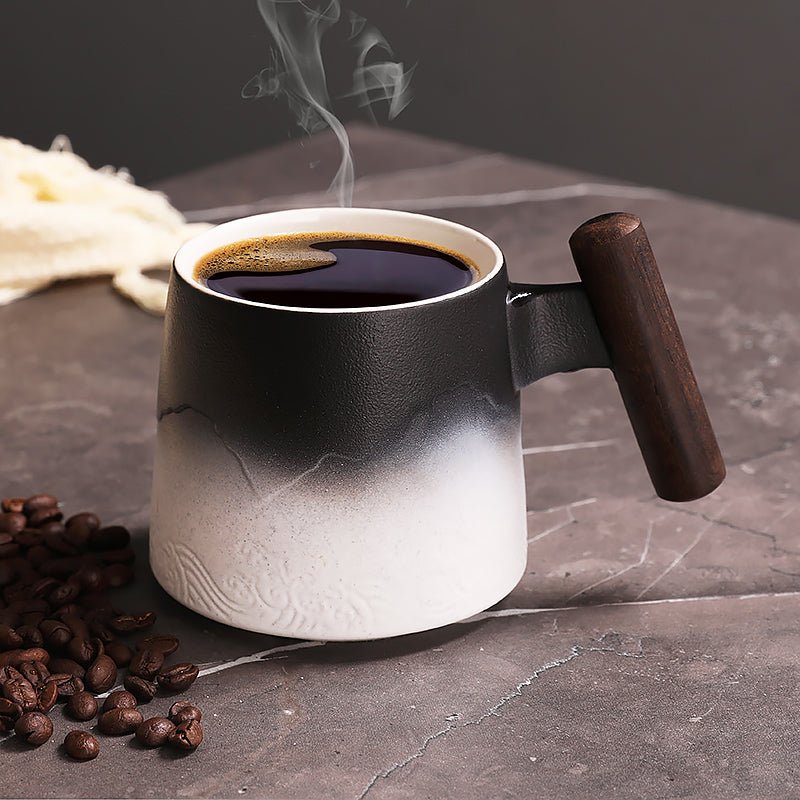
Coffee Mug Drawing: What Buyers Should Check Before Choosing One
Reading time: about 9 minutes
A coffee mug drawing usually starts as a simple sketch, but the buying decision is rarely simple. We see shoppers compare handle shape, capacity, rim feel, and whether the mug will survive everyday dishwasher use before they ever add anything to cart.
That is the part most generic guides miss. A drawing can show the silhouette, but it cannot tell you how a mug feels around a full pour, whether the base stays steady on a crowded desk, or whether the glaze will look clean after repeated washing. In our store, those are the details that separate a mug people use from a mug that stays in the cabinet.
If you are using a coffee mug drawing to narrow down your options, this guide will help you compare real-world features before you buy. You can also browse our full collection or start with our current products page if you want to see what is available now.
What does a coffee mug drawing help you decide before buying?
A drawing is useful because it highlights proportions. You can quickly see whether a mug looks short and wide, tall and narrow, chunky and stable, or slim enough for a crowded office desk. That visual check matters more than people expect.
For example, a mug drawn with a wide mouth often feels easier to sip from, but it may cool faster than a taller shape. A tall mug may look elegant in a sketch, yet it can feel less stable if the base is too narrow. If the mug is meant for a coffee station, a laptop side table, or a shared office kitchen, that trade-off matters.
We also use drawings to spot likely comfort issues. A handle that looks stylish on paper may leave too little room for three fingers. A thick wall may suggest better heat retention, but it can also make the mug feel heavier in the hand. These are small things until you use the mug every morning.
Which mug shapes usually work best for daily coffee?
Shape affects comfort, pour level, and even how quickly you finish your drink. In practice, the best shape depends on how you drink coffee and where you use the mug most.
| Shape | What it is good for | Trade-off |
|---|---|---|
| Classic straight-sided mug | Easy stacking, simple look, stable on desks | Can feel plain and may not hold heat as long as thicker styles |
| Rounded mug | Comfortable in the hand, familiar feel | Sometimes harder to stack neatly in a cabinet |
| Tall mug | More vertical profile, good for larger pours | May be less stable if the base is small |
| Wide mug | Easy sipping, quick access to the drink | Can cool faster and may splash more easily |
If you are comparing sizes, our related guides on 8 oz coffee mug and 20 oz coffee mug are useful because capacity changes the way a mug is actually used, not just how it looks on a page.
What materials should you check in the listing or drawing notes?
A drawing tells you very little about material, so the product listing has to do the heavy lifting. We always tell shoppers to check the body material, finish, and care instructions before deciding.
Common mug materials each behave differently:
- Ceramic feels familiar, usually has a solid hand feel, and works well for desk or kitchen use. It is not ideal if you need something lightweight for travel.
- Stoneware often feels heavier and sturdier. That can be nice for a grounded table mug, but less appealing if you dislike weight.
- Porcelain tends to look cleaner and finer. It can be great for presentation, though it may feel more delicate than a thick stoneware mug.
- Insulated or travel-style mugs are better for commuting or longer heat retention, but they usually sacrifice the open, simple feel of a classic coffee mug drawing.
We recommend checking whether the mug is microwave-safe and dishwasher-safe if your routine depends on convenience. A mug that looks perfect in a drawing can still be a poor fit if it needs hand washing every day. That is a real trade-off, and for many shoppers it is the deciding factor.
Our experience is that buyers rarely regret choosing the mug that fits their routine. They do regret choosing the one that only looked good in a sketch.
How do size and capacity affect comfort and cleanup?
Size changes everything. A mug that seems ideal in a coffee mug drawing may feel oversized once you fill it and carry it across the kitchen.
Smaller mugs, like 8 oz options, are often better for espresso-based drinks, smaller servings, or people who like to drink coffee while it stays hot. Larger mugs, like 20 oz styles, suit long mornings, big pours, or anyone who wants fewer refills. The catch is that larger mugs can be heavier when full, and they take up more shelf space.
In our store, we think about three practical measurements:
- Fill line comfort — a mug should leave enough space so coffee does not slosh when you walk.
- Cabinet clearance — the mug must fit where you store it, not just where you use it.
- Hand clearance — the handle should allow a comfortable grip even when the mug is hot.
If your coffee mug drawing shows a tall, narrow shape, ask yourself whether it will fit under your machine or in your dishwasher rack. That small check prevents a lot of buyer regret.
What design details make a mug feel better in real use?
Good mug design is about the little things. We handle a lot of mugs, and the ones people keep using usually share a few traits: a comfortable handle opening, a balanced base, and a rim that feels smooth against the lips.
Here are the details we look for before we recommend a mug:
- Handle size — large enough for a secure grip, even if you are holding the mug by the desk while reading emails.
- Base stability — a flat, well-balanced bottom helps prevent tipping on crowded surfaces.
- Rim finish — a clean, even rim matters more than most people expect because that is the part you feel every sip.
- Glaze consistency — uneven glaze, pinholes, or rough spots are common defect modes to watch for in lower-quality mugs.
- Weight distribution — a mug that feels top-heavy in the hand gets annoying fast.
This is where a coffee mug drawing can be misleading. A pretty profile does not guarantee a comfortable drink. We have seen shoppers choose a mug because the sketch looked elegant, then discover the handle was too tight for everyday use.
Is a decorative mug a good choice for everyday coffee?
Sometimes yes, but not always. A decorative mug can be a nice gift or desk accent, especially if you want something with personality. But if your first priority is daily convenience, decoration should not outrank usability.
Decorative mugs are often not the best choice if you:
- Need a mug that goes straight into the dishwasher every day
- Drink coffee quickly and want heat retention over visual style
- Prefer a mug that stacks neatly with your other kitchenware
- Want a wide handle that works comfortably with larger hands
If personality matters to you, that is fair. We simply suggest matching the design to the use case. For shoppers who want style without losing function, our article Awesome Coffee Mugs: How to Choose a Mug You’ll Actually Use is a helpful next read.
How do you compare coffee mug drawings without getting fooled by the artwork?
Try reading the drawing like a product tester, not like an art viewer. The goal is to spot clues about comfort and practicality.
- Check the handle opening and imagine whether three fingers fit comfortably.
- Compare width to height to judge whether the mug is likely to feel stable or top-heavy.
- Look at the lip and rim for signs of a smooth drinking edge.
- Notice the base and whether it looks broad enough for a desk or countertop.
- Read the listing details for material, care, and capacity, because the drawing cannot tell you those things.
That approach works well for gift buying too. If you are unboxing a mug for an office exchange or a home coffee station, the people using it usually care less about the illustration and more about whether it feels good in the hand on day one and after a few dishwasher cycles.
Frequently asked questions
What should I look for in a coffee mug drawing before I buy?
Focus on proportions first. Check the handle size, base width, and overall shape so you can judge comfort and stability. Then confirm the real product details like material, capacity, and care instructions, since the drawing alone cannot tell you how the mug will perform.
Is a 20 oz mug too big for everyday coffee?
It can be, depending on how you drink. A 20 oz mug is useful if you want fewer refills or drink long, slow cups, but it may feel heavy when full and take up more cabinet space. If you prefer smaller servings or espresso-based drinks, an 8 oz or mid-size mug may be a better fit.
Are ceramic mugs good for daily use?
Yes, ceramic mugs are a practical everyday choice for many shoppers. They feel familiar, usually handle heat well, and work nicely on a kitchen counter or office desk. Just check whether the mug is dishwasher-safe and microwave-safe if convenience matters to you.
What makes one mug more comfortable than another?
Comfort usually comes down to handle shape, mug weight, and rim feel. A comfortable mug gives your fingers enough room, balances well when full, and has a smooth drinking edge. If any of those are off, you will notice it every day.
Should I choose a decorative mug or a plain one?
Choose decorative if the look matters enough that you will enjoy seeing it every day. Choose plain if you want easier pairing with other kitchenware, simpler cleaning, and fewer worries about visual clutter. For most daily coffee drinkers, the better mug is the one that feels easy to use and easy to keep clean.
If you are still deciding, use this quick checklist before you buy: capacity, handle comfort, material, dishwasher safety, and whether the shape fits your cabinet or coffee machine. Then browse our full mug collection to compare what fits your routine best.
More from our blog
Read more

Star Wars Starbucks Coffee Mug: What Buyers Should Check Before Ordering
A Star Wars Starbucks coffee mug can be a great shelf piece or a real desk mug, but only if the size, print, and care instructions match how you actually use it. We break down the checks that matte...
Leer más
Crystal Coffee Mugs: What Buyers Should Check Before Ordering
Crystal coffee mugs can look elegant on the table, but the details that matter are weight, clarity, rim comfort, and how they handle daily washing. Here’s what we check before recommending a set.
Leer más
Dejar un comentario
Este sitio está protegido por hCaptcha y se aplican la Política de privacidad de hCaptcha y los Términos del servicio.