
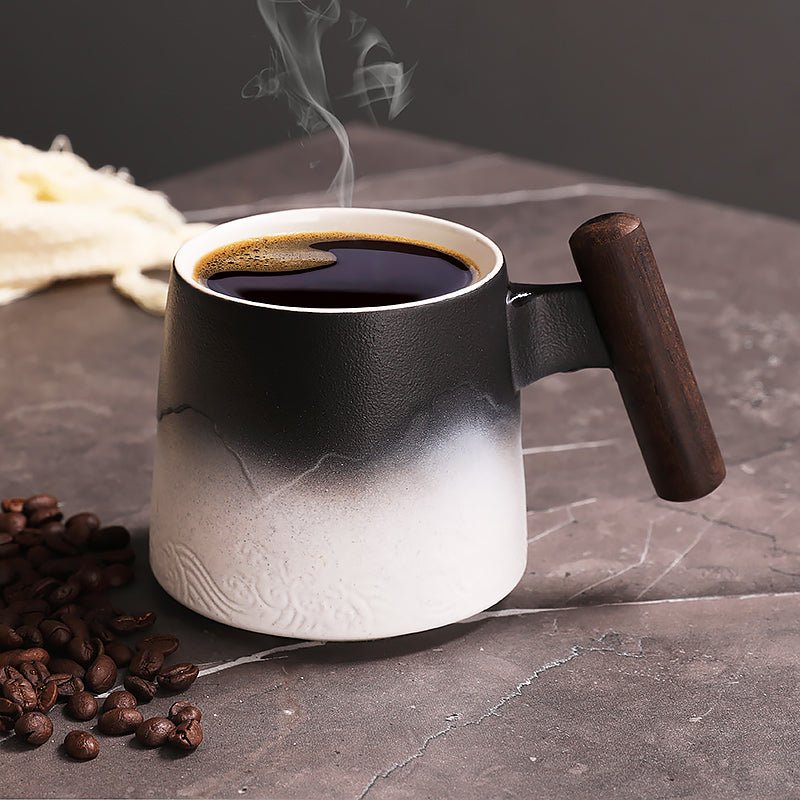
Coffee Mug 24 oz: What Buyers Should Check Before They Buy
Reading time: about 9 minutes
A coffee mug 24 oz takes up real space on a counter. It changes the balance in your hand, the way heat escapes, and whether the mug fits under a cabinet or beside a laptop. In our store, we see buyers choose this size for long work sessions, second pours, and tea or cocoa that they do not want to keep refilling.
That bigger capacity is useful. It also exposes weak design fast: a shallow handle feels cramped, a narrow base can wobble, and decorative finishes can make microwave use awkward. If you are comparing options in our store, that is where the real differences show up.
What does a 24 oz mug feel like in daily use?
A 24 oz mug feels less like a standard cup and more like a small vessel. That is the point for many buyers. You get room for a full morning coffee, a large tea pour, or hot chocolate with extra headroom for milk, foam, or creamer.
In practice, the biggest change is not the extra ounces. It is the extra mass once the mug is filled. A full 24 oz mug can feel top-heavy if the base is too narrow or the handle sits too high. We pay attention to that because it affects how the mug behaves on a desk, near a keyboard, or on a crowded breakfast table.
This size is a strong fit for:
- People who prefer one larger drink instead of repeated refills.
- Desk setups where the mug stays parked beside a laptop or monitor.
- Tea, cocoa, broth, or oversized coffee pours that need extra room.
It is not the best choice for espresso drinkers, small cabinet shelves, or anyone who wants a lightweight everyday cup. If that sounds closer to your routine, our 16 oz Coffee Mug: What Buyers Should Check Before They Buy and 18 oz Coffee Mug: What to Check Before You Buy guides explain where the middle ground usually feels better.
Which materials make the most sense for a 24 oz mug?
Material matters more as the mug gets bigger. A 24 oz body holds more liquid, so wall thickness, weight, and heat behavior are easier to notice. The right choice depends on how you actually use the mug, not just how it looks on a product page.
| Material | What it does well | Trade-offs to watch |
|---|---|---|
| Ceramic | Common, familiar, and easy to use for daily coffee. Usually the best default for a kitchen or desk. | Can chip at the rim or base if it is handled roughly. Quality depends on glaze and firing consistency. |
| Stoneware | Often feels sturdier and holds heat well. A good choice if you like a heavier mug with a solid hand feel. | Usually heavier than porcelain or thin ceramic, which some buyers notice right away when full. |
| Porcelain | Cleaner look, typically lighter in the hand, and often nicer if you want a more refined table feel. | Can feel less rugged. A very thin body may feel delicate for everyday desk use. |
| Stainless steel | Durable and useful if the mug moves around a lot or you want extra resistance to breakage. | Usually not microwave safe and not everyone likes the feel or taste impression for coffee. |
For most buyers, ceramic or stoneware is the practical starting point. We handle a lot of drinkware, and the easiest complaints to avoid are the ones tied to poor fit, not just poor style. A mug can look great and still be annoying if the finish is slick, the handle is cramped, or the base feels narrow compared with the body.
If you want to browse what we currently carry, start with our products page or go straight to the broader all collection to compare styles side by side.
What shape and dimensions should you check before ordering?
With a 24 oz mug, shape can matter more than raw capacity. Two mugs can both hold 24 oz and still feel very different in the hand. One may be stable and comfortable. The other may be tall, narrow, and awkward the moment it is full.
Here is the checklist we use before we recommend a larger mug:
- Base width: A wider base usually sits more securely on a desk or coaster. If the bottom is too small for the body, the mug can feel unstable when full.
- Handle opening: Check that two fingers fit comfortably, and three if you want a looser grip. A tight handle gets old fast on a 24 oz cup.
- Wall thickness: Thicker walls often improve heat retention and durability, but they also add weight. Thin walls can feel lighter, but they lose heat faster.
- Rim shape: A smooth rolled rim is easier to drink from and usually feels better than a sharp edge.
- Finish quality: A uniform glaze is easier to clean than textured surfaces that hold coffee residue or tea stain.
The common defect modes we watch for are simple: rough seams at the handle join, hairline cracks near the base, glaze pinholes, and mugs that tilt slightly because the foot ring is uneven. A 24 oz mug amplifies those problems because the extra volume makes any imbalance easier to notice.
In our experience, buyers often focus on the printed design first and only notice the handle or base after the mug arrives. That is backwards. If the mug is meant for daily use, the shape is the thing you will feel every morning.
How do microwave and dishwasher use affect a 24 oz mug?
A larger mug can be more convenient, but the care routine matters. A 24 oz mug is often used for bigger pours, which means more contact with heat, more cleanup, and more repeated washing than a decorative piece sitting on a shelf.
If you heat coffee in the microwave, avoid metallic trim, foil decals, or any decorative finish that is not marked microwave safe. That includes gold rims and some specialty prints. If the mug has a painted design, the print may hold up fine in hand washing but still fade sooner in a harsh dishwasher cycle.
For dishwasher use, we look for:
- A fully glazed interior that does not trap residue.
- A sturdy handle connection that does not flex under repeated cycles.
- A finish that can handle detergent and hot water without clouding too quickly.
Hand washing is not a downside by itself. For some mugs, it is the honest way to protect a delicate finish. That said, if you want the easiest daily routine, a simple ceramic mug with a clean glaze and no metallic decoration is usually the least fussy option.
One practical note: a bigger mug can also cool unevenly in the microwave if the wall is very thick. Stirring after heating helps, but a well-balanced shape still matters more than people expect. A good 24 oz mug should work hard without demanding extra attention every time you use it.
Who should buy a 24 oz coffee mug, and who should choose a smaller size?
A coffee mug 24 oz is best for buyers who want fewer refills and do not mind a larger cup on the desk or kitchen counter. It is also useful for people who use one mug for coffee in the morning and tea later in the day, or for anyone who likes having room for cream, foam, or extra liquid without the cup feeling full to the brim.
It is a weaker fit if you want a compact mug that disappears into a small dish rack, fits a tight cabinet shelf, or feels easy to lift with one hand while moving around the house. It is also not the right pick for a travel-minded buyer. If your coffee mug needs to go into a car cup holder or a tote bag, a travel mug is the better category.
If you are still deciding on size, these guides help compare the middle options:
- 14 oz Coffee Mug: What Buyers Should Check Before They Buy
- 15 oz Coffee Mug: Size, Fit, and What Buyers Should Check
- 16 oz Coffee Mug: What Buyers Should Check Before They Buy
That comparison usually makes the decision obvious. Buyers who want a familiar daily mug often land around 14 to 16 oz. Buyers who want a larger, more relaxed pour usually move up to 18 oz or 24 oz.
How do 24 oz mugs compare with smaller everyday mugs?
The cleanest way to judge size is to compare it with the mugs you already use. A 24 oz cup is not just a slightly bigger version of a standard mug. It is a different daily habit. The table below shows the practical difference we explain to shoppers who are choosing between sizes.
| Size | Best for | Typical buying concern |
|---|---|---|
| 10 oz | Compact servings, smaller coffee pours, and tighter storage | May feel too small for a full morning drink |
| 11 oz | Classic gift mugs and simple everyday servings | Limited headroom for milk, foam, or extra creamer |
| 12 oz | Standard coffee portions and easy cabinet fit | Not enough room if you want one large pour |
| 18 oz | People who want a larger mug without going oversized | Still smaller than a true oversized cup |
| 24 oz | Long desk sessions, tea, cocoa, and fewer refills | Can feel heavy, tall, or bulky in small kitchens |
If you like to compare by capacity before you buy, our 10 oz Coffee Mug: Size, Fit, and What to Check Before You Buy, 11 oz Coffee Mug: Size, Fit, and What to Check Before You Buy, and 12 oz Coffee Mug: Size, Fit, and What to Check Before Buying articles help set the baseline. Once you know what a normal mug feels like, the 24 oz decision is much easier.
Frequently asked questions
Is a 24 oz coffee mug too big for everyday use?
Not if you actually drink that much liquid and have space for a larger mug. For desk use, long mornings, or tea drinkers, it can be the right size. If you only want a quick cup and prefer a lighter mug, a smaller option will feel more natural.
Will a 24 oz mug fit under a coffee maker or cabinet?
Sometimes, but not always. Height is the issue more than capacity, so check the total mug height against your brewer and cabinet clearance. A tall 24 oz mug can also feel awkward on a shelf with short stacked dishes.
Are 24 oz ceramic mugs dishwasher safe?
Many are, but you should always check the maker's care notes. A simple glazed ceramic mug usually handles dishwasher use better than a mug with metallic decoration or a delicate printed finish. If the design is detailed, hand washing can extend the life of the surface.
What is the difference between an 18 oz and a 24 oz mug?
An 18 oz mug usually feels more manageable in the hand and stores more easily. A 24 oz mug gives you more room for a larger pour, but it also adds weight and can feel taller or bulkier. The right choice depends on whether you value capacity or easier handling more.
Is a 24 oz mug good for soup or cocoa?
Yes, if the mug is shaped with a wide enough opening and a comfortable handle. Larger mugs work well for soup, hot chocolate, and broth because the extra capacity leaves room for toppings or steam. Just make sure the base is stable enough for a fuller serving.
If you want to narrow this down fast, compare the size notes in the 14 oz, 16 oz, and 18 oz guides, then browse our products page and all collection to choose the handle shape, finish, and capacity that fits your setup.
Read more
Bear Coffee Mug Buying Guide: Size, Material, and Gift Checks
A practical bear coffee mug guide covering size, material, care, and gift fit. Built for shoppers who want a mug that looks good on a desk and holds up in daily use.
Leer más
Cat Coffee Mugs: How to Choose the Right Size, Material, and Style
We break down what matters most in cat coffee mugs: size, material, handle comfort, and care. You’ll also see when a novelty cat mug is a poor fit and which options make better gifts or everyday de...
Leer más
Dejar un comentario
Este sitio está protegido por hCaptcha y se aplican la Política de privacidad de hCaptcha y los Términos del servicio.