
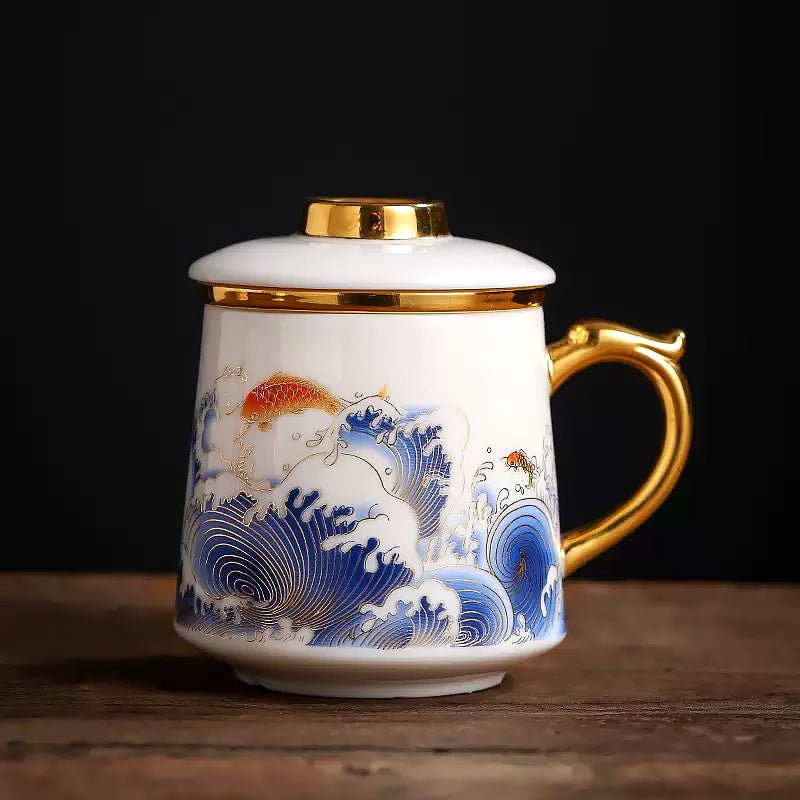
Ceramic Glazed Coffee Mugs Shape and Handle Guide: Current Options
Reading time: about 10 minutes
Set three glazed mugs on the same kitchen shelf and color stops being the only difference. One handle may consume the spare space beside a canister, while another body may look compact from the front but project farther at its widest point. This ceramic glazed coffee mugs shape and handle guide focuses on details a shopper can verify before ordering: visible profile, handle form, stated capacity, listed dimensions, and care language. In our store, we treat these as usable objects rather than finish swatches, so general fit advice stays separate from claims made for a specific mug.
Ceramic glazed coffee mugs shape and handle guide: what changes in use?
Ceramic describes the body material, while glaze is the fired surface finish. Glaze color alone does not tell you the mug's wall thickness, weight, appliance compatibility, or capacity. Start by opening the current unique coffee mugs collection, then compare each option using the same four reference points.
- Body measurements: Look for height, rim or body diameter, and total width. Total width matters most if a projecting handle has to fit inside a cabinet or beside office equipment.
- Widest point: A rounded mug can be wider below the rim, while a tapered mug may have different top and base diameters. A front-facing image may not reveal that difference.
- Handle geometry: Compare the inner opening, outside projection, and where the handle joins the body. A visually large handle can still have limited finger clearance.
- Listed capacity: Treat capacity as a volume reference, not a complete indication of exterior size or comfortable serving level.
Use the live listing photos to judge silhouette and handle form. Use the written specifications for numbers. Do not estimate dimensions from a styled photograph, since camera angle and nearby props can distort scale.
How do the Gradient, Golden Waves Kio, and Emerald options differ?
The three current product pages lead with different visual priorities. The table below maps each one to a buyer situation without assigning unlisted performance characteristics.
| Current option | Visible design priority | Situation it fits | What to verify on the page |
|---|---|---|---|
| The Gradient Coffee Tea Mug | A color-transition treatment is the defining visual cue. | Consider it if a changing glaze color is more appealing than a uniform finish, especially for an open shelf or color-led gift. | Check the selected option's capacity and dimensions, then inspect the side view for body taper and handle clearance. |
| Golden Waves Kio Coffee Tea Mug | The golden wave theme gives it a more decorative presentation. | It fits a shopper seeking a statement mug rather than the quietest everyday design. | Read the current care language and listed measurements. A golden-looking detail should not be assumed to be metallic or microwave-safe based on appearance alone. |
| Emerald Coffee Tea Mug | A saturated emerald-toned finish is the main color cue. | It suits a kitchen, desk, or gift palette built around rich green rather than a multicolor effect. | Confirm capacity, exterior dimensions, and the photographed handle form instead of choosing from color alone. |
The linked pages are the source of truth for current variants, numeric specifications, stock, and care instructions. We do not label any option dishwasher-safe, microwave-safe, insulated, or stackable unless its live product information explicitly supports that claim.
Straight, tapered, or rounded: which silhouette fits your shelf?
Body shape affects where a mug occupies space. It does not reliably predict durability or heat retention, so keep the comparison physical and measurable.
- Straight-sided profiles: The body width remains relatively consistent from base to rim. This can make the footprint easier to judge, although the handle may still determine total cabinet width.
- Tapered profiles: The rim and base differ in diameter. Check which diameter a specification refers to, especially if the mug must fit a cup holder, warming surface, or narrow shelf.
- Rounded or bellied profiles: The widest point may sit below the rim. Compare that point with neighboring mugs rather than relying only on the opening diameter.
For a shelf with fixed vertical clearance, prioritize exterior height. For a crowded desk, measure the mug's full width from the far side of the body to the outer edge of the handle. Buyers who need nesting or true stackability should seek a product specifically designed and described for that purpose; these decorative options should not be assumed to stack.
How much handle clearance do your fingers and desk need?
Handle comfort is personal. In our experience, shoppers often judge the outside shape but overlook the inner opening, which is the part that controls finger placement. A small loop may suit a one- or two-finger hold, while a taller opening may permit three or four fingers, depending on hand size and the handle's lower attachment point.
- Measure the inner height and width of a mug you already find comfortable.
- Measure its total exterior width, including the handle, so you know how much shelf or desk space that grip requires.
- Notice where your knuckles sit. A low handle joint can reduce clearance even if the opening looks generous.
- Compare those references with the product photos and listed dimensions. If the listing does not state inner handle measurements, do not treat a visual estimate as exact.
An oversized handle is not automatically more comfortable. It can move the mug's center of mass farther from the hand and take up more room in a dishwasher rack. A compact handle is not automatically better either; it may be awkward for larger hands or anyone wearing a ring. The practical choice is the form closest to a grip you already use comfortably.
How should capacity and listed dimensions be read together?
Capacity describes internal volume. Dimensions describe the outside object. Two mugs with similar capacities can have different heights, diameters, handle projections, and usable serving levels because their wall thickness and interior profiles differ.
- For a familiar reference: 12 US fluid ounces is about 355 ml. Shoppers working around that volume can use our 12 oz ceramic mug shape and handle comparison alongside the current product specifications.
- For milk drinks: Leave room above the liquid for milk or foam rather than treating a listed maximum as the intended serving line.
- For iced coffee: Ice occupies part of the stated volume, and a narrow opening can make adding larger cubes or cleaning by hand less convenient.
- For shelving: A capacity figure cannot replace exterior height and overall width. A taller narrow mug and a shorter broad mug may hold similar amounts but fit very different spaces.
If a product page presents two or three measurements without labeling their order, avoid guessing which one includes the handle. Use the photos for orientation and contact the store before buying for a tight cabinet, cup holder, or fitted gift box.
Does a decorative glaze change care and inspection?
A glaze can be glossy, visually varied, or richly colored without establishing how the mug should be cleaned. Care instructions on the product page take priority. If dishwasher or microwave compatibility is not explicitly stated, the conservative choice is hand washing and avoiding microwave use.
- Use a non-abrasive sponge rather than steel wool or a harsh scouring pad, particularly around decorative areas.
- Avoid abrupt temperature changes, such as taking a very cold ceramic mug and immediately filling it with boiling liquid.
- If the foot ring is unglazed, dry it before returning the mug to a wood shelf or stacking it on another surface.
- During unboxing, inspect the rim, handle joints, and foot. A sharp chip, a through-body crack, or movement at a handle joint is different from harmless visual variation in a glaze.
Glaze also does not prove that a mug is thick or especially heavy. If wall thickness and a substantial hand feel are your priority, compare the listing details with our thick ceramic coffee mug shape and handle guide. A shopper wanting a lightweight, highly stackable office mug may be better served by a simpler style with explicit weight, stacking, and appliance-care information.
Which option fits an office desk, kitchen shelf, or gift box?
Start with the recipient or location, then match the visible design to that situation. This prevents a striking glaze from distracting you from an unsuitable handle or footprint.
- For a color-focused kitchen shelf: The Gradient mug listing is the relevant next step because its color transition is the central design feature. Confirm that its listed dimensions leave room beside neighboring cups.
- For a decorative gift: Open the Golden Waves Kio product page if the recipient favors a more detailed visual treatment. Check care language before giving it to someone who relies on daily microwave or dishwasher use. Our coffee mug gift shape and handle guide covers the additional fit questions gift buyers often miss.
- For a saturated green desk accent: The Emerald mug listing gives you the most direct color match. Compare the handle opening with the user's usual grip, especially for a mug that will be picked up repeatedly during a workday.
- For a buyer who is still unsure: Return to the unique mug collection and compare side views, capacities, and care wording across more than one tab before committing.
None of these should be selected solely from the finish name if the buyer needs a confirmed cup-holder fit, a large iced-drink capacity, nesting storage, or a particular appliance rating. In those cases, the missing functional requirement should eliminate an option before color enters the decision.
What should you check during unboxing and the first wash?
We recommend inspecting a ceramic mug before the first drink or dishwasher cycle. Good lighting and a level counter make small issues easier to spot.
- Check the rim for chips, sharp points, or a hairline crack extending into the body.
- Hold the body securely and inspect both handle joints. Do not use the mug if the handle shifts or a crack crosses an attachment point.
- Set the mug on a flat counter and confirm that the foot sits as expected without unstable movement.
- Confirm that the received color or selected option matches the order before discarding the packaging.
- Follow the listing's care instructions for the first wash. If appliance care is not stated, use warm water, mild dish soap, and a non-abrasive sponge.
Frequently asked questions
Which ceramic mug shape takes up the least cabinet space?
The mug with the smallest verified overall width and suitable height will fit best, regardless of its stated capacity. Include the handle in that measurement. A narrow-looking body can still require substantial shelf space if the handle projects far outward.
Is listed mug capacity the same as a comfortable serving size?
No. In this ceramic glazed coffee mugs shape and handle guide, listed capacity is treated as a comparison figure, while a practical serving normally leaves headroom below the rim. Milk, foam, ice, and stirring space all reduce the amount of beverage you may want to pour.
Can the Golden Waves Kio mug go in a dishwasher or microwave?
Follow the care instructions on the current Golden Waves Kio product page. A golden color or decorative name does not establish what the decoration is made from or whether it is appliance-safe. If the page does not explicitly approve dishwasher or microwave use, hand wash it and avoid microwaving it.
Which current glazed mug makes the easiest gift choice?
Choose according to the recipient's visible style preference, then verify capacity, handle form, and care. Gradient suits someone who likes changing color effects, Golden Waves Kio offers a more decorative direction, and Emerald fits a rich green palette. For someone with strict dishwasher, shelf, or grip requirements, confirm those points before selecting by appearance.
Five checks to run before choosing a current mug
- Confirm the exact product or variant shown as selected on the live page.
- Record its stated capacity, exterior height, widest body measurement, and total width if provided.
- Compare the photographed handle opening with a mug you already hold comfortably.
- Read the care instructions without inferring microwave, dishwasher, or stacking suitability from the glaze.
- Match the result to the real destination: kitchen shelf, office desk, iced-drink routine, or gift box.
Once those five points are clear, revisit the CoffeifyMug unique coffee mugs collection and open the strongest two candidates side by side. The better purchase is the one whose current listing answers your fit and care questions before its glaze settles the style decision.
Read more
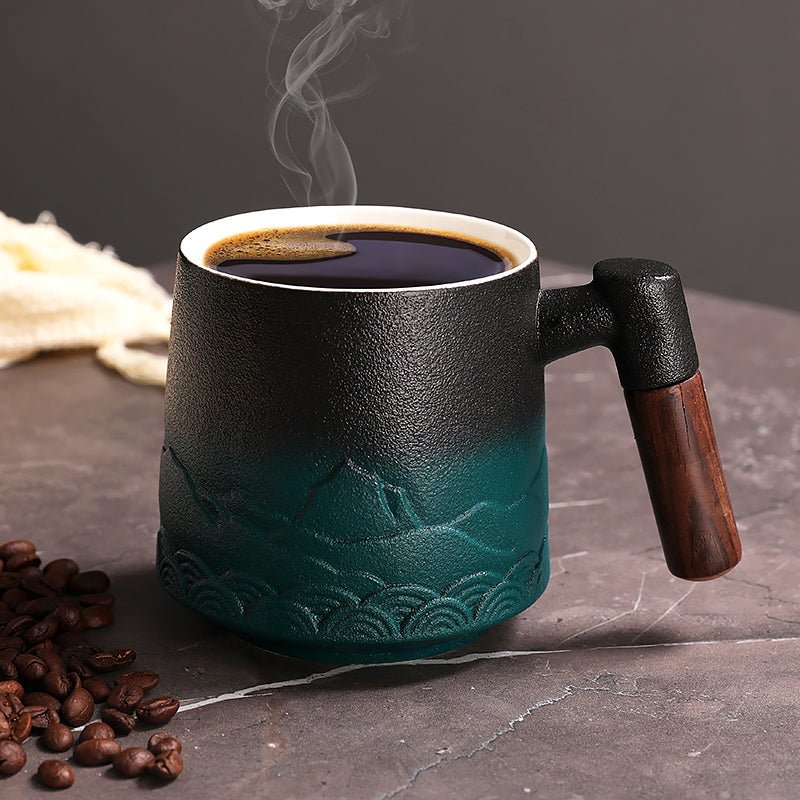
Vintage Pottery Coffee Mugs Shape and Handle Guide: Current Options
Compare CoffeifyMug's current retro and mountain-themed pottery mugs by silhouette, listed dimensions, capacity, and handle form. The guide also covers grip, care, desk fit, and gifting trade-offs.
Leer más
Small ceramic coffee cup shape and handle guide: Current options
Compare CoffeifyMug's Pleated, Emerald, and Retro small ceramic cups by visible profile, handle fit, nominal capacity, and the dimensions that matter on a shelf or desk. Includes honest limitations...
Leer más
Dejar un comentario
Este sitio está protegido por hCaptcha y se aplican la Política de privacidad de hCaptcha y los Términos del servicio.