
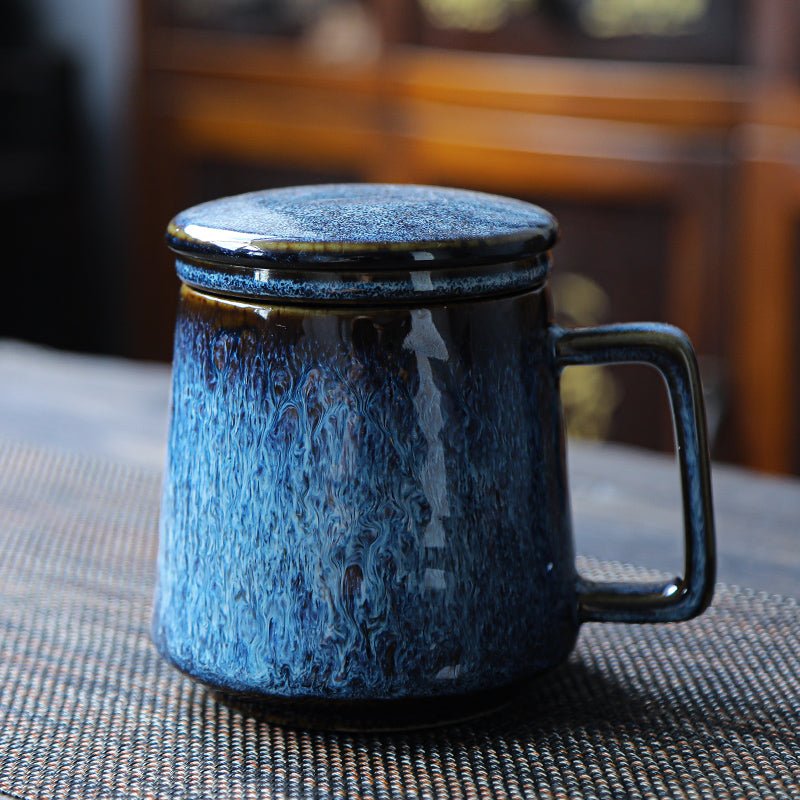
Cafe Au Lait Mug Daily Use Guide: 400-480 ml Trade-Offs
Reading time: about 10 minutes
An extra 80 ml sounds minor until a full mug has to travel from the kitchen counter to a desk beside a laptop. The larger serving can be useful, but it also means more liquid to lift, more room needed for headspace, and potentially more drink than you finish. That is why our cafe au lait mug daily use guide starts with actual routines rather than treating the largest option as the automatic winner.
From handling and selling larger mugs in our store, we have learned that listed capacity is only the first filter. This comparison sticks to the verified capacities of three CoffeifyMug options, then explains how to assess their shapes and handles from the current product listings. Material, external dimensions, and care settings should also be confirmed on those listings before purchase; capacity alone cannot establish any of them.
The cafe au lait mug daily use guide: what changes from 400 to 480 ml?
The three options sit within a relatively narrow range, but each step changes the serving margin. Here is the practical comparison based on their listed capacities.
| Option | Listed capacity | Everyday fit | Main trade-off |
|---|---|---|---|
| The Flow | 400 ml, about 13.5 US fl oz | A sensible starting point when a regular milk-coffee serving already fits within 400 ml and you do not want the highest liquid load. | It provides 40 ml less room than Morning and Night and 80 ml less than The Rock. |
| Morning and Night | 440 ml, about 14.9 US fl oz | The middle option for someone who finds 400 ml slightly restrictive but does not routinely need 480 ml. | The extra 40 ml is useful only if it solves a real serving or headroom problem. |
| The Rock | 480 ml, about 16.2 US fl oz | The best fit of these three for a larger finished drink, generous stirring room, or fewer top-ups. | A full serving creates the highest liquid load and may be excessive for shorter drink sessions. |
Those ounce figures are approximate conversions, not additional catalog specifications. A listed capacity also should not be treated automatically as the ideal fill line. Most people need some empty space below the rim for carrying and stirring, and the amount of headroom that feels comfortable depends on the mug's shape and the way it is used.
Open the product pages to inspect their current photographs and details side by side. If none of the three shapes suits your grip or kitchen setup, the unique coffee mugs collection is the more useful next stop than forcing a capacity match.
Which capacity fits a quick morning, an office desk, or a slow breakfast?
A measured morning serving: The Flow at 400 ml
Choose The Flow 400 ml mug when your usual finished drink is comfortably below 400 ml and you prefer the lowest listed capacity in this group. For example, a hypothetical 320 ml drink would leave a nominal 80 ml difference between the drink volume and the listed capacity. That margin is not a guaranteed fill line, but it gives you a useful number to compare with your current mug.
The Flow is not the best fit if you routinely reach the rim after adding milk or if you frequently return to the kitchen for a second pour. In that situation, the next capacity step may solve a repeated annoyance.
A middle-ground desk mug: Morning and Night at 440 ml
Morning and Night 440 ml fits the shopper who knows 400 ml is a little tight but sees no clear benefit in going straight to 480 ml. Its 40 ml increase over The Flow can accommodate a modestly larger serving or more headspace without selecting the largest listed option.
It is less compelling when your current 400 ml mug already comes back to the kitchen with liquid left in it. Paying attention to what remains after a normal desk session is more informative than choosing the middle number by default.
A longer drink with more margin: The Rock at 480 ml
Pick The Rock 480 ml when you consistently prepare the largest serving in this comparison or need more nominal room above the same recipe. It provides 80 ml more listed capacity than The Flow and 40 ml more than Morning and Night.
The Rock is not the automatic choice for someone with a lighter grip, a short coffee break, or a habit of leaving part of a large drink unfinished. A full 480 ml vessel also contains more liquid to carry. The mug's own weight is separate and should be checked on the current listing if that specification is provided.
Drink style can change the decision. Our mocha mug guide for 400 ml to 480 ml covers the same capacity band in a mocha routine. If your servings are usually much smaller, the 170 ml to 270 ml cappuccino mug comparison is a more relevant scale. For a present, use the coffee mug gift daily-use guide to check recipient fit instead of assuming bigger looks more generous.
How should you compare shape and handle comfort online?
Capacity does not reveal a mug's height, base width, rim opening, body profile, or handle clearance. Two mugs can hold the same amount while feeling very different in the hand or occupying different amounts of cupboard space. We do not label one handle universally comfortable because hand size, grip style, and finger mobility vary.
Use the product photographs and any current measurements to examine four specific points:
- Handle opening: Look at how many fingers appear likely to fit and whether knuckles would sit close to the mug body.
- Grip position: Compare the distance between the handle and body. A grip that looks secure for two fingers may not suit someone who wants a full four-finger hold.
- Body and base profile: A wider profile can require more shelf or desk area, while a taller profile can create clearance issues. Do not infer either dimension from capacity alone.
- Rim and upper-body shape: Check how the rim relates to the handle position and how much visible space remains for carrying without filling to the edge.
A simple home rehearsal is more reliable than guessing. Fill a mug you already own with 400 ml of water using a measuring jug, lift it with your normal grip, and repeat at 440 ml and 480 ml if the vessel is large enough. Water weighs about one gram per milliliter, so those test fills contribute roughly 400 g, 440 g, and 480 g before the mug's own weight. This does not predict the weight or comfort of any CoffeifyMug product, but it does reveal whether an additional 40 or 80 g of liquid matters to you.
How much headroom does your usual recipe need?
Write down the finished volume of the drink, including coffee, milk, and anything added before serving. Then subtract that number from each listed capacity. For a hypothetical 350 ml finished drink, the nominal differences are:
- The Flow 400 ml: 50 ml between the recipe volume and listed capacity.
- Morning and Night 440 ml: 90 ml between the recipe volume and listed capacity.
- The Rock 480 ml: 130 ml between the recipe volume and listed capacity.
This calculation compares numbers; it does not establish a safe or comfortable fill level. The usable margin depends on the actual interior shape and where the listing's capacity measurement is taken. Someone who stirs at the counter may accept less headroom than someone carrying a drink through the house or past office equipment.
Also account for displacement. Foam, toppings, or ice used for other drinks occupy space even though they are not part of a simple liquid measurement. If those additions are regular rather than occasional, measure the completed drink once instead of estimating each ingredient separately.
What should you check at unboxing and before daily use?
A careful first inspection catches fit problems before the mug becomes part of the routine. We use the following checks because they separate a product condition issue from a capacity choice that simply does not suit the buyer.
- Recheck the current listing: Confirm the stated material, external dimensions, and care instructions. This guide does not infer microwave or dishwasher safety from the word mug. If a nightly dishwasher cycle is part of your routine, explicit listing confirmation is a purchase requirement, not a minor detail.
- Inspect under direct light: Look around the rim, body, base, and both handle attachment points for chips or hairline cracks. These are general receiving checks, not a claim that a particular product commonly arrives damaged.
- Set the empty mug on a flat counter: Check that it sits as expected without rocking. Test on a second known-flat surface before deciding the base is uneven.
- Try a dry grip: Lift the empty mug with the hand you normally use. Check finger clearance and whether the handle presses against a knuckle before adding the extra load of a drink.
- Confirm storage and machine clearance: Compare any listed height and width with your cupboard shelf, coffee-machine area, and usual place on the desk. The 400 ml, 440 ml, and 480 ml capacities do not establish exterior dimensions.
Follow the current product instructions for cleaning and first use. If a required care method is not stated clearly, confirm it with the store before exposing the mug to an appliance or temperature change.
Where are these 400-480 ml mugs not the best fit?
- Small, concentrated servings: If your completed drink is closer to 170 ml or 270 ml, all three may leave more unused volume than you want.
- A handleless bowl preference: The phrase cafe au lait mug does not guarantee a traditional bowl form. Choose only from the shape shown and described on the individual listing.
- Travel or spill-control needs: Do not assume a lid, sealed construction, or travel suitability unless a listing explicitly provides those details. A purpose-built travel vessel may be the better choice.
- Strict appliance-care requirements: Capacity says nothing about microwave or dishwasher safety. A different product with explicit care information is the better purchase if those details cannot be confirmed.
- Grip sensitivity: The 480 ml option can hold about 80 g more water than the 400 ml option when both are filled to their stated capacities. A smaller vessel may suit someone who wants to reduce the liquid load.
These limitations are part of a sound purchase decision. A mug that holds more is useful only when the extra volume matches the drink, grip, storage, and care routine.
Frequently asked questions
Is a 400 ml mug large enough for a daily milk coffee?
It can be if your finished drink and preferred headroom fit below the mug's usable level. Measure one normal serving in a jug rather than relying on memory. If your recipe approaches 400 ml before carrying space is allowed, compare the 440 ml and 480 ml options.
Which size does this cafe au lait mug daily use guide recommend for every day?
There is no single best capacity. The Flow 400 ml suits the lowest-volume routine in this group, Morning and Night 440 ml covers the middle, and The Rock 480 ml provides the most listed room. Choose from the measured volume you actually finish, then check shape and handle fit.
How much heavier is 480 ml than 400 ml when full?
Using water as a rough rehearsal, the additional 80 ml adds about 80 g of liquid. That figure does not include either mug's own weight, and the exact weight of a prepared drink varies with its ingredients. Check any listed product weight separately.
Are these mugs microwave and dishwasher safe?
This guide does not make that claim. Review the current product listing for the exact mug and follow its stated care instructions. Do not infer appliance safety from capacity, shape, or product category.
Which mug handle is best for large hands?
Handle comfort cannot be determined from capacity alone. Compare the current listing images for opening size, body clearance, and intended grip, then measure a handle that already works for your hand. If handle dimensions are essential and are not listed, confirm them before ordering.
A 60-second checkout checklist
- Measure the finished drink you normally consume, not the maximum recipe you might make occasionally.
- Add enough personal headroom for stirring and carrying without treating listed capacity as a fill line.
- Rehearse the 400 g, 440 g, or 480 g liquid load with water in a mug you already own.
- Inspect product photographs for handle clearance, rim position, body profile, and base shape.
- Verify current material, exterior dimensions, and care instructions instead of assuming them.
Select The Flow if 400 ml covers the routine, Morning and Night if an additional 40 ml solves a specific fit problem, or The Rock if you will regularly use the full 480 ml range. If the capacity works but the visible shape or handle does not, compare alternatives in our unique coffee mugs collection before checking out.
Read more
The cute ceramic coffee mugs daily use guide: Everyday Trade-Offs
A practical comparison of cute ceramic mugs for desks, kitchens, tea breaks, and gifting. Learn how shape, capacity, storage, and care affect daily use, then match the Handbag, Pleated, or Gradient...
Leer más
Ceramic Glazed Coffee Mugs Daily Use Guide: Practical Trade-Offs
Compare glazed ceramic mug finishes by handle comfort, working capacity, care limits, office use, and gifting. See when Gradient, Golden Waves Kio, or Emerald is the practical fit.
Leer más
Dejar un comentario
Este sitio está protegido por hCaptcha y se aplican la Política de privacidad de hCaptcha y los Términos del servicio.