
Blank Coffee Mug Guide: Size, Shape, and Daily-Use Trade-Offs
Reading time: about 11 minutes
A blank coffee mug can look perfectly fine on a product page and still disappoint on day one. The usual problems show up fast: your fingers barely fit through the handle, the rim feels thicker than expected, or the base leaves a damp ring on a stack of office papers after a dishwasher cycle.
We handle this category in our store every day, and those are the details shoppers ask about after real use, not during casual browsing. A good blank coffee mug needs more than a clean photo. It should feel balanced in the hand, sit flat on a kitchen counter, clean up easily after coffee or tea, and give you a surface that still looks intentional if you leave it plain.
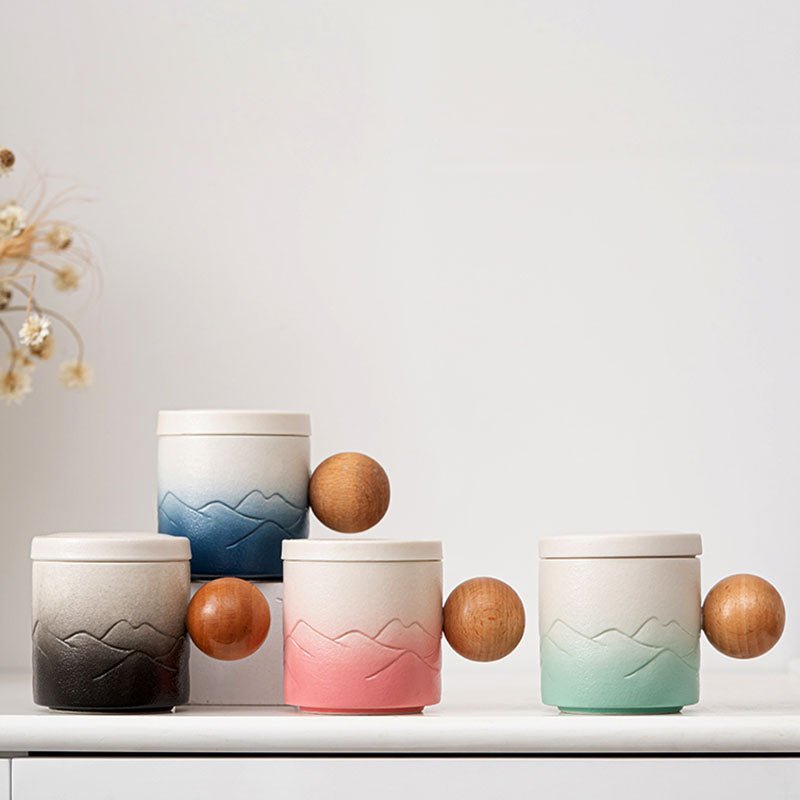
If you want to compare the broader range first, start with our full mug collection. If your search for a blank coffee mug turns into a search for something with more personality, three useful reference points are the Gradient Coffee Tea Mug, the Retro Coffee Tea Cup, and the Ball Handled Coffee Tea Mug. They show how much silhouette and handle shape can change the experience.
What makes one blank coffee mug easier to live with than another?
The difference usually comes down to five practical details. None of them are glamorous. All of them matter once the mug is full of hot coffee and sitting next to your laptop or toaster.
- Rim feel: A thinner rim often feels cleaner and a bit more refined when drinking. A thicker rim can feel sturdy, but it may also feel bulky if you sip slowly.
- Handle clearance: Check how many fingers fit comfortably. A handle that only works for two cramped fingers gets annoying very quickly, especially for bigger hands.
- Base stability: A mug should sit flat without wobbling on stone, wood, or laminate. A tiny wobble becomes obvious on an office desk.
- Foot ring finish: The unglazed ring on the bottom should feel smooth, not gritty. A rough foot ring can scratch shelves or drag across a tabletop.
- Weight when full: A mug that feels fine empty can feel front-heavy after you pour in 325 to 355 ml of coffee. That changes how secure the handle feels.
In our experience, shoppers underestimate handle comfort more than anything else. They shop by color or shape, then realize later that the mug pinches their knuckles or forces an awkward grip. If the mug will live on a work desk for long mornings, comfort deserves the first check, not the last.
What surface details should you inspect before buying?
On a blank coffee mug, the finish is the product. A plain mug has nowhere to hide defects, so the glaze, body shape, and surface consistency matter more than they do on a heavily decorated piece.
Most mugs in this category use a glazed ceramic body, and the glaze does a lot of the visual work. We look for an even surface with no obvious pinholes, no dull patches where the glaze pooled thinly, and no rough patch around the handle joins. A clean blank panel matters if you plan to keep the mug plain, add a name later, or use it in a gift set.
Here are the defects worth watching for:
- Pinholes in the glaze: Tiny pits can catch staining over time, especially with tea or darker roast coffee.
- Uneven color under natural light: A blank mug that looks solid indoors can show cloudy glaze or streaking by a window.
- Visible warping: A slight lean or uneven top line makes a mug feel cheaper the moment you fill it.
- Handle seam roughness: If the join feels unfinished, that area can look worn faster than the rest of the mug.
- Interior staining risk: Light interiors show tea tannins and milk coffee residue sooner. That is not a defect, but it does mean you need to rinse promptly.
Trade-offs matter here. A glossy light finish usually gives you the cleanest blank look and the most predictable print surface, but it will also reveal coffee residue sooner. A darker or more decorative finish hides use marks better, yet it is not the best match if your goal is full custom artwork across the body.
That is exactly why some shoppers move away from a strict blank mug and pick a style-led option instead. The Gradient Coffee Tea Mug works better if you want a finished look without adding decoration, while a plain blank coffee mug still wins if printable surface area is your priority.
Which size works for your daily pour?
Buyers often fixate on the number printed in the description and skip the routine behind it. Size only makes sense once you know how you actually drink. A quick morning coffee, a tea bag with room for water movement, and a desk mug that sits beside a keyboard all place different demands on the cup.
For everyday shopping, these are the most useful starting points:
| Use case | Good starting size | What to watch for |
|---|---|---|
| Short coffee or smaller tea servings | About 240 to 300 ml | Elegant feel, but more refills and less room for milk |
| Standard daily coffee | About 325 ml or 11 oz | Balanced for most desks and kitchen use |
| Roomier everyday mug | About 355 ml or 12 oz | Better for milk, cream, or longer mornings, but heavier when full |
| Oversized home mug | Above 355 ml | Comfort depends heavily on handle design and cabinet space |
We usually tell shoppers to check three real-world measurements before buying. First, think about your actual fill level, not the mug's maximum capacity. Second, make sure the mug fits the shelf or cabinet where it will live. Third, consider the footprint on a desk. A wide mug next to a mouse pad or notebook feels much larger in use than it does in a studio photo.
If you drink coffee with milk or flavored syrups, a little extra room helps more than people expect. If you mostly drink black coffee in smaller pours, a more compact mug often feels better balanced and keeps the mug from getting awkwardly heavy near the handle.
How much do shape and handle design really matter?
More than most shoppers expect. Shape changes how the mug pours, how easy it is to clean, how much printable real estate you get, and even how stable the mug feels on a crowded counter. Handle design does the same for comfort.
| Style | Best for | Main trade-off |
|---|---|---|
| Straight-sided blank mug | Clean print area, simple office use, easy comparison shopping | Can feel plain if you want a more styled gift |
| Rounded or retro profile | Cozy kitchen use, softer look, relaxed breakfast settings | Usually offers less predictable print space |
| Distinctive ball handle | Shoppers who care about grip feel and standout design | Not everyone likes the more sculpted handle shape |
| Decorative gradient finish | A mug that already looks finished without customization | Less suitable if your goal is a fully blank print-ready surface |
The Retro Coffee Tea Cup is a good example of a profile that feels warmer and more casual on a breakfast table. The Ball Handled Coffee Tea Mug is the better reference if your eye goes straight to grip and hand feel. The Gradient Coffee Tea Mug shows the opposite end of the decision: it is a stronger visual object, but not the first choice for someone who wants a truly blank panel for custom artwork.
There is no universal best shape. If you want the safest all-purpose blank coffee mug, straight sides and a simple handle are still the easiest place to start. If the mug is a gift by itself and you do not plan to add artwork, shape can matter more than blank surface area.
Is a blank coffee mug a good choice for gifts or custom decoration?
Yes, but the right blank coffee mug for gifting is not always the one with the biggest empty panel. In our store, the mugs that feel best in gift unboxings are the ones that still look deliberate before any name, logo, or message gets added.
If you are shopping for printing, personalization, or a simple gift set, use this checklist:
- Check the usable print band: A straight, uninterrupted area between the rim and lower curve is easier to decorate cleanly.
- Look at the handle position: A handle that visually crowds the artwork area can make a design feel off-center.
- Match the finish to the goal: Glossy plain surfaces are usually easier for clean graphics. Decorative finishes are better if the mug will stay undecorated.
- Think about the unboxing moment: A mug should look neat from the side, from above, and on a table, not only in a front-facing product shot.
There are limits, and it is better to say them clearly. A blank coffee mug is not the best fit for every design job. If you need edge-to-edge full-wrap art, a perfectly cylindrical body is easier to work with than a strongly curved, retro, or gradient-finished shape. If you need a gift that already has personality before personalization, a styled mug may suit you better than a plain blank.
That trade-off matters because many shoppers are not really choosing between blank and not blank. They are choosing between print flexibility and built-in character. If you want flexibility, stay plain. If you want something that already feels finished on a shelf or in a gift box, move toward a stronger silhouette or glaze treatment.
What care and durability issues show up after a week of real use?
This is where small flaws stop being theoretical. After a week of coffee, tea, dishwashing detergent, spoons tapping the interior, and quick rinses between calls, a mug either settles into daily life or starts irritating you.
The most common issues we see are straightforward:
- Tea and coffee staining: Light interiors show residue faster, especially if the mug sits with leftover liquid for a few hours.
- Spoon marking: Some glazes show light gray utensil marks that can usually be cleaned off, but they still affect the look.
- Thermal shock risk: Ceramic does not like sudden temperature swings. Moving a mug from a cold fridge or cold sink rinse straight to boiling water is a bad habit.
- Handle stress: A mug that feels too heavy for its handle becomes more awkward every time you carry it full.
- Base moisture: Water can cling to the foot ring after the dishwasher, which matters if the mug goes back onto paper, wood, or open shelving.
A few practical care habits help a lot:
- Rinse soon after milk-based coffee or strong tea so residue does not sit on the interior glaze.
- Let the mug warm gradually instead of exposing it to extreme hot-cold jumps.
- Check the bottom after dishwashing before setting it on a desk or cabinet shelf.
- If the mug has custom decoration, follow the care guidance for that finish instead of assuming every piece should be scrubbed the same way.
A blank coffee mug also has clear limits. It is not the best choice for commuting, spill-proof travel, or true heat retention over long stretches. If you need a lid, a sealed drink opening, or insulation for long drives, that is a different product category. Ceramic mugs are best at desks, dining tables, kitchen counters, and gift settings where comfort and presentation matter more than portability.
Frequently asked questions
Is a blank coffee mug good for sublimation or custom printing?
It can be, as long as the surface is smooth, the body shape is predictable, and the blank area is not interrupted by strong curves or decorative effects. A straight-sided mug with an even glaze is usually easier to print cleanly than a retro profile or gradient finish.
Can I put a blank coffee mug in the dishwasher every day?
Many glazed ceramic mugs can handle routine dishwasher use, but the exact care depends on the finish and any added decoration. If the mug is customized later, follow the decoration care instructions, because the print may be more delicate than the ceramic body.
What size blank coffee mug works best for office use?
For most office setups, 11 to 12 oz, or roughly 325 to 355 ml, is the safest starting point. That size gives you enough room for a practical pour without taking over the desk or feeling too heavy near a keyboard.
What defects should make me skip a mug right away?
Pass on a mug that wobbles on a flat surface, has a rough rim, shows obvious pinholes in the glaze, or has a hairline crack where the handle meets the body. Those flaws tend to bother you more with use, not less.
Is a styled mug better than a blank coffee mug for gifting?
If you want to add a name, logo, or message, a blank mug is usually the better base. If the mug will stay plain and you want it to feel special straight out of the box, a more designed option such as a retro shape, ball handle, or gradient finish can be the stronger gift.
What should you do next?
- Decide your real everyday fill level before you shop by capacity.
- Check that the handle shape matches your grip, not just the photo.
- Choose between a print-friendly blank surface and a more decorative finished look.
- Think about where the mug will live: desk, cabinet, breakfast table, or gift box.
Then compare the options side by side in our collection. If you want a mug that already feels styled on the counter, start with the Gradient Coffee Tea Mug. If you prefer a warmer classic profile, open the Retro Coffee Tea Cup. If handle feel is your first filter, begin with the Ball Handled Coffee Tea Mug.
More from our blog
Read more
Lemon Coffee Mug Buying Guide for Bright Kitchens and Daily Use
A practical guide to choosing a lemon coffee mug that fits your kitchen, your drink size, and your daily routine. We cover finish, capacity, care, and which styles work best as gifts or desk mugs.
Leer más
Life Is Good Coffee Mug: How to Choose the Right Everyday Mug
A practical guide to choosing a life is good coffee mug for daily use, gifting, and desk coffee. We compare shape, feel, cleanup, and the trade-offs that matter before you buy.
Leer más
Dejar un comentario
Este sitio está protegido por hCaptcha y se aplican la Política de privacidad de hCaptcha y los Términos del servicio.