
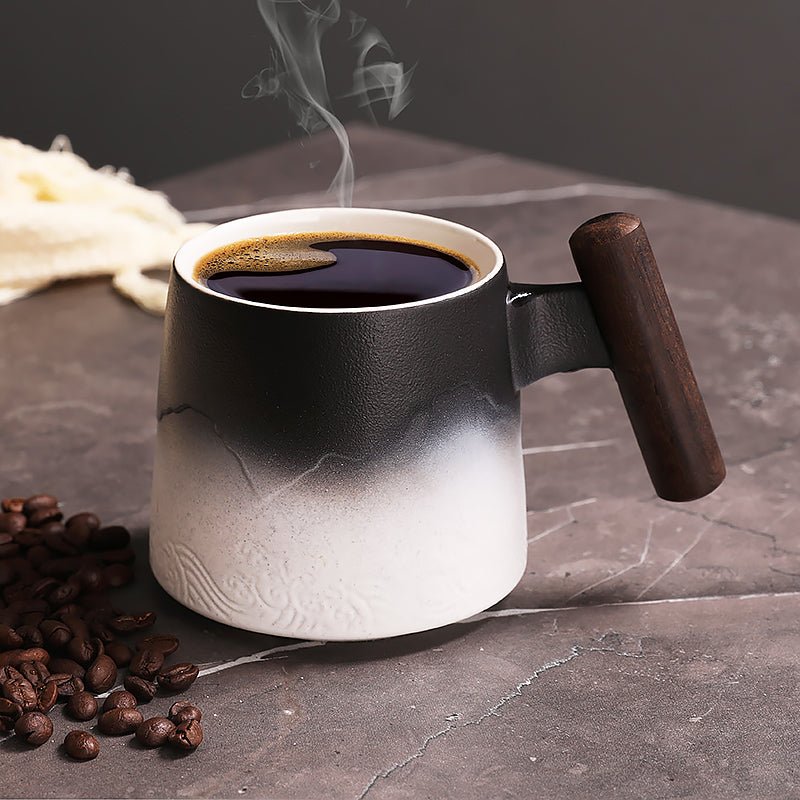
1940s Coffee Mug Buying Guide: Style, Size, and Everyday Use
Reading time: about 9 minutes
A 1940s coffee mug should look like it belongs beside a metal bread box or a sunlit kitchen window, but it still has to work on a Monday morning. In our store, we see shoppers split into three camps: people buying for display, people buying for a daily desk mug, and people buying a gift that feels a little more thoughtful than a plain white cup.
If you want the vintage look without the frustration, start by comparing a few current styles like The Rock Coffee Tea Mug, Morning Night Coffee Tea Mug, and Mountain Coffee Tea Mug. For a broader browse, our full collection makes it easier to compare silhouettes, finishes, and use cases side by side.
The trick is not to chase a perfect museum replica. A true 1940s piece can be charming, but it may also be too delicate, too small, or too fussy for daily use. What most buyers actually want is the look: a sturdy mug, a clean shape, a handle that fits real fingers, and a finish that survives repeated kitchen-counter life.
What should a 1940s coffee mug look like?
The 1940s look is usually more restrained than loud. Think simple shapes, practical proportions, and decoration that does not fight the mug itself. A good vintage-style mug usually has a few of these cues:
- A straight-sided or gently tapered body instead of a bulbous novelty shape
- A comfortable handle that leaves enough clearance for at least two fingers
- Muted colors, earthy tones, or classic high-contrast graphics
- A stable base that sits flat on a kitchen counter or office desk
- A rim that feels comfortable for sipping black coffee, tea, or a small pour of milk
What we avoid recommending for this look are oversized novelty handles, glossy prints that dominate the mug, and shapes that are more decorative than useful. A mug can be retro without pretending to be a prop.
If your goal is an authentic feel, the best test is simple: set the mug down next to a spoon, a bag of coffee, and a folded napkin. If it still looks natural in that scene, it is probably in the right lane.
Which mug style is best for daily coffee, gifting, or display?
Different buyers need different trade-offs. We see this every week. A collector wants the story. A commuter wants comfort. A gift buyer wants a design that opens well and feels intentional out of the box.
| What you want | What to prioritize | What to avoid |
|---|---|---|
| Daily coffee | Comfortable handle, stable base, easy-to-clean finish | Too much surface texture, awkwardly tall shapes |
| Gift | Clear vintage styling, readable graphics, solid packaging presentation | Overly niche motifs that only make sense to one person |
| Display | Strong silhouette, period-inspired color palette, visual personality | Plain forms that do not justify shelf space |
If you are shopping for a drink-first mug, choose something you would happily put through a full week of kitchen-counter use. If you are shopping for display, the visual profile matters more, but the mug should still sit flat and feel finished from every angle. That is where our store’s practical bias comes in: a good mug should look good on a shelf and still survive a dishwasher cycle.
For shoppers who want a more structured browse, compare styles in our collection before narrowing to a specific design. The The Rock Coffee Tea Mug works well for buyers who like a heavier visual presence, while the Morning Night Coffee Tea Mug suits a cleaner everyday look. If you want a nature-forward feel, the Mountain Coffee Tea Mug gives a quieter retro mood.
What size and material make the biggest difference?
Size matters more than many people expect. A mug that looks right in photos can feel too small once you add milk, too large for a short desk break, or too heavy for one-handed use. For readers comparing size benchmarks, our guides on 11 oz Coffee Mug: Size, Fit, and What to Check Before You Buy and 12 Ounce Coffee Mug Buying Guide for Daily Use and Better Fit are useful reference points.
For a 1940s coffee mug, the sweet spot is usually the range that feels substantial without crowding the hand. A smaller mug can be a better fit for straight coffee or tea. A slightly larger mug can be better if you like cream, if you drink slowly, or if you want a little extra room for foam.
The material also changes the experience:
- Ceramic usually gives the most familiar everyday feel and a clean, classic look.
- Stoneware tends to feel heavier and more grounded, which suits a vintage aesthetic but can add weight.
- Porcelain can feel lighter and more refined, though it may not deliver the same sturdy diner-style presence some buyers want.
Here are the practical details we look at in our store when someone asks us to judge a mug by hand rather than by photo:
- The handle opening should let fingers slide in without knuckle pressure.
- The rim should feel even, not sharp or lopsided.
- The base should sit flat, not rock on a counter.
- The wall should feel balanced: thin enough to sip comfortably, thick enough to avoid a fragile feel.
If you want to go deeper on fit before buying, our 10 oz Coffee Mug: Size, Fit, and What to Check Before You Buy guide and our 10oz Coffee Mug Buying Guide: Fit, Materials, and Best Uses help frame the trade-off between compact and everyday-use sizing.
How do you keep a vintage-style mug looking good after repeated use?
Most damage we see is not dramatic. It is slow wear. A mug starts looking tired from dishwasher heat, spoon chatter, stacking pressure, or one hard knock against a sink edge. If you want a vintage-style mug to keep its finish, a few habits help a lot:
- Rinse coffee or tea residue before it dries into the glaze.
- Use a soft sponge instead of abrasive pads on printed surfaces.
- Avoid sudden temperature changes, like pouring boiling liquid into a cold mug straight from the cabinet.
- Do not stack rim-to-rim if the glaze or graphic is delicate.
- If the design has detailed decoration, handwashing will usually be the safer choice over repeated dishwasher cycles.
This is where real-world use matters. A mug might look perfect on a shelf, but if it lives on an office desk and goes through daily washing, the weak points show up fast. Printed graphics can fade, glaze can develop tiny hairlines, and a handle joint that looked fine on day one can reveal a stress point after enough use.
We also tell buyers to watch for finish issues right away. If you are unboxing a gift, check for pinholes in the glaze, uneven print alignment, and any wobble on a flat surface. Those are the small defects that make a mug feel cheap even if the design is good.
What is this style not good for?
A 1940s coffee mug is not the best choice for every routine. If you want an insulated cup for commuting, choose a travel mug instead. If you prefer very large iced drinks, a classic vintage-style mug may feel cramped. If your main goal is ultralight portability, a ceramic mug is the wrong category altogether.
It is also not ideal if you want a very modern minimal look. The whole point of this style is that it has personality. That means a little visual character, sometimes a thicker profile, and sometimes a more traditional handle shape. Buyers who only want an invisible, all-purpose mug should probably skip this category.
For gift buyers, one more trade-off matters: a retro mug is more personal than a neutral cup, but that also makes it less universal. If you are unsure about the recipient's taste, a simple, clean design is safer than a highly specific novelty reference.
How do you choose the right one before you buy?
We use a short checklist in our store when shoppers ask which mug is the smartest buy rather than just the prettiest one. Run through this before you add one to cart:
- Does the handle feel comfortable for your hand size?
- Will the capacity match how much you actually drink?
- Does the finish look easy to clean, especially around printed areas?
- Is the shape stable on a desk, tray, or kitchen counter?
- Would you still like it if you saw it empty, not just filled with coffee?
That last question matters more than it sounds. A strong 1940s coffee mug should hold up as an object, not just as a vessel. If it looks good empty, it usually has the right proportions. If it only looks good in a heavily styled photo, the design may be carrying too much weight.
For buyers who like to compare before deciding, starting with our collection is the fastest way to shortlist options, then comparing the shape and use case of The Rock Coffee Tea Mug, Morning Night Coffee Tea Mug, and Mountain Coffee Tea Mug will usually make the choice obvious.
Frequently asked questions
Is a 1940s coffee mug usually ceramic?
Most vintage-style mugs in this category are ceramic or stoneware because those materials give the right weight and look for everyday use. A true antique may be a different material, but for a modern buy, ceramic is the most familiar and practical choice. It also tends to fit the classic diner-style feel buyers expect.
What size works best for a 1940s coffee mug?
For most daily coffee drinkers, the middle range is the safest pick. A smaller mug works well for black coffee or tea, while a slightly larger one is better if you add milk or like a slower sip. If you need help deciding, our 11 oz and 12 oz guides are a useful starting point.
Can I put a vintage-style mug in the dishwasher?
Sometimes, but it depends on the finish and decoration. Repeated dishwasher cycles can be harder on printed designs and decorative surfaces than handwashing. If you want the mug to keep looking clean longer, a gentle hand wash is the safer habit.
Is a 1940s coffee mug a good gift?
Yes, especially for someone who likes retro kitchen pieces, classic coffee routines, or a more personal shelf display. It is less ideal if the person prefers very minimalist home goods or needs a travel-friendly cup. A mug with a clean, balanced shape is usually the safest gift choice.
What should I check in photos before buying one online?
Look for the handle shape, the base, and the angle of the rim. We also recommend checking whether the print sits evenly and whether the mug looks stable on a flat surface. If the listing shows the mug from only one angle, that is usually not enough for a confident buy.
If you are ready to compare options, start with the full collection, then use the checklist above to sort the mugs by handle comfort, capacity, finish, and the way they will actually live on your kitchen counter or office desk.
Read more
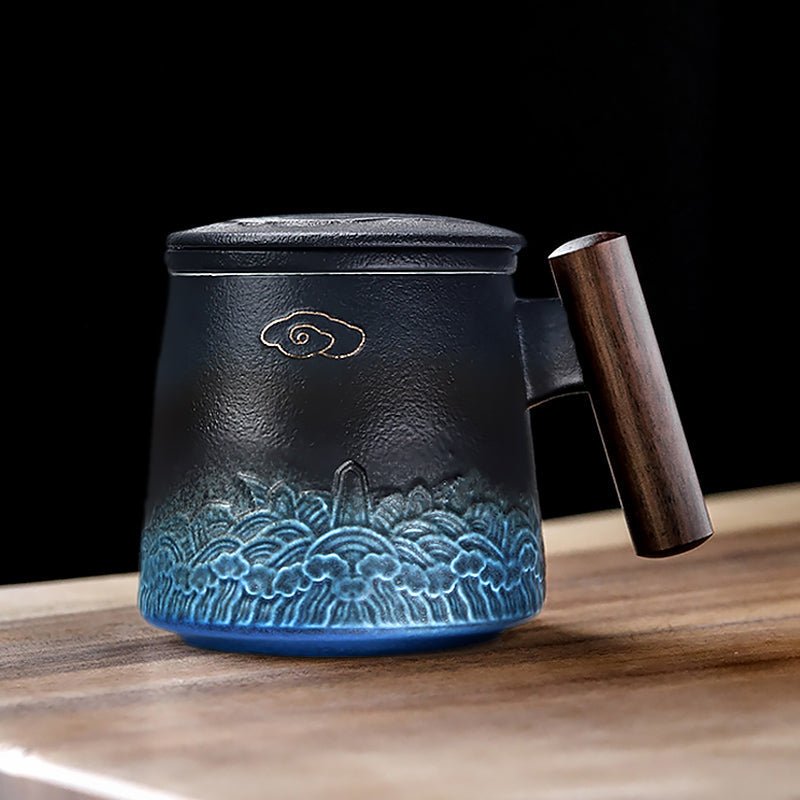
Violin Coffee Mug Buying Guide for Gifts, Daily Use, and Fit
A practical buying guide for choosing a violin coffee mug that works for desk use, rehearsal breaks, and gift-giving. We cover size, handle comfort, materials, and the trade-offs worth checking bef...
Leer más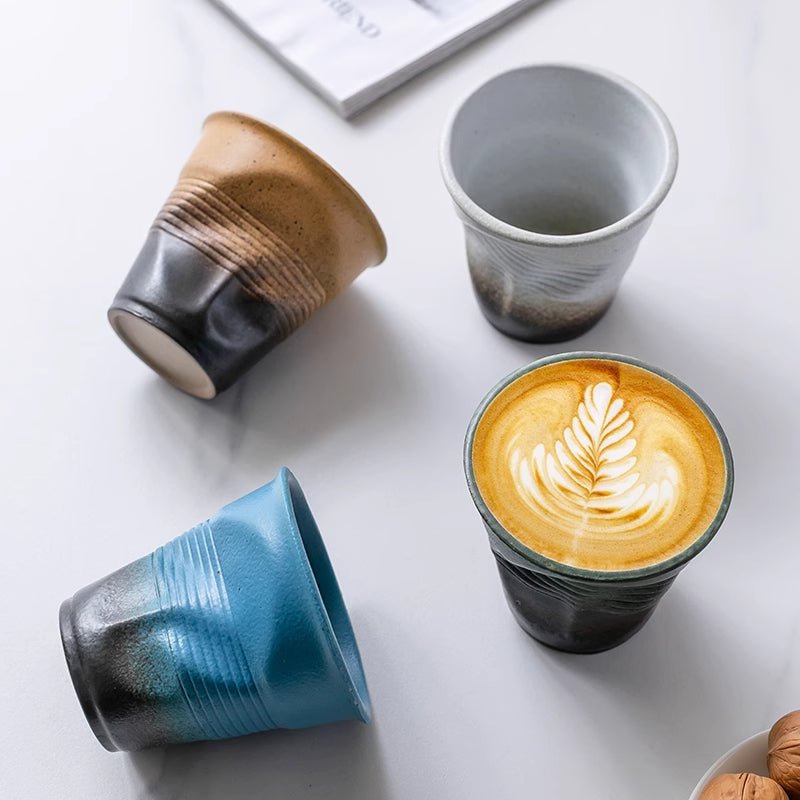
24 oz Ceramic Coffee Mug: What to Check Before You Buy
A 24 oz ceramic coffee mug gives you one large pour for long desk sessions, slow breakfasts, or second cups without changing mugs. We break down the fit, care, and shape details our team checks bef...
Leer más
Dejar un comentario
Este sitio está protegido por hCaptcha y se aplican la Política de privacidad de hCaptcha y los Términos del servicio.