
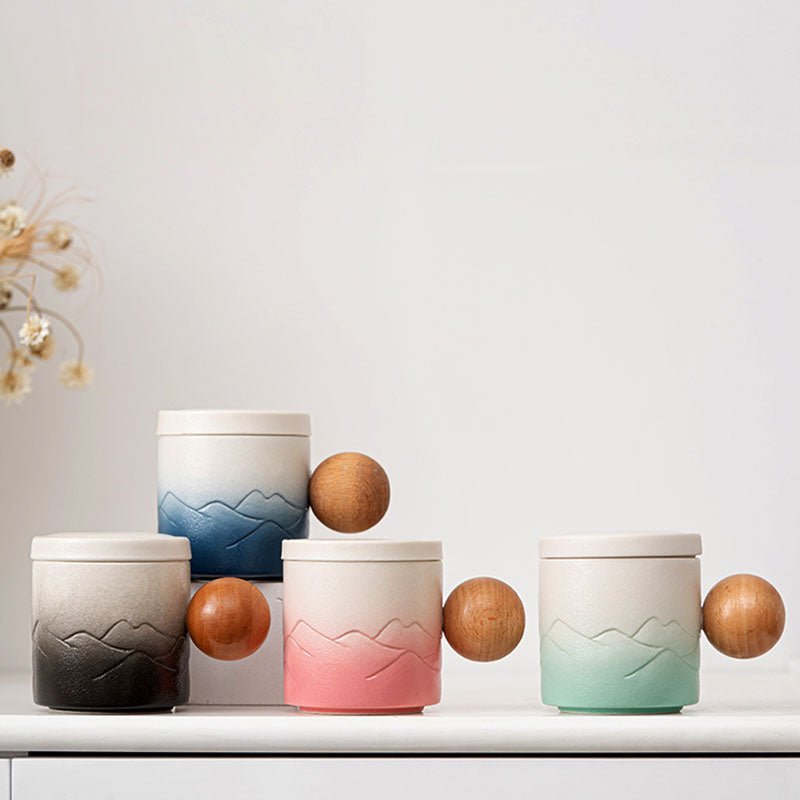
Wood Cups: What to Check Before You Buy for Daily Use
Reading time: about 9 minutes
Wood cups are the kind of item people notice after they pick them up once. The weight feels different, the grip feels different, and the finish either looks calm on a kitchen shelf or starts to feel cheap fast. In our store, we see buyers looking for that balance: something distinctive enough to gift, but practical enough to live on a desk, at breakfast, or beside the kettle every day.
We sell drinkware for real use, so we look at wood cups the way customers do. Does the handle stay comfortable after a full mug of coffee? Does the finish hold up to regular washing? Does the design still make sense when it sits next to a laptop, a sink, or a stack of dishes? Those are the questions that matter before you buy.
If you want to compare our current options first, start with the full CoffeifyMug collection. If you already know you want a mug with a wood accent, take a look at the Mountain Sea II Coffee Tea Mug with Wooden Handle and the The Cloud Coffee Tea Mug Wooden Handle.
What do wood cups actually do well for daily use?
Wood cups are appealing because they bring warmth to a category that can feel very plain. A wooden handle softens the look of a ceramic mug, and a full wooden cup has a more tactile, natural feel than glass or stainless steel. For everyday use, that matters more than people expect. A cup you enjoy picking up tends to get used more often.
In practical terms, wood cups work best in situations where feel and presentation matter:
- Morning coffee on a kitchen counter where the cup is part of the routine, not just a vessel.
- Office desks where a calmer, less industrial look fits the setup.
- Gift purchases where the buyer wants something useful, not another decorative object.
- Tea or coffee breaks where the hand feel matters more than the cup being dishwasher-ready.
The main limitation is convenience. Pure wood drinkware and wood-accent mugs are usually not the best fit for people who want to microwave everything or toss every item into a high-heat dishwasher cycle. If that is your main use case, a standard ceramic mug with no wooden parts may be the safer choice.
What should you check before buying wood cups?
We think the easiest way to buy wood cups is to look at the parts that usually get overlooked in product photos. The cup body may look polished, but the long-term experience depends on small details.
| What to check | Why it matters | What we look for |
|---|---|---|
| Handle finish | A rough or unfinished handle can feel uncomfortable over time | Clean sanding, smooth edges, and a finish that does not look patchy |
| Joint or attachment point | Loose hardware or weak bonding can become a problem after repeated washing | Secure alignment and no visible wobble |
| Interior surface | The drinking surface should be easy to rinse and should not trap residue | A smooth interior with no obvious pits, cracks, or rough spots |
| Care instructions | Wooden components usually need gentler care than plain ceramic | Clear guidance on hand washing and drying |
| Size and shape | The wrong size can make a mug awkward on a desk or under a coffee machine | A shape that fits the way you actually drink coffee or tea |
There are also a few common defect modes to watch for in wood cups. We check for hairline cracks in the wood, uneven staining, rough edges around the handle, and any sign that moisture has started to affect the finish. A lot of these issues are not dramatic at first. They show up as small frustrations: a handle that feels scratchy, a finish that loses its smoothness, or a cup that starts looking tired sooner than expected.
For a broader buying checklist, our post Wood Cups: What to Look for Before You Buy goes deeper into the details shoppers usually miss.
Which type of buyer should choose a wood cup instead of a standard mug?
Not everyone needs wood cups. That sounds obvious, but it saves people from buying the wrong thing. If you want maximum convenience, a plain ceramic mug may be a better choice. If you want something that feels more distinctive in the hand and looks better on display, wood cups or wood-handled mugs make more sense.
Here is the short version we use when helping customers decide:
- Choose wood cups if you care about visual warmth, gifting, or the feeling of a more considered desk setup.
- Choose a standard ceramic mug if you want the easiest everyday cleaning and the least maintenance.
- Choose a large mug if you tend to pour coffee once and sit with it for a while.
- Choose a wood-accent mug if you want the style of wood without committing to a fully wooden vessel.
The trade-off is straightforward. Wood adds character, but it also adds care requirements. That does not make it fragile by default. It just means you should buy with your habits in mind. Someone who hand washes a mug after breakfast will have a much easier time than someone who wants every cup to handle heat, soaking, and repeated machine washing with no thought at all.
Our team sees this often with gift buyers. They want something memorable, but not impractical. For that customer, a wood-accent mug usually hits the sweet spot. That is why pieces like Mountain Sea II Coffee Tea Mug with Wooden Handle and The Cloud Coffee Tea Mug Wooden Handle work well as presents: they feel more personal than a plain mug, but still fit into normal coffee-and-tea routines.
How should you care for wood cups so they last longer?
Care is where a lot of wood cups either hold up or start to look tired. We recommend gentle handling and consistent drying because moisture is the enemy of unfinished or poorly finished wood. If a product has a wooden handle, treat that part differently from the ceramic body.
A practical care routine looks like this:
- Wash by hand with mild soap instead of relying on harsh cycles.
- Dry the wooden part promptly after washing so water does not sit in seams or grain.
- Avoid soaking the cup for long periods.
- Do not use abrasive scrubbers on wood-finished parts.
- Check the handle periodically for roughness, color change, or looseness.
That routine is simple, but it makes a difference. The most common problems we see with wood-accent drinkware are not dramatic breakage events. They are slow wear issues: the finish dulls, the wood takes on moisture marks, or the grip starts feeling less smooth than it did on day one. A little care prevents that.
If you want a comparison that includes more polished, gift-friendly drinkware beyond wood cups, our article Beautiful Coffee Cups: What to Look for Before You Buy is a useful companion read.
Which style makes sense: full wood, wood handle, or standard mug?
This is the decision point that matters most. Buyers often search for wood cups as a broad category, but the right choice depends on how much wood they actually want in the product.
Here is how we break it down in practice:
- Full wood cups are best for people who want a natural look and are comfortable with more careful washing and less kitchen-machine convenience.
- Wood-handled mugs are the easiest entry point for most shoppers. You get the visual appeal of wood without giving up the familiarity of a ceramic mug body.
- Standard mugs are best if your priority is pure convenience and you do not want to think about special care.
For many customers, the wood handle is the right compromise. It adds warmth without changing the whole drinking experience. That matters for office use too. A wood-accent mug can look intentional on a desk without feeling like a decorative object you are afraid to use.
For shoppers browsing a broader range of sizes and styles, the all products collection is the quickest way to compare what fits your routine before you commit.
Are wood cups a good gift, or do they feel too specific?
Wood cups make better gifts than many people expect, but only if you match the style to the person. We see them work best for someone who likes quiet design, natural textures, or a mug that feels a little more thoughtful than a basic promo cup.
They are strong gift options for:
- Housewarming presents
- Office desk upgrades
- Tea or coffee drinkers who prefer understated design
- People who already have plenty of standard mugs and do not need another identical one
They are not ideal for recipients who hate maintenance, use the microwave constantly, or want everything dishwasher-safe with no exceptions. That is the trade-off. A wood cup can feel more personal, but the buyer should understand that personality usually comes with a little extra care.
If you are shopping with a gift angle, our related guide Christmas Coffee Cups for Gifts, Daily Use, and Real Kitchens is useful even outside the holiday season because it focuses on what makes a mug feel genuinely giftable rather than just decorative.
Frequently asked questions
Are wood cups dishwasher safe?
Some wood-accent mugs may tolerate gentle cleaning, but we do not recommend assuming dishwasher safety for the wooden parts. Heat, soak time, and detergent can wear down the finish faster than hand washing. Check the specific care notes on the product page and use hand washing if you want the longest life.
Can I put hot coffee or tea in wood cups?
Yes, wood cups and wood-handled mugs are commonly used for hot drinks. The key is making sure the cup is designed for that use and that the handle stays comfortable when the drink is fresh. If you tend to drink very hot coffee immediately after pouring, a mug with a secure wooden handle is usually the safer choice than a fully wooden vessel.
What is the downside of choosing wood cups over ceramic mugs?
The main downside is maintenance. Wood needs more careful washing and drying, and it is usually less forgiving of soaking or harsh dishwashing. If convenience matters more than appearance, a plain ceramic mug is usually the better buy.
Do wood cups stain or absorb smells?
They can, especially if the finish is thin, worn, or damaged. Coffee and tea are the usual culprits over time. Regular washing, prompt drying, and avoiding long soaking sessions help reduce that risk.
What should I buy if I like the look of wood but want easier care?
A wood-handled mug is usually the best compromise. You keep the natural look and the warmer grip without committing to a fully wooden cup. In our range, that is where many shoppers land after comparing options.
What should you do next if you are comparing wood cups?
Start with your actual routine. If you want the simplest choice, compare the product care notes first. If you want something giftable, compare finish, handle shape, and how the mug will look on a kitchen counter or desk. If you want the fastest path to a purchase, open the full collection, compare the two wood-handled options, and choose the one that fits your daily use rather than just the photo.
If you are still narrowing it down, use this quick checklist before you buy:
- Does the handle look smooth and comfortable to hold?
- Is the care routine realistic for your kitchen?
- Will the mug suit coffee, tea, or both?
- Do you want full wood, or just a wood accent?
- Will this be a daily mug, a desk mug, or a gift?
Read more

Coffee Mug Holders: How to Choose the Right Fit for Your Space
Coffee mug holders work best when the rack, the mug shape, and the space around it all match. We break down fit checks, holder styles, and the mug details that avoid chips, wobble, and clutter.
Read more
Coffee Mug Designs: How to Choose the Right Mug for Daily Use
A practical look at coffee mug designs that compares shape, feel, cleaning, and shelf fit so you can choose a mug that works at home or at the desk.
Read more
Los kommentaar
This site is protected by hCaptcha and the hCaptcha Privacy Policy and Terms of Service apply.