
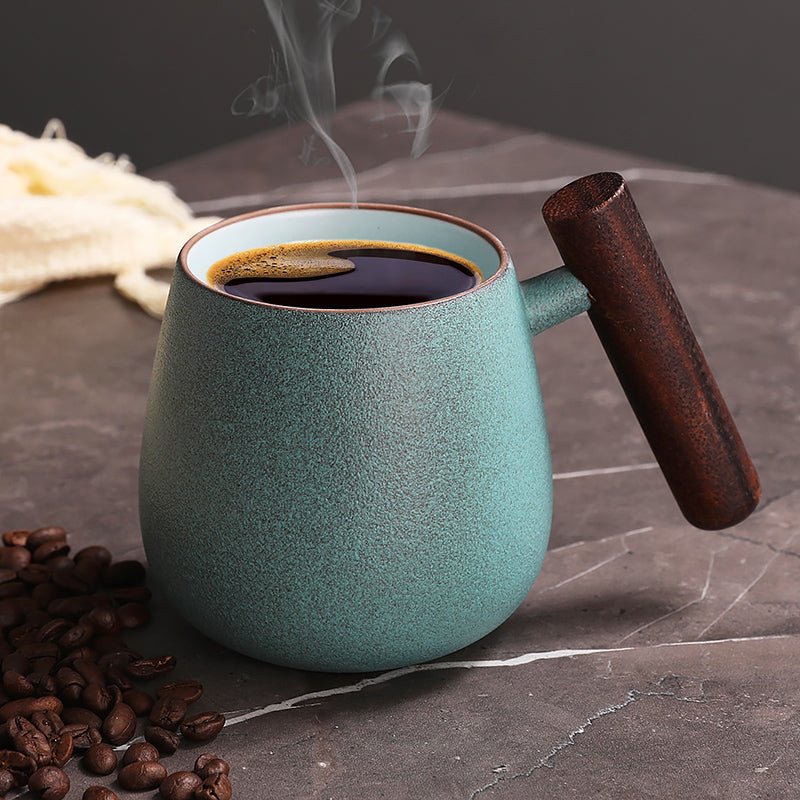
Size of Standard Coffee Mug: What Buyers Should Know Before Ordering
Reading time: about 9 minutes
A mug can look “standard” on a product page and still feel too small once you pour your morning coffee into it. We see that all the time in our store: buyers want an everyday mug, then realize the real question is how much coffee they actually drink, how tall their machine pours, and whether the mug fits under the brewer without a tilt.
The size of standard coffee mug is usually understood as an 8 to 12 oz mug, with many shoppers landing on 10 oz as a comfortable middle ground. That range is practical for drip coffee, tea, and hot chocolate, but the best choice depends on handle room, wall thickness, and the shape of the cup itself. A tall mug with the same ounces as a round mug can feel very different in the hand and on the counter.
If you want a broader buying context, our guide to Standard Coffee Mug Size: How to Choose the Right Everyday Mug pairs well with this one. We also cover mug volume in Coffee Mug Ounces: How to Choose the Right Mug Size if you want to compare ounces directly before ordering.
What size is considered a standard coffee mug?
For most buyers, a standard coffee mug means something in the 8 to 12 oz range. That is the size most people recognize as an everyday mug rather than a small espresso cup or a oversized novelty cup. In practice, 10 oz is a very common middle point because it gives enough room for coffee plus a little cream without feeling oversized on a desk or breakfast tray.
Here is the part that causes confusion: oz capacity is not the same as usable pour space. A mug may be sold as 10 oz, but if it has a thick base or a curved inner wall, it may hold a little less coffee than the number suggests before reaching the rim. That is normal. We always recommend leaving a little headroom if you carry your mug from the kitchen to the office or from the brewer to the couch.
| Common mug size | Typical use | What it feels like |
|---|---|---|
| 8 oz | Smaller coffee servings, tea, hot chocolate for kids or light drinkers | Compact, quick to finish, easy to store |
| 10 oz | Everyday coffee, balanced serving size | Most versatile for home and office |
| 12 oz | Larger coffee servings, milk drinks, longer sipping sessions | More generous, but heavier when filled |
If you are cross-checking common measurements, our article on Average Coffee Mug Size: What Buyers Should Expect is a useful second look. Buyers often use “average,” “standard,” and “everyday” interchangeably, but those terms are not always identical once you start comparing real products.
How do mug shape and dimensions change the way standard size feels?
Two mugs can both be labeled 10 oz and still feel completely different. Shape matters. A round mug usually spreads the volume lower and wider, while a tall mug stacks the volume upward and can feel slimmer on a desk. The handle placement, lip thickness, and base width also change the experience more than most shoppers expect.
In our experience, these are the practical differences buyers notice first:
- Round mugs feel stable and familiar. They are a good fit for bedside coffee, relaxed breakfast use, and people who prefer a classic shape.
- Tall mugs often feel more modern and may fit better under some coffee machines, but they can be less forgiving if you overfill them.
- Wider mugs cool drinks a little faster because of the larger surface area, which some tea drinkers prefer.
That is why a mug’s dimensions matter as much as its listed ounces. A standard-sized mug with thick ceramic walls may keep heat better, but it will also take up more cabinet space. A slimmer mug may store better on crowded shelves, but the handle might feel tighter for larger hands. We check these details in-house because a mug that looks right in photos can still be awkward at a real kitchen counter.
Which standard mug size works best for coffee, tea, and milk drinks?
The “best” size depends on the drink, and that is where many buyers save themselves frustration by thinking one step ahead. A standard mug is not one-size-fits-all for every beverage.
- Black coffee: 8 to 10 oz is usually enough if you like a straightforward cup and want it to stay hot without waiting too long.
- Coffee with milk or creamer: 10 to 12 oz is often more practical because it leaves room for add-ins.
- Tea: 8 to 12 oz works well depending on how long you want to sip and whether the mug needs to hold a tea bag and water comfortably.
- Hot chocolate: 10 to 12 oz is usually better if you want foam, marshmallows, or extra mix.
If you prefer a mug that feels balanced for everyday use, our Round Coffee Tea Mug is the kind of shape many people reach for first. For buyers who want a taller profile that takes up less surface area, the Landscape Tall Coffee Tea Mug is a smarter fit. And if you want a giftable design with a more decorative feel, the Elk and Moon Coffee Tea Mug is a good example of how style and everyday size can work together.
Those options are all part of our wider all collection, which is the fastest place to compare styles side by side if you are not yet sure which mug shape fits your routine.
What materials and construction details should you check before buying?
For a standard mug, the material and construction matter just as much as ounces. Most shoppers are looking at ceramic mugs, and that is where a few details separate a comfortable everyday cup from one that chips early or feels clumsy in use.
Here is what we check before we recommend a mug in our store:
- Wall thickness: A thicker ceramic wall usually holds heat longer, but it can make the mug feel heavier in the hand.
- Rim finish: A smooth, even rim makes sipping easier and feels better on the mouth. A rough or uneven rim is a quality issue.
- Handle clearance: The handle should give enough room for your fingers without pressing against the mug body when it is full and warm.
- Base stability: A flat, well-set base reduces wobble on trays, desks, and coffee tables.
- Glaze quality: An even glaze helps with cleaning and reduces the chance of staining from coffee or tea over time.
We also look for common defect modes that shoppers should know about: hairline cracks near the handle attachment, glaze pooling at the base, and small chips on the rim from shipping or repeated contact with a hard sink. Those are the kinds of issues that can turn a mug that looks fine online into one that feels disappointing in daily use.
As for care, most ceramic mugs do best with a normal wash cycle if the product is labeled for that use, but hand washing is still the safest option for preserving printed designs and reducing wear on decorative finishes. If you want a mug that will be used every day in a dishwasher-heavy kitchen, choose a simpler shape and finish rather than a highly detailed exterior.
What is the trade-off between a standard mug and a larger mug?
A larger mug sounds convenient, and sometimes it is. But there are trade-offs. A 14 oz or bigger mug gives you more room for milk, foam, or a long coffee refill, yet it also gets heavier when full and can be harder to fit under compact brewers or inside a crowded cabinet. Larger mugs also cool at a different rate, which is not always ideal if you drink slowly.
That is why the standard size still earns its place. It tends to be easier to hold, easier to store, and easier to live with on a desk or kitchen shelf. If you are buying for a gift, a standard mug also feels safer because it works for more people than a very large specialty cup.
That said, a standard mug is not the best choice if you regularly drink oversized lattes, want one mug to hold a full travel-mug volume, or need a cup that doubles as a soup bowl. In those cases, a larger ceramic cup or a handled tumbler style makes more sense.
One thing we tell shoppers all the time: buy the size that matches your first pour, not the size you hope you might use someday. Most disappointment starts when a mug is technically “standard” but practically too small for the way someone drinks coffee.
How should you measure a mug before you order?
If you are comparing mugs online, use more than the ounce label. Measure against your coffee routine and your storage space. A mug can be the right capacity and still be the wrong fit for your shelf, brewer, or hand size.
A quick buying checklist we use in our own store looks like this:
- Check the listed ounce capacity, but also look for height and width when available.
- Compare the handle opening to your finger width if you have larger hands.
- Think about your coffee maker clearance if the mug will sit under a brewer.
- Decide whether you want a mug that finishes quickly or one that supports slower sipping.
- Choose a shape that matches where you will use it most: kitchen, office desk, gift set, or nightstand.
If you are comparing standard sizes side by side, our article Standard Coffee Mug Size: What Buyers Should Know Before Ordering goes deeper into the decision points that matter before checkout. For shoppers with limited storage space, Best Ceramic Mug Size for a Small Coffee Corner is also worth reading because the right mug can make a small shelf feel much less crowded.
Frequently asked questions
How many ounces is a standard coffee mug?
A standard coffee mug is usually 8 to 12 oz, with 10 oz being a very common everyday choice. The actual usable amount may be a little less than the listed capacity because most mugs should not be filled to the rim.
Is a 12 oz mug standard or large?
For many shoppers, 12 oz still counts as standard, especially for coffee with milk or tea. It starts to feel large only when compared with smaller 8 oz mugs or when you prefer a lighter cup that finishes faster.
What size mug is best for daily coffee at home?
Most people are happy with 10 oz for daily use because it balances portion size, heat retention, and cabinet space. If you drink a lot of milk-based coffee, 12 oz may be more practical.
Do tall mugs hold the same amount as round mugs?
They can, but they feel different in use. A tall mug often looks slimmer and may fit better under some machines, while a round mug usually feels more stable and familiar in the hand.
Should I choose a smaller mug if I use a dishwasher often?
Not necessarily, but simpler shapes and clean ceramic finishes usually hold up better over time. If the mug has detailed exterior decoration, hand washing may help preserve the look longer even when the mug is technically dishwasher safe.
If you are still deciding, start with the shape that matches your routine, then compare the ounces and handle feel against the mugs in our all collection. That is usually the fastest way to find a standard mug that actually earns a spot on the counter instead of sitting unused in the cabinet.
Read more
Rick and Morty Coffee Mug Buying Guide for Everyday Use
A Rick and Morty coffee mug should do more than carry a joke. We break down size, grip, print durability, and which mug styles make sense for daily coffee, gifts, and desk use.
Read more
Cubs Coffee Mug Buying Guide for Size, Gifts, and Daily Use
A Cubs coffee mug should do more than show team pride. We break down size, handle comfort, and gift trade-offs so you can buy the one that gets used.
Read more
Los kommentaar
This site is protected by hCaptcha and the hCaptcha Privacy Policy and Terms of Service apply.