
Piccolo Cup Buying Guide: Compact Ceramic Options for Milk Coffee
Reading time: about 10 minutes
A milk coffee can look and feel wrong in a large mug. The drink cools while you are still reaching for it, the coffee sits low in the vessel, and a carefully made small serving loses its sense of proportion. Shoppers looking for a piccolo cup are usually trying to avoid that experience: they want a compact ceramic piece that feels deliberate in the hand without forcing an overly tiny drink.
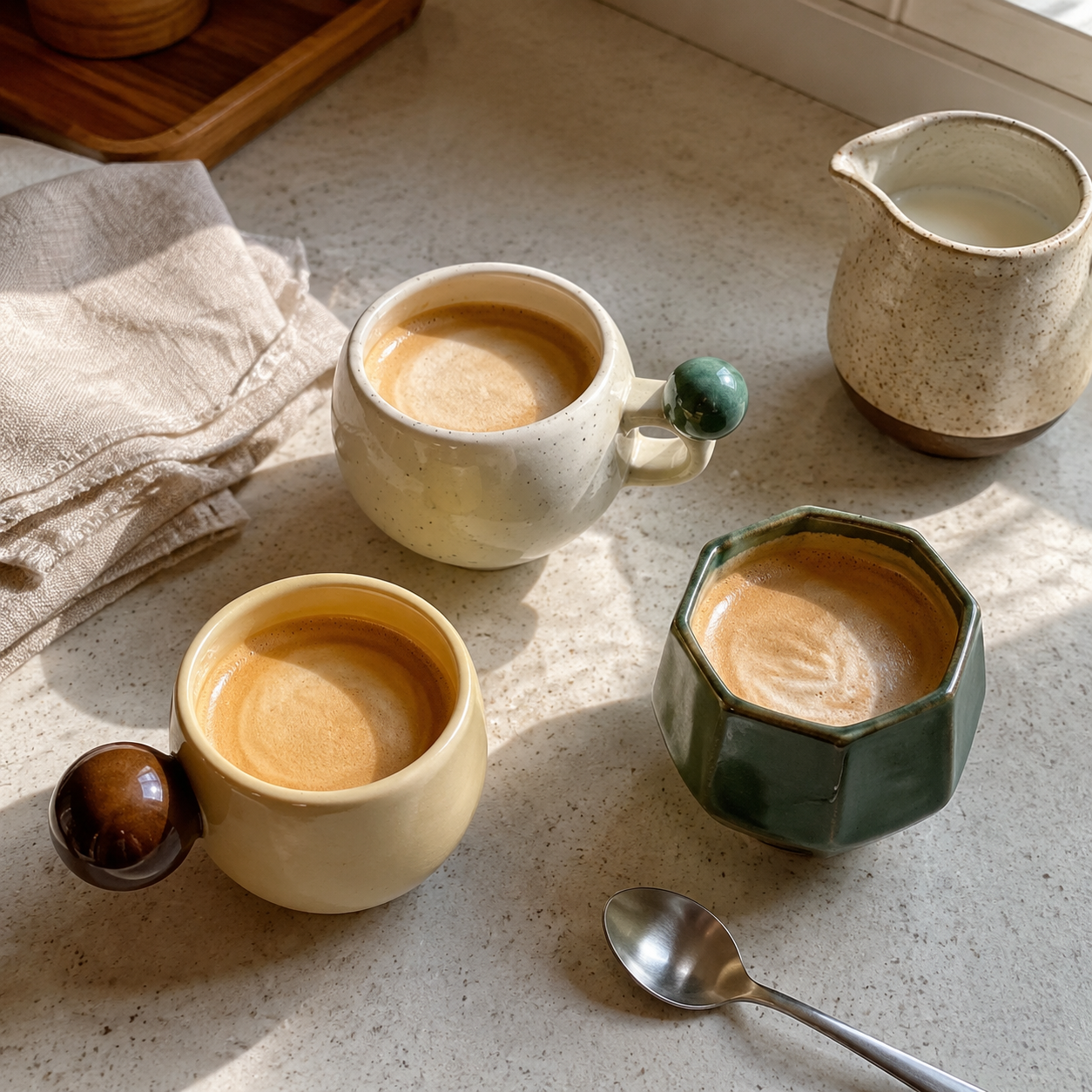
At CoffeifyMug, we treat capacity as the first filter because it changes the daily experience more than a product photo can show. Our currently verified compact options are 170 ml for the Retro cup, 250 ml for the Ball Handle mug, and 270 ml for the Emerald mug. Those sizes give you useful choices for milk coffee, but they should not be presented as certified piccolo cups or as a promise of any fixed coffee-to-milk recipe. Your espresso size, milk texture, and preferred headroom still decide how full each cup will feel.
Is a 170 ml, 250 ml, or 270 ml cup right for milk coffee?
Start by separating the cup's stated capacity from the amount you plan to pour. Stated capacity is the volume to the rim; a comfortable serving normally leaves room below the edge. That space matters when carrying a hot drink from the kitchen counter to a desk, and it matters even more if the milk has a thick foam cap.
- 170 ml: The Retro Coffee Tea Cup is the most compact of these three options. It is the clearest fit for shoppers who want a shorter milk coffee, a small afternoon cup, or a portion that does not linger too long. It is not the best choice for someone who routinely pours a larger home latte, adds extra milk, or wants a generous tea serving.
- 250 ml: The Ball Handled Coffee Tea Mug gives substantially more room for milk, foam, and a less exacting pour. This is the practical middle ground for a home coffee routine where one person drinks compact milk coffee and another reaches for tea. Its larger volume makes it less suited to buyers who specifically want the tight, small-cup feel associated with a piccolo-style serving.
- 270 ml: The Emerald Coffee Tea Mug has the most capacity of the three. It works for a milk-forward coffee, tea, or a drink that needs more headroom. It is not the right pick if your priority is a very compact espresso-and-milk presentation.
A simple test helps before you buy: picture your usual drink, then leave a visible margin for movement. If you prefer to fill a vessel nearly to the top, choose more capacity than the drink itself requires. If you like a compact serving with a modest amount of foam, the 170 ml option is the more focused starting point.
For more shapes beyond these three capacities, browse our unique coffee mugs collection. It is a useful next step for shoppers comparing the compact end of the range with cups intended for more relaxed, larger pours.
Why does headroom matter more than a fixed piccolo recipe?
There is no single milk-to-coffee ratio that makes every drink a piccolo, especially in a home kitchen. Espresso volume varies, milk can be steamed thin or thick, and some people prefer a short, concentrated cup while others want a softer, milkier drink. Rather than chasing a label, use headroom as a buying variable.
Headroom is the unfilled space between the drink and the rim. It reduces splashing when you walk across an office, gives foam somewhere to sit, and makes a small cup easier to use without overfilling it. In our experience helping shoppers compare small cups, a cup can be technically large enough yet still feel frustrating if the desired drink reaches the edge every morning.
The 170 ml Retro option makes sense when the drink itself is intentionally modest. The 250 ml Ball Handle option gives more tolerance if your milk pour is not identical every time. The 270 ml Emerald option is better for a person who values breathing room and flexibility over the most compact visual presentation. None of those choices dictates how you prepare coffee; they simply change how much room you have around it.
If you are also comparing milk coffee styles, our flat white cup guide on capacity and headroom explains why a vessel's usable pour volume can matter more than the number printed in a listing.
What should you inspect in a ceramic cup before making it an everyday favorite?
Ceramic is a practical material for hot coffee because the body has enough mass to feel stable in the hand and does not impart a metallic taste. It also carries trade-offs. A ceramic cup is less forgiving of an impact against a stone counter than a metal travel tumbler, and the cup itself will absorb heat from a hot drink before it reaches its own temperature.
We recommend checking these details as soon as a new cup arrives, particularly if it will become part of a daily coffee setup or a gift:
- Inspect the rim under good light. Run a clean fingertip around it to check for chips or rough spots. The rim is the contact point you notice at every sip.
- Look over the glaze and interior. Small visual irregularities, pinholes, or a hairline crack deserve attention before use. Check the inside after the first wash as well, because dark coffee residue makes surface issues easier to spot.
- Check the foot and handle. Set the cup on a flat counter and make sure it sits steadily. On handled pieces, hold the handle with your usual grip before committing to a daily routine; visual style cannot tell you whether the grip suits your hand.
- Avoid abrupt temperature changes. Do not move a cup directly from a cold rinse into a very hot pour. Let it return toward room temperature first, and avoid placing a hot ceramic vessel against a cold, wet surface.
Dishwasher convenience matters to many households, but care guidance can vary by product finish and decoration. Check the product-specific information before repeated dishwasher cycles. For handwashing, use a soft sponge and avoid abrasive scouring pads that can dull or mark a glazed surface over time. Rinsing coffee residue shortly after use also reduces the need for aggressive scrubbing.
Does a handle change the fit for a kitchen counter or office desk?
It can. A compact cup without enough space for your fingers can become inconvenient when the drink is hot, while an oversized handle can make a small cup feel visually and physically larger than the serving calls for. The Ball Handled Coffee Tea Mug is worth considering for buyers who prioritize an obvious handle grip during a busy morning, at a shared office coffee station, or while moving between rooms.
That does not make it automatically better for every milk coffee. The larger 250 ml capacity means more potential weight once filled, and the format may feel too roomy if your routine is a short coffee with a restrained amount of milk. The smaller 170 ml Retro option is the better capacity-led choice for a compact serving, while the 270 ml Emerald option favors a more relaxed drink with extra room.
For a gift, think about the recipient's actual routine rather than the drink name alone. A person who drinks tea in the afternoon may appreciate the flexible 250 ml or 270 ml options more than the smallest vessel. A person with a dedicated espresso machine, limited counter space, and a preference for short milk coffee may appreciate the 170 ml size more. At gift unboxing, a cup that fits an established habit is more useful than one selected only for its color or label.
Which CoffeifyMug compact option fits your routine?
| Routine | Best starting point | Why it fits | Consider another option if |
|---|---|---|---|
| Short milk coffee at home | Retro Coffee Tea Cup, 170 ml | The smallest verified capacity creates the most compact serving experience of the three. | You often add more milk, prefer a taller foam cap, or use the cup for larger tea servings. |
| Shared household with coffee and tea drinkers | Ball Handled Coffee Tea Mug, 250 ml | Its middle capacity offers useful headroom and a handled format for varied daily drinks. | Your priority is a strictly small, concentrated milk-coffee presentation. |
| Milk-forward coffee, tea, or flexible desk cup | Emerald Coffee Tea Mug, 270 ml | The largest verified capacity leaves the most room for a fuller drink and less precise pouring. | You want the smallest possible footprint and a quick, compact serving. |
This comparison is deliberately based on capacity, not an assumed cafe standard. A 170 ml cup is compact relative to the other two options, but it should not be sold as a formally certified piccolo vessel. Honest selection starts with the drink you actually make at home.
Should you choose a piccolo cup, flat white cup, or cappuccino mug?
These categories overlap in real kitchens, and the cup is often used more flexibly than a menu name suggests. A shopper looking for a compact ceramic piece for a modest milk coffee should begin with the 170 ml option. A buyer who wants more room for foam, milk, or a less tightly controlled pour should consider 250 ml or 270 ml instead.
For a more detailed comparison of foam room and larger milk coffee expectations, see our cappuccino coffee mug buying guide. It can help prevent a common mismatch: buying a compact cup for a drink you regularly make at a noticeably larger volume.
A good cup choice is not the one with the closest-sounding name. It is the one that holds your normal pour with enough room to carry, sip, and clean comfortably.
Frequently asked questions
What size piccolo cup should I buy for milk coffee?
Choose based on your usual finished pour and the headroom you prefer, rather than a fixed recipe. Among these CoffeifyMug options, the 170 ml Retro Coffee Tea Cup is the most compact; 250 ml and 270 ml options give progressively more room for milk and foam.
Is a 170 ml coffee cup too large for a piccolo?
It may be larger than what some coffee drinkers personally associate with a very short piccolo-style drink. We do not describe it as a certified piccolo cup. It is a compact 170 ml option that can suit a small milk coffee when its capacity matches your preferred serving.
Can I use a compact ceramic cup for tea as well as coffee?
Yes, if the capacity works for the tea portion you normally drink. The 250 ml Ball Handled and 270 ml Emerald options are likely to be more flexible for tea than the 170 ml option, while still serving milk coffee well.
How do I keep a ceramic coffee cup looking good after regular use?
Rinse coffee residue soon after drinking, wash with a soft sponge, and avoid abrasive cleaners on glazed surfaces. Prevent thermal shock by not pouring a very hot drink into a cup immediately after a cold rinse, and review product-specific care instructions before routine dishwasher use.
Use this counter-to-cart checklist before choosing
Before selecting a piccolo cup or a compact coffee mug, check four practical points: your usual finished drink volume, the foam and spill room you want, whether you need a comfortable handle, and whether the cup must also cover tea or office-desk use. Choose the 170 ml Retro cup for the most compact option, move to 250 ml for a more flexible handled format, or select 270 ml when extra room matters most. Compare the available finishes and formats in our unique coffee mugs collection once you know which capacity fits your routine.
More from our blog
Read more

Apple Cider Mug Buying Guide: Capacity, Handle, Everyday Fit
Compare 400 ml and 480 ml apple cider mug options, assess handle comfort for your grip, and choose a ceramic shape that works at home, on a desk, or as a gift.
Read more
Matcha Latte Mug Buying Guide: Capacity, Opening, Everyday Use
Compare the 250 ml Ball Handle, 390 ml Round, and 400 ml Spittoon options by listed capacity and visible opening profile. This guide helps you choose a matcha latte mug for your usual serving size,...
Read more
Los kommentaar
This site is protected by hCaptcha and the hCaptcha Privacy Policy and Terms of Service apply.