
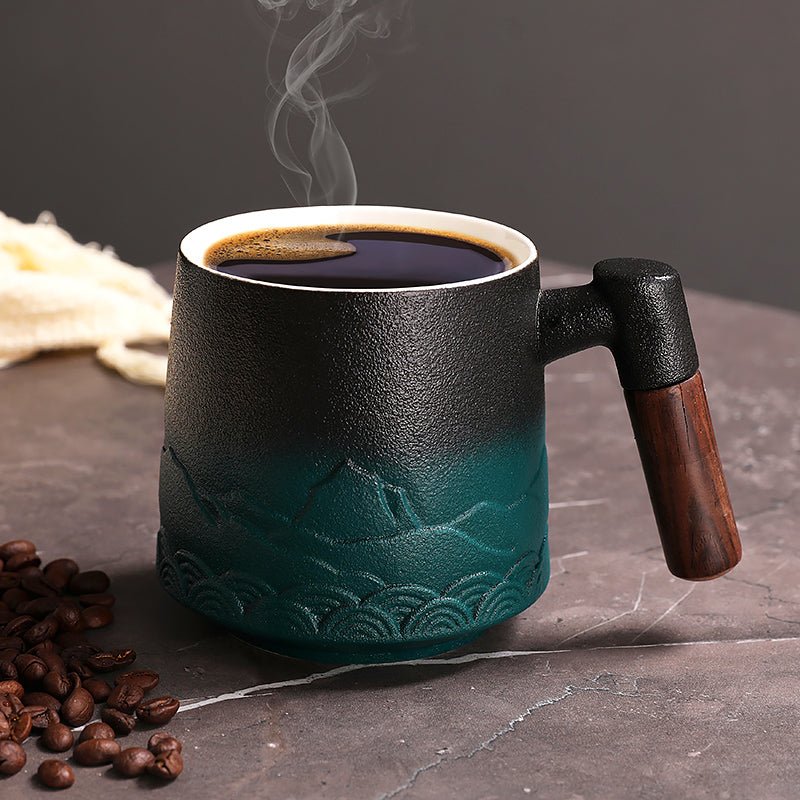
Non Toxic Coffee Mugs: What to Check Before You Buy
Reading time: about 9 minutes
A mug can look perfect on the shelf and still be annoying after a week of real use. The rim feels rough, the handle pinches two fingers, or the glaze starts to show fine lines after a few dishwasher cycles. That is why shoppers looking for non toxic coffee mugs usually need more than a pretty print. They need a mug that is comfortable, easy to clean, and built from materials that make sense for daily coffee.
In our store, we see the same buying pattern over and over: people want a mug that works at the kitchen counter, on an office desk, and after a gift unboxing. They do not want to guess about the drinking surface, and they do not want a cup that stains fast or feels fragile in normal use. The good news is that the right mug is usually easy to spot once you know what to check.
What does non toxic mean in a coffee mug?
For mugs, non toxic usually means the part that touches your drink is made from a material and glaze that are intended for food contact. It is not a style label. It is a practical question about the interior surface, the rim, any printed decoration, and whether the mug can hold up to regular washing without breaking down.
A mug can be safe for daily coffee and still not be the best choice for everyone. For example, a decorative mug may be fine for at-home coffee but not ideal if you microwave every refill, stack mugs tightly in a cabinet, or use abrasive scrubbers. A mug with a metallic accent can look sharp, but that same accent may make it a poor pick for microwave use. That is the kind of trade-off worth checking before checkout.
Our rule is simple: the drinking surface matters first, the care instructions matter second, and the decoration matters third.
Which materials are usually the best fit for daily use?
There is no single perfect material. The best one depends on how you actually drink coffee. A mug that is great for a quiet breakfast at home can be the wrong choice for an office desk or a travel-heavy routine.
| Material | What it does well | What to check |
|---|---|---|
| Ceramic | Classic feel, solid weight, usually easy to sip from, and often the most familiar option for daily mugs. | Look at glaze quality, rim smoothness, and whether the maker gives clear care guidance. |
| Porcelain | Typically lighter and smoother than heavier stoneware, with a clean feel for coffee or tea. | Check for chip resistance around the rim and handle, especially if you stack mugs. |
| Glass | Lets you see the drink and avoids hidden staining on the drinking surface. | Watch for thermal shock risk and confirm whether it is meant for hot drinks. |
| Stainless steel | Durable and good for keeping coffee off a fragile surface. | It is better for travel-style use than for a classic mug experience, and some people do not like the taste feel. |
For most shoppers looking for non toxic coffee mugs for the home, ceramic and porcelain are the easiest places to start. They are familiar, they feel good in the hand, and they usually pair well with a simple breakfast routine. The trade-off is weight: a thicker mug can feel sturdy, but it can also be a little heavier when full.
What should you inspect before buying?
We handle mugs the same way a careful customer should: we check the edges, the base, the handle, and the finish. A mug can look fine in photos and still have small defects that matter in daily use.
- Rim: Run your eye around the drinking edge. A smooth rim matters because tiny rough spots become obvious once you sip from the mug every morning.
- Interior glaze: Look for a consistent finish inside the cup. Pinholes, crazing, or patchy coverage are not things you want on a mug that will be washed and refilled often.
- Handle clearance: Make sure you can fit two fingers comfortably if you prefer a secure grip. A handle that is too tight gets old fast, especially when the mug is full.
- Base stability: A flat base that sits solidly on a counter or desk is a small detail that prevents a lot of annoyance. A mug that rocks feels cheap even if the artwork is good.
- Decoration: If the mug has metallic accents or raised decals, confirm how it should be used. Decorative surfaces are not the same thing as the drinking surface.
- Care instructions: Dishwasher safe does not mean indestructible. It means the mug is intended to survive normal cleaning, not repeated abuse with metal scrubbers or sudden temperature swings.
The common failure modes we look for are easy to miss at first glance: hairline crazing in the glaze, a chipped foot ring, a rough interior seam, or a handle that is attached cleanly but feels awkward in the hand. Those are the details that separate a mug you keep reaching for from one that ends up in the back of the cabinet.
Which size fits your routine better?
Size matters more than most product photos admit. A mug that is too small gets refilled constantly. A mug that is too large can cool too slowly, crowd your desk, or feel heavy when filled near the top.
If you are deciding between compact and fuller pours, our size guides on 12 oz Coffee Mugs: How to Choose the Right Mug for Daily Use and 16 oz Coffee Mugs: What to Check Before You Buy cover the practical fit questions. A 12 oz mug often works well for a standard coffee break, while a 16 oz mug gives more room for milk, foam, or a longer sit-down drink. If you want a middle ground, a 14 oz mug can feel more flexible without becoming oversized.
We see this most clearly in two places: a kitchen counter with a small drip setup and an office desk with a crowded layout. On the counter, a larger mug can be fine. On a desk, a slimmer mug with a stable base is usually easier to live with.
- 12 oz: Better if you want a familiar daily mug and do not usually load it with milk.
- 14 oz: Good if you like a little extra room but do not want a bulky cup.
- 16 oz: Better for longer drinks, bigger pours, or people who do not want to refill often.
If you want a deeper look at the middle sizes, our 14 Ounce Coffee Mugs: Size, Fit, and Buying Guide is useful for checking how the extra capacity changes the feel in hand.
Which mugs in our store fit this kind of buyer?
For shoppers who want non toxic coffee mugs that still feel thoughtful and giftable, we usually point them toward designs that balance comfort with clean interior finish and everyday usability. If you want a calmer desk mug, the The Crane Coffee Tea Mug is an easy starting point. If you prefer a more organic, nature-forward look, the Elk and Moon Coffee Tea Mug has that quieter visual style. For something with a bit more movement and color, the Koi Fish Coffee Tea Mug is a strong option.
Those are the kinds of mugs people tend to choose when they want a piece that works on a kitchen shelf and still feels good to give as a gift. They are not the right answer if you want insulated travel performance. If your real need is a lid, a sealed seal, or a coffee that stays hot through a commute, a travel tumbler is the better tool. A mug is for drinking, sitting, and refilling with ease.
If you want to compare more styles before deciding, browse our full all collection. That is often the fastest way to compare artwork, shape, and everyday fit without jumping between separate pages.
For a broader buying context, our related guides on 12 oz Coffee Mugs: What to Check Before You Buy and 16 Ounce Coffee Mugs: Size, Materials, and Fit Guide are useful if you are comparing capacity and shape at the same time.
How do you care for a mug so it stays safe-looking and usable?
Good care does not make a bad mug good, but it does help a good mug stay good. The most common problems we see are not dramatic. They are gradual: coffee staining on unglazed areas, light crazing from repeated temperature swings, or a chip from getting knocked against the sink.
- Wash it after use: Coffee oils build up fast. A daily rinse or dishwasher cycle keeps the interior cleaner and makes stains easier to avoid.
- Avoid abrupt temperature changes: Do not move a very cold mug straight into boiling liquid or a very hot mug onto a cold, wet counter. That kind of thermal shock is hard on ceramics and glass.
- Use gentle scrubbers: Hard pads can scratch glaze and make the finish look tired before the mug is actually worn out.
- Check for chips and cracks: A chipped rim or a crack near the handle is a sign to retire the mug from daily use.
- Store with space: Tight stacking can chip rims and handles, especially on heavier ceramic mugs.
Dishwasher-safe mugs are convenient, but convenience is not the same as indestructibility. If you want a mug that stays in rotation for a long time, handle the glaze gently and keep an eye on the edge where the mug takes the most abuse.
Frequently asked questions
Are ceramic coffee mugs non toxic?
They can be, but the key is the glaze and the food-contact surface, not the word ceramic by itself. A well-made ceramic mug is a normal daily-use choice for coffee, especially when the finish is smooth and intended for food contact. If the mug has heavy decoration, metallic accents, or visible glaze damage, check the product details before using it every day.
What materials are safest for coffee mugs?
For most home shoppers, ceramic and porcelain are the simplest, most familiar options. Glass can also be a clean choice if it is rated for hot drinks, while stainless steel is better when durability matters more than the classic mug feel. The safest pick is the one that matches the drink, the care routine, and the way you actually use it.
Can I put a non toxic coffee mug in the microwave and dishwasher?
Only if the maker says it is safe for that use. Many everyday ceramic mugs are dishwasher safe, but decorative details or metallic accents can change that. Microwave use is especially important to confirm because some finishes and printed elements should never go in.
What signs tell me a mug should not be used anymore?
Retire it if you see a chipped rim, a crack near the handle, deep crazing, or a glaze defect that seems to be spreading. Those flaws are not just cosmetic. They can make the mug harder to clean and less reliable for daily use.
What is the best mug size for everyday coffee?
For many people, 12 oz is the easiest daily size because it feels familiar and does not get bulky on a desk or counter. If you add milk or want a longer coffee break without refilling, 14 oz or 16 oz can make more sense. The best size is the one that fits your pour, your hand, and your shelf space.
If you want a quick next step, compare your preferred size, check the care instructions, and choose a design that fits where you actually drink coffee. Then start with our all collection and narrow it down from there.
Read more
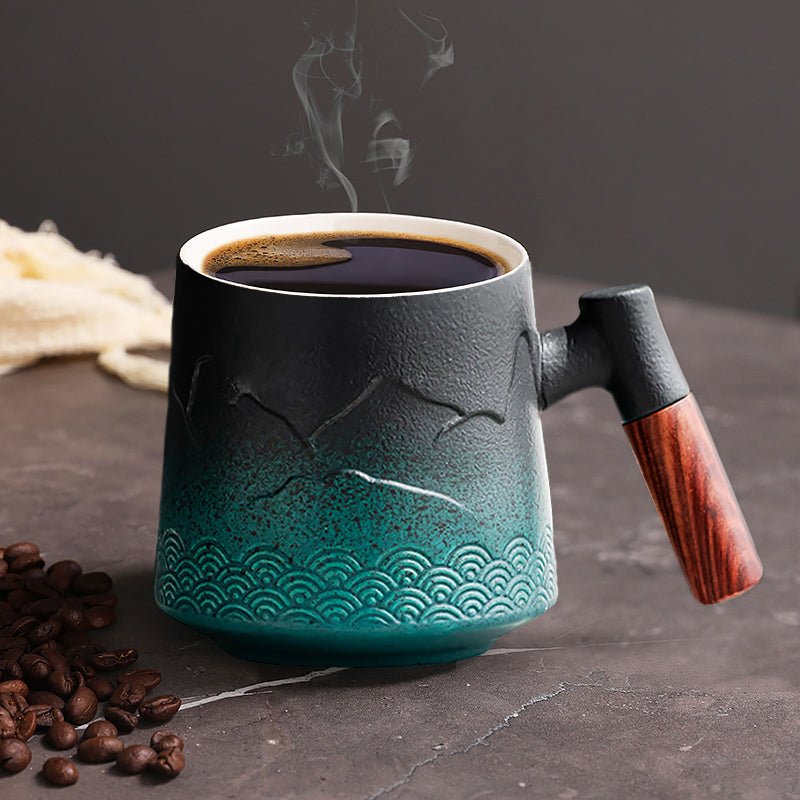
Handle Mug Buying Guide: Fit, Material, and Everyday Use
A handle mug should feel stable in the hand, stay comfortable near the rim, and fit your routine without fuss. We compare wooden-handle and ball-handled styles, plus the details that matter before ...
Read more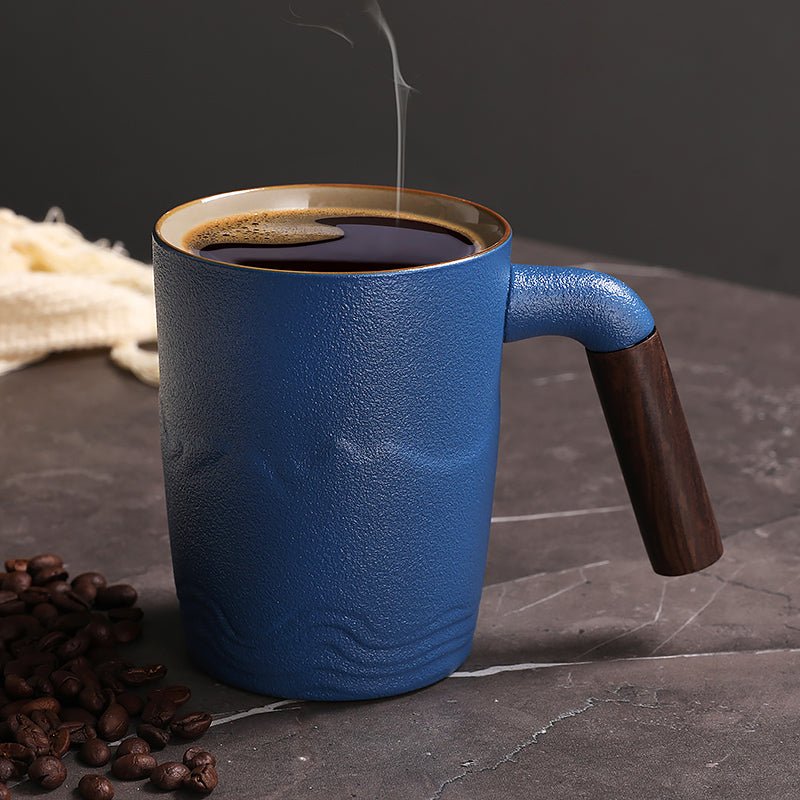
Drawing a Coffee Mug: What to Check Before You Buy
A practical guide to drawing a coffee mug as a buying shortcut: what to check in shape, handle comfort, finish, and care before you choose a mug for home, office, or gifting.
Read more
Los kommentaar
This site is protected by hCaptcha and the hCaptcha Privacy Policy and Terms of Service apply.