
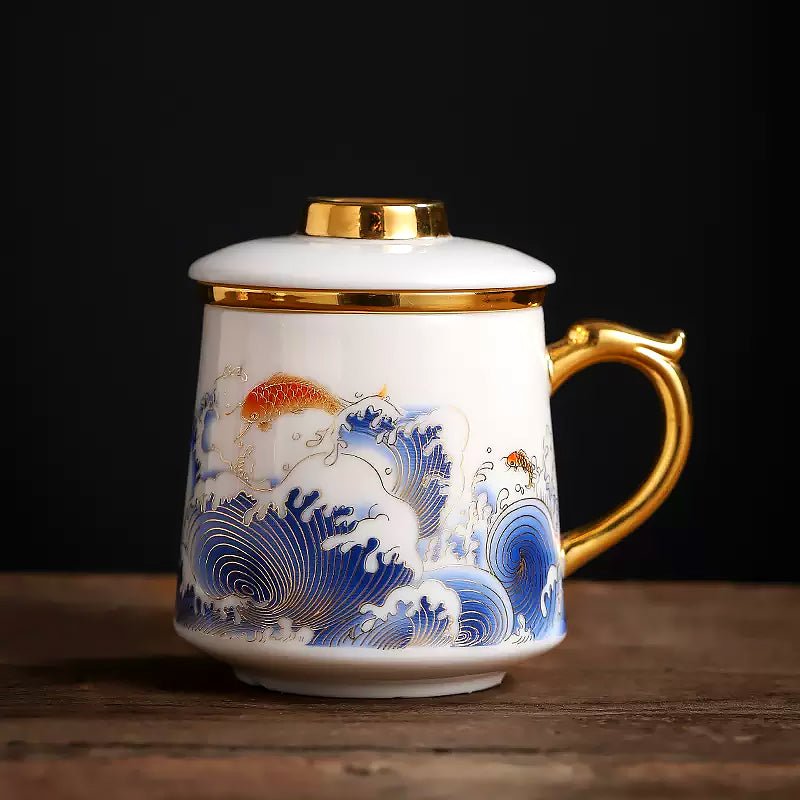
Microwave Safe Coffee Mugs: How to Choose a Mug That Holds Up
Reading time: about 8 minutes
A mug that comes back from the microwave with a scorching handle, a hot rim, or a fine crack in the glaze is the wrong mug for everyday use. We see that problem most often in kitchens where coffee gets reheated between meetings, on office desks where a drink sits too long, and in gift boxes where the buyer wants something practical, not fragile.
At CoffeifyMug, we treat microwave safe coffee mugs as a category with real trade-offs. Some mugs heat evenly and clean up easily. Others look good on a shelf but are poor choices for daily reheating. If you want a mug that feels solid in hand and holds up after repeated microwave and dishwasher use, the details matter more than the label on the product page.
Our store keeps that in mind across the pieces we stock, including the Planet Coffee Tea Mug and the Rhombus Coffee Tea Mug. If you want to compare more shapes and capacities, start with our full collection and filter by the style that fits your routine.
What actually makes a coffee mug microwave safe?
A mug is microwave safe when its materials and construction do not create a problem in microwave heat. That usually means a body made from ceramic or stoneware, a glaze without metallic decoration, and a handle or wall thickness that does not trap heat so aggressively that the mug becomes uncomfortable to use.
We look for a few practical signs before we recommend a mug for reheating:
- Non-metallic construction: no gold rim, silver leaf, foil transfer, or decorative metallic paint.
- Stable glaze: the surface should be smooth, sealed, and free of hairline cracks that can widen with repeated heating.
- Balanced wall thickness: thin enough to heat reasonably, thick enough not to feel flimsy in the hand.
- Comfortable handle: the handle should stay usable after a normal microwave cycle, not force a two-hand carry to the sink.
That is why we favor straightforward ceramic and stoneware mugs for most shoppers. They are easy to live with, easy to wash, and usually the best fit for a kitchen counter or office break room. For more background on what we check before adding a mug to our lineup, our post Microwave Safe Coffee Mug: What We Check Before We Stock One covers the practical screening process we use.
Which mug materials hold up best in a microwave?
Material is the first filter. A mug can look perfect in photos and still be a poor fit if the body or finish was chosen for appearance instead of daily heating.
| Material | Microwave use | What we watch for |
|---|---|---|
| Ceramic | Usually a good fit | Glaze quality, chip resistance, handle comfort |
| Stoneware | Usually a good fit | Weight, wall thickness, slower heat transfer |
| Porcelain | Often suitable | Finish durability, hairline cracks, rim wear |
| Glass | Sometimes suitable | Temperature shock, hot spots, handle shape if present |
| Metal or metallic-trimmed mugs | Not suitable | Arcing risk and decorative trim issues |
For coffee drinkers, ceramic and stoneware are usually the most forgiving choices. They handle the mix of microwave reheating, countertop use, and regular washing better than highly decorative pieces. A very thin mug may heat quickly, but it can also feel less secure when full. A very heavy mug can be comfortable, but it may be awkward for someone who drinks several cups a day or keeps a mug on a crowded desk.
If you are choosing for a smaller daily pour, our guide on 10 oz Coffee Mugs: How to Choose the Right Fit for Daily Use is useful. If you prefer a bit more room for cream or a longer coffee break, 12 oz Coffee Mugs: How to Choose the Right Mug for Daily Use covers the middle ground well.
How do size and shape affect microwave use?
Size changes the whole experience. A mug that is microwave safe on paper can still be annoying if it is too narrow for a normal spoon, too tall for your microwave turntable, or too wide to hold heat evenly.
In our experience, buyers usually run into three shape issues:
- Overly tall mugs: they can fit less comfortably under some microwave spinners and are harder to stir without splashing.
- Very wide mugs: they lose heat faster and are less practical if you like to sip slowly.
- Unbalanced handles: some designs look decorative but make a full mug feel awkward when hot.
That is where shape-specific choices matter. The Planet Coffee Tea Mug suits buyers who want a more distinctive silhouette without giving up day-to-day reheating convenience. The Rhombus Coffee Tea Mug leans more geometric, which appeals to shoppers who want something cleaner and more modern on a desk or shelf.
For people shopping by capacity first, the right size depends on how the mug will be used. A small cup can be better for quick espresso-style refills or tea. A larger mug is better for milk-heavy coffee, but it also means more heat retention concerns and more weight when full. If the mug will live in an office kitchenette, a moderate size often works better than an oversized statement piece.
What defects or details should you check before buying?
This is where shoppers save themselves from disappointment. A mug can be listed as microwave safe and still have weak points that show up after a few uses.
We check for the same failure modes customers run into at home:
- Hairline glaze cracks: tiny lines can collect moisture and worsen with repeated heating.
- Metallic accents: decorative rims or paint may not be obvious in product photos, but they matter in a microwave.
- Rough or unfinished bottoms: these can scratch countertops or feel unstable on a smooth desk.
- Loose handles or thin joins: the handle should feel integrated, not lightly attached.
- Interior staining risk: darker glazes and textured interiors can hide buildup if the mug is not cleaned well.
That is also why we prefer to talk plainly about what a mug is not good for. A decorative mug with a metallic finish is not the right pick for someone who reheats coffee all morning. A very delicate porcelain piece is not the best option for a shared office kitchen. A heavy stoneware mug may feel excellent at home but may be too bulky for a commuter who wants one hand free.
If you want a deeper buying checklist, the articles Microwave-Safe Coffee Mugs for Men: What to Check Before Buying and Coffee Mug Men Microwave Safe: What to Check Before You Buy go into the same practical points from a gift-shopping angle.
How should you clean and care for a mug you microwave every day?
The best microwave safe coffee mugs are the ones people keep using, not the ones that need special handling. Simple care matters.
Our everyday guidance is straightforward:
- Rinse the mug soon after use so coffee oils do not set in.
- Use a mild dish soap and a soft sponge for regular cleaning.
- Check the rim and handle area for chips if the mug has been dropped or knocked in the sink.
- Let the mug cool before washing if it has just come out of the microwave.
- Do not keep reheating a mug that already shows cracks, flaking glaze, or rattling internal damage.
Dishwasher use is common for modern mugs, but it is not a substitute for inspection. A mug can survive washing and still be a poor microwave choice if the finish is damaged. We see that often with mugs that look fine on the shelf but have been through years of daily use. The safest habit is to treat visible wear as a signal to retire the mug from microwave duty.
Practical rule: if a mug has a chip, a crack, or metallic decoration, it does not belong in the microwave. The label on the listing does not override what you can see in the glaze.
Which microwave safe coffee mugs make the most sense for gifting or daily use?
If you are buying for yourself, the right mug usually comes down to comfort and size. If you are buying as a gift, presentation and broad usefulness matter more. A mug that looks distinctive on unboxing but still works at the office kitchen is usually the strongest choice.
For gifting, we usually recommend a mug that:
- has a simple, durable surface finish
- does not rely on metallic trim or fragile decoration
- fits common coffee portions without feeling oversized
- can move from kitchen to office without special handling
That is why the Planet and Rhombus designs work well as practical gifts. They have enough visual character to feel considered, but they are not so delicate that the recipient has to baby them. If you want to browse more options before deciding, the full collection is the fastest way to compare forms, finishes, and everyday usability in one place.
Frequently asked questions
How can I tell if a coffee mug is really microwave safe?
Look for a non-metallic mug with a stable glaze, then check the product details for microwave-safe use. If the mug has gold, silver, or foil-like trim, skip it. A small test is not enough if the mug already has visible cracks or chips.
Are ceramic mugs always microwave safe?
No. Ceramic is often a good material for microwave use, but the glaze, decorations, and overall condition still matter. A ceramic mug with metallic paint or hairline damage is not a good microwave choice.
Can I microwave a mug with a small crack in it?
No. A cracked mug can trap moisture and break down further with heat. If you are unsure, keep that mug out of the microwave and use it for cold drinks or retire it.
Do larger coffee mugs work better in the microwave?
Not always. A larger mug gives you more room for milk or foam, but it can be heavier, harder to stir, and less efficient for quick reheating. For many buyers, a moderate size is the better everyday choice.
What kind of mug is worst for microwave use?
Metal mugs and mugs with metallic decoration are the clearest no. Very delicate decorative mugs and anything with visible chips or cracks are also poor choices. If the mug is mainly for display, it may not belong in regular reheating use.
If you want a mug that can actually live on a kitchen counter or office desk and still work after repeated reheating, start by comparing the shapes and finishes in our collection, then narrow to the mug that fits your daily routine rather than just the photo.
Read more
Owl Coffee Mug Buying Guide: What to Check Before You Order
A practical owl coffee mug guide for shoppers comparing size, comfort, print quality, and gift value. We cover what works for daily use, what to avoid, and which styles fit different buyers.
Read more
Owl Coffee Mug Buying Guide: Best Uses, Materials, and Fit
An owl coffee mug can be a fun gift or a daily desk mug, but the best choice depends on size, handle comfort, finish, and care. Here is what we check before stocking one in our store.
Read more
Los kommentaar
This site is protected by hCaptcha and the hCaptcha Privacy Policy and Terms of Service apply.