
Microwavable Coffee Mug Buying Guide: What to Check Before You Buy
Reading time: about 9 minutes
The first complaint we hear about a microwavable coffee mug is rarely about the microwave itself. It is usually about the mug: the handle gets too warm, the base wobbles on a desk, or the glaze shows tiny cracks after a few cycles. If you reheat coffee at work or at home, those details matter more than a cute print.
In our store, we look at a microwavable coffee mug the same way we would on a kitchen counter or next to an office keyboard: will it heat evenly, fit comfortably, and survive regular use? That is the standard here, not just whether it looks good in a photo.
What makes a coffee mug truly microwavable?
A mug is only useful in the microwave if the material, glaze, and decoration can take repeated heat without breaking down. Ceramic and stoneware are the usual safe bets, but the finish matters just as much as the base material. A mug with a sound, even glaze and no metal accents is far less likely to cause trouble than one with decorative foil, a chipped rim, or visible crazing.
We also check how the mug behaves in real use. A mug that passes the label check but comes out hotter than the drink is not a good daily buy. The same goes for a cup that feels fine empty but becomes awkward once it is full and warm.
| What we check | What good looks like | Why it matters |
|---|---|---|
| Material | Ceramic or stoneware with an even finish | Handles reheating more predictably |
| Decoration | No metallic trim, foil, or metallic paint | Metal and microwaves do not mix well |
| Handle | Enough room for two fingers, with a grip that stays comfortable | Reduces the chance of a hot, awkward hold |
| Base | Flat and stable | Less wobble on a desk or turntable |
| Rim | Smooth, even, and free of chips | Better drinking comfort and fewer weak points |
A simple at-home check helps too. Fill the mug with water, heat it briefly, and compare the mug temperature with the water temperature. If the mug itself gets uncomfortably hot, or if one side heats much faster than the other, we treat that as a warning sign.
A mug should help you reheat coffee, not become the thing you have to work around.
Which materials handle reheating best?
For most shoppers, the safest practical choice is still a ceramic or stoneware mug with a clean glaze. Those materials tend to handle everyday reheating well, and they are easy to rinse out after coffee, tea, or a splash of milk. Porcelain can also work, but the finish and thickness matter. A very thin porcelain mug may look refined, yet it can feel less forgiving in a busy kitchen or office sink.
Here is how we usually think about the common options:
- Ceramic: A reliable everyday pick. It is usually the most balanced choice for coffee drinkers who want low fuss and easy cleanup.
- Stoneware: Often a little heavier and more substantial in the hand. Good if you want a mug that feels steady on a desk.
- Porcelain: Sleeker and lighter, but not always the best choice if you want a rugged daily mug.
- Decorative coated mugs: Fine only if the listing clearly says they are microwave safe and the decoration has no metal.
The trade-off is simple. Heavier mugs feel stable, but they take longer to warm and can be less convenient if you carry coffee from the counter to a desk. Thinner mugs feel lighter, but they can heat up quickly and may not be the best fit if you reheat the same cup multiple times a day.
We see the difference most in everyday settings: a kitchen with a crowded drying rack, an office desk with a laptop and charger in the way, or a gift mug that needs to survive both display and use. If you want a mug that looks good and works hard, avoid overly delicate finishes.
How do size and shape affect daily use?
Capacity changes the experience more than many buyers expect. A smaller mug is easier to grip and usually leaves more room in the microwave, but it may not hold enough milk, cream, or foam if you like a larger drink. A bigger mug gives you more room for a long pour, yet it can feel bulky in the hand and may cool down a little faster if the drink spreads out more.
Shape matters too. A mug with a wide, stable base is easier to set down quickly on a desk. A narrower body may fit better under a cabinet or into a crowded cupboard. The handle should not just look good from the side. It should leave enough clearance for your fingers without forcing you to grip at an angle.
If you are still deciding between common mug sizes, our 10 oz Coffee Mug: Size, Fit, and What to Check Before You Buy and 12 oz Coffee Mug Buying Guide for Fit, Comfort, and Daily Use cover the usual trade-offs in more detail.
For a microwavable coffee mug, we pay attention to three dimensions in particular:
- Height: A taller mug can be harder to fit under cabinet shelves and inside compact microwaves.
- Diameter: A wider opening helps with stirring milk, sugar, or instant coffee, but it can cool faster.
- Handle clearance: If the handle is too tight, it becomes annoying every time you lift a full mug.
Which CoffeifyMug options should I compare first?
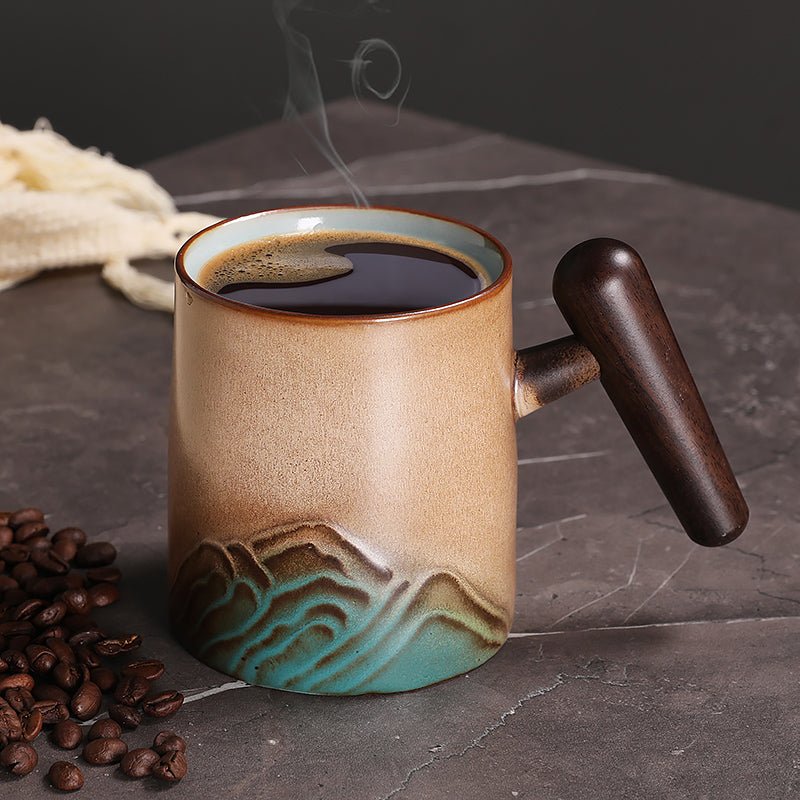
If you want to compare specific styles from our store, start with the Spittoon Coffee Tea Mug, the Planet Coffee Tea Mug, and the Rhombus Coffee Tea Mug. Each product page is useful for checking the mug profile, the handle shape, and the care notes before you buy. For the full range, browse our collection and compare the current options side by side.
The reason we suggest comparing a few styles instead of shopping by image alone is simple: mugs feel different in the hand than they look on screen. One mug may have a wider handle gap, another may sit lower and feel sturdier, and another may have a profile that looks elegant but is less comfortable for repeated use. That is the kind of detail shoppers notice after the first week, not the first glance.
In our experience, the best buying decision comes from matching the mug to the actual routine:
- Desk coffee that gets reheated between meetings.
- Kitchen coffee that moves from counter to microwave to breakfast table.
- Gift mugs that need to look clean out of the box and still hold up after dishwasher cycles.
If the mug is mostly decorative, you can prioritize shape. If it will be used every day, put comfort and easy cleaning first. That trade-off is where many shoppers get tripped up.
What should I avoid if I microwave coffee every day?
Some mugs are fine for display or occasional use but become annoying fast when you heat coffee daily. We would skip these:
- Anything with metal trim or metallic printing: Gold rims, silver edges, foil graphics, and similar decoration are a bad fit for microwaves.
- Chipped or crazed glaze: Hairline cracks and surface crazing can collect stains and may worsen over time.
- Very thin walls: Thin mugs can heat up quickly and make the handle less comfortable.
- Loose or undersized handles: If the handle feels cramped empty, it will feel worse when the mug is hot and full.
- Unstable bases: A mug that rocks on the counter is frustrating and less safe near a crowded sink or desk.
We also avoid overpromising on decorative mugs that are not clearly labeled. If the product page does not state microwave compatibility, do not assume it will behave like a plain ceramic mug. That is especially true with heavily printed surfaces, raised embellishments, or unusual finishes.
One more practical point: a microwavable coffee mug is not always the right choice if you want to heat soup, oatmeal, or large portions of broth. For that, a wider bowl or a larger vessel is often easier to handle and less likely to overflow.
How do you care for a mug that goes from microwave to dishwasher?
A mug that gets used every day needs basic care, not special treatment. Still, a few habits make a real difference. We have seen plenty of mugs last longer simply because the owner stopped shocking the ceramic with extreme temperature changes and stopped using a chipped mug out of habit.
Use this routine if you want the finish to hold up:
- Heat in shorter bursts, then stir before reheating again.
- Do not move a very cold mug straight from the fridge to a hot microwave cycle.
- Let the mug cool before you rinse it in cold water.
- Handwash printed or detailed mugs if you want the artwork to stay crisp longer.
- If the listing says dishwasher safe, the top rack is usually the gentler choice.
The most common damage modes we see are small chips on the rim, hairline cracks near the handle, and glaze wear on the bottom edge from repeated placement on rough surfaces. None of that is dramatic at first. It just turns a perfectly usable mug into one that feels tired faster than it should.
If you want more help on capacity before you pick a style, our 10 oz Coffee Mug: What Fits, What Doesn’t, and What to Buy can help you judge what actually belongs in the cup you will use every day.
Frequently asked questions
How do I know if a coffee mug is microwave safe?
Look for a clear microwave-safe note on the product page or packaging, then check for metal trim, foil, or decorative accents. A good mug should also have an even glaze, a stable base, and no visible cracks or chips. If the mug gets hotter than the liquid after a short test, we would not use it regularly.
Can I put a mug with a metallic design in the microwave?
No. Metallic paint, gold rims, silver trim, and foil decorations do not belong in a microwave. Even small accents can cause sparking or damage, so choose a plain ceramic or stoneware mug instead.
Is ceramic or stoneware better for a microwavable coffee mug?
Both can work well. Ceramic is usually the lighter, more common everyday choice, while stoneware often feels heavier and more substantial in the hand. The better pick depends on whether you value a lighter mug or a sturdier feel.
Why does my mug get hotter than my coffee?
That usually means the material is absorbing heat quickly or the mug is thin enough to warm fast. It can also happen if the mug has hidden defects or an uneven glaze. A mug that consistently overheats in the microwave is not a good daily-use option.
Can I use a microwavable coffee mug for tea or soup?
Yes, if the mug is large enough and the maker says the mug is safe for heated liquids. Tea is usually fine, but soup and thicker foods can push the capacity limit faster than coffee does. If you often heat larger portions, a wider vessel may be easier to use.
If you want the shortest path to a good pick, compare the handle, base, and care notes first, then choose the style that matches how you actually reheat coffee. Start with the product pages above, then browse our full collection to find the microwavable coffee mug that fits your kitchen, desk, or gift list.
Read more
Michael Myers Coffee Mug Buying Guide for Horror Fans
A Michael Myers coffee mug works best when the size, handle, and print quality fit daily use, not just Halloween week. We break down what to check before buying and which mug style makes the better...
Read more
Flowered Coffee Mugs: What to Check Before You Buy
A practical guide to flowered coffee mugs, with what to check for size, handle feel, print quality, and care before you buy. We also compare nature-inspired mugs that work well for daily coffee, gi...
Read more
Los kommentaar
This site is protected by hCaptcha and the hCaptcha Privacy Policy and Terms of Service apply.