
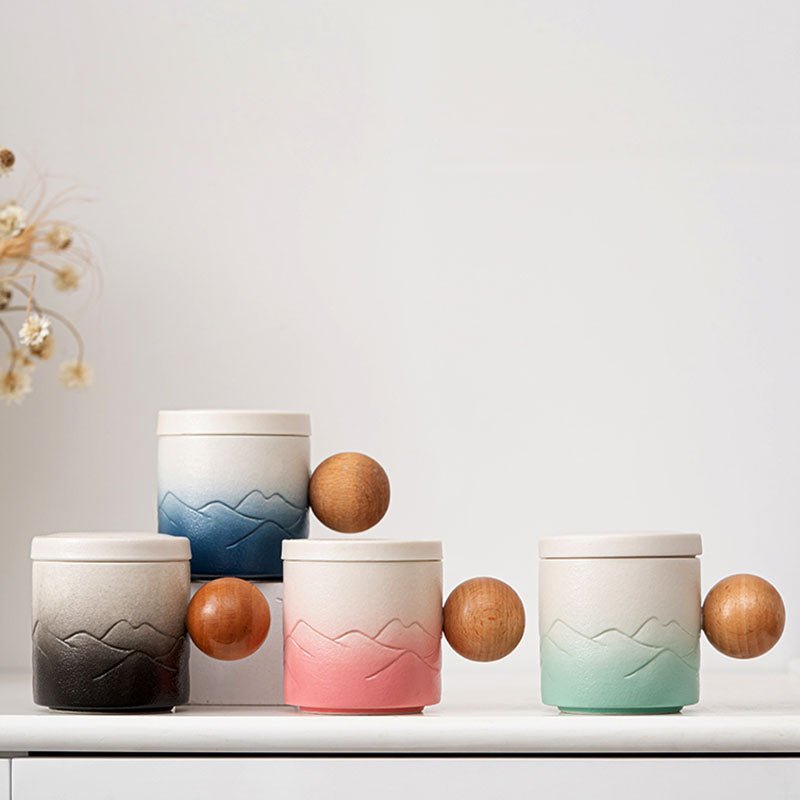
Matcha Latte Mug Daily Use Guide: 250 ml, 390 ml, or 400 ml?
Reading time: about 9 minutes
A 250 ml mug can look almost as substantial as a 400 ml mug in a tightly cropped product photo. The difference becomes obvious at 7:30 a.m., after the prepared matcha and milk are combined: the drink either sits at a comfortable level or fills more of the mug than your routine allows. This matcha latte mug daily use guide uses the catalog facts we can verify - listed capacity, one listed diameter, and opening shapes visible in the product images - without treating a photograph as proof of performance.
In our store, we start by asking shoppers about the finished drink, not just how much water appears in the recipe. Milk, foam, ice, and any extra liquid all affect the space required. We also separate measurable facts from assumptions: capacity does not establish heat retention, care compatibility, whisking performance, or what tools may be included.
The three relevant options cover two noticeably different capacity ranges. The Ball Handle mug is listed at 250 ml, while the Round and Spittoon mugs are listed at 390 ml and 400 ml. That makes the first decision fairly practical: do you make a modest serving, or do you want room for a larger finished drink?
250 ml, 390 ml, and 400 ml: what changes at the counter?
The Ball Handle 250 ml mug is the compact-capacity starting point. It makes sense for a shopper whose measured recipe stays around that range and who does not mind refilling later. It is not the best fit for a routine drink that already reaches 300 ml before foam or ice is considered.
If the overall profile matters as much as volume, compare the current images in our unique coffee mug collection. Product photos can show the opening silhouette and handle style, but they should not be used to estimate unlisted measurements.
| Option | Verified listing detail | Practical daily fit | Likely mismatch |
|---|---|---|---|
| Ball Handle | 250 ml; listed 11.2 cm diameter | Measured smaller servings and planned refills | Recipes above 250 ml or a preference for substantial empty space |
| Round | 390 ml; rounded opening visible in images | Larger milk-forward servings without moving to the highest listed capacity | Shoppers specifically seeking the smallest option |
| Spittoon | 400 ml; outward-flared opening visible in images | The largest listed capacity of these three and a visibly flared profile | Modest servings or a preference for a less flared upper shape |
The Round and Spittoon capacities differ by only 10 ml. By comparison, the Round holds 140 ml more listed capacity than the Ball Handle, and the Spittoon holds 150 ml more. Do not expect the 390-to-400 ml change to transform serving size; the visible opening profile is the clearer distinction between those two listings.
Matcha latte mug daily use guide for counters, desks, and refills
The same mug can feel appropriate in a kitchen and inconvenient at a crowded workstation. We use these everyday situations to make the capacity numbers concrete:
- A short kitchen routine: Choose the Ball Handle mug if your measured finished drink fits within its listed 250 ml capacity and you prefer a smaller serving. Skip it if you regularly add enough milk or ice to take the recipe beyond that figure.
- A longer desk session: The Round 390 ml mug gives 140 ml more listed capacity than the Ball Handle. It fits a larger one-mug serving, but it is not a reason to assume spill resistance, better heat retention, or easier cleaning.
- Your recipe approaches 400 ml: The Spittoon 400 ml mug has the highest listed capacity here. It is the logical volume check for the largest recipe, although its 10 ml advantage over the Round is small and its flared opening may not suit every visual preference.
Refill habits matter too. Someone who enjoys two smaller drinks may find 250 ml more natural than carrying one larger serving to a desk. A shopper who dislikes returning to the kitchen should first measure the full recipe and compare it with 390 ml and 400 ml. Capacity cannot tell you which habit is better; it can show which mug is less likely to conflict with the habit you already have.
Does the visible opening shape suit your routine?
Opening shape is useful as a visual comparison, but its limits should be clear. The listing images show circular openings on the Ball Handle and Round designs, while the Spittoon design has a more outward-flared upper profile. That information can help you choose the silhouette you want to see on an open shelf or desk.
It does not prove how a rim will feel to a particular person. It also does not establish whisk clearance, pouring behavior, heat retention, or ceremonial authenticity. If any of those qualities is central to your purchase, ask for specific confirmation instead of inferring it from the mug name or photograph.
The Ball Handle listing includes an 11.2 cm diameter, which is a useful concrete detail with an important boundary. The available fact calls it a diameter; it does not identify it specifically as the inner opening diameter or as the total width including the handle. Use 11.2 cm as a listed comparison figure, not as a substitute for an unlisted cabinet-clearance measurement.
How should you measure a finished matcha latte?
A recipe described as one cup is not precise enough for this purchase. Cup can refer to a measuring unit, a drinking vessel, or an informal serving. A quick measurement in your own kitchen produces a much better answer.
- Record the amount of water and milk normally used, including any liquid sweetener or other additions.
- For a cold serving, account for the space displaced by ice rather than comparing liquid alone with the mug capacity.
- Decide how much empty space you personally want above the drink. Listed capacity is not a promise that filling to that amount will leave comfortable carrying room.
- Compare the resulting requirement with 250 ml, 390 ml, and 400 ml. If the total is close to a limit, choose deliberately instead of assuming the nominal difference will be enough.
For example, a measured 240 ml drink is below the Ball Handle mug's listed 250 ml capacity, but the 10 ml nominal difference leaves little mathematical margin. A 320 ml recipe exceeds 250 ml and falls below both larger listed capacities. Those comparisons are more useful than judging scale from a styled product image.
This process evaluates the serving vessel only. It does not claim that any of these mugs is optimized for whisking directly inside it, and it does not imply that a whisk, scoop, or other preparation tool is included.
Arrival, cabinet, and care checks before daily use
A daily mug should earn its place before it disappears into the back of a cabinet. We recommend a short inspection as soon as the package arrives, especially if the mug is intended as a gift.
- Inspect the rim in bright light: Look for chips or a rough spot before using the mug. This is a shipping and arrival check, not a suggestion that damage is expected.
- Check the handle attachment: Examine the areas where the handle meets the body for visible hairline cracks. Set the mug on a flat counter and check for unexpected rocking.
- Confirm physical storage: Compare the Ball Handle mug's listed 11.2 cm diameter with the space you have, while remembering that the listing does not define that figure as total handle-to-edge width. The Round and Spittoon dimensions should not be guessed from photos.
- Read current care directions: Do not make the first dishwasher cycle or microwave use an experiment. Use either appliance only if the current product instructions explicitly permit it.
- Avoid unsupported care assumptions: Appearance alone does not identify appliance compatibility or resistance to rapid temperature changes. If the directions call for hand washing, follow them and use the cleaning method they specify.
For a gift unboxing, an arrival inspection also prevents the recipient from discovering a shipping issue later. Keep the original packaging until the condition and ordered design have been confirmed. If a product detail essential to your routine is not stated, contact our store before use rather than relying on a general rule for mugs.
Will the same capacity work for tea, cappuccino, or a gift?
A mug selected for matcha often enters a broader drink rotation, but capacity does not transfer perfectly between recipes. Loose leaf tea introduces preparation and leaf-removal considerations that are separate from this article's matcha serving comparison. Our 250 ml, 390 ml, and 400 ml loose leaf tea mug guide examines those sizes in that context.
If the Ball Handle's 250 ml listing is closest to your normal drink, compare it with the smaller serving ranges in our 170 ml to 270 ml cappuccino mug guide. That check is useful for households that make both drinks, but it still does not mean one recipe should use the other's volume.
For gifting, start with the recipient's routine rather than your own favorite capacity. A 400 ml mug can be a poor gift for someone who consistently makes compact servings, while 250 ml can frustrate someone whose usual recipe is larger. Our coffee mug gift daily use guide covers recipient habits and practical unboxing checks in more detail.
Frequently asked questions
Is a 250 ml mug large enough for a matcha latte?
It can be if your complete recipe, including milk and other liquid additions, remains below the listed capacity with the empty space you prefer. This matcha latte mug daily use guide treats 250 ml as the compact option, not a universal matcha serving size. Measure your own finished drink before ordering.
Should I choose a 390 ml or 400 ml matcha latte mug?
The listed capacities differ by only 10 ml, so start with the visible design distinction: the Round has a rounded opening, while the Spittoon has a more outward-flared upper profile. Choose 400 ml if that small extra listed capacity and flared shape match your preference; choose 390 ml if the Round profile is the better fit.
Does the Ball Handle mug have an 11.2 cm opening?
The Ball Handle listing gives an 11.2 cm diameter, but the available fact does not define it as the inner opening diameter. Do not use that number as a mouth measurement or total handle-to-edge width unless the product details specifically confirm it. Ask our store if that exact clearance controls your decision.
Can these matcha latte mugs go in a dishwasher or microwave?
We are not making dishwasher or microwave compatibility claims for these options. Check the current product page and care instructions before using either appliance. Shape and capacity are not evidence of appliance compatibility.
Can I whisk matcha directly in these mugs?
We cannot confirm whisking performance from listed capacity or visible opening shape alone. If direct in-mug whisking is essential, request specific confirmation before ordering or plan to prepare the drink in a separate vessel. No included preparation tools should be assumed from this comparison.
A 30-second checkout check
- Write down the measured volume of your usual finished drink.
- Choose 250 ml for a genuinely smaller serving, 390 ml for a larger Round option, or 400 ml for the highest listed capacity and flared Spittoon profile.
- Remember that 390 ml and 400 ml differ by only 10 ml.
- Review the visible opening shape and verify any unlisted dimensions that affect your cabinet or desk.
- Confirm current care instructions instead of assuming dishwasher, microwave, or temperature compatibility.
With those answers in hand, open the unique coffee mug collection and compare the live product images against your measured serving and available space. That gives you a concrete next step without asking a mug photo to answer questions it cannot prove.
Read more
Abstract Coffee Mug Daily Use Guide: 250 ml or 400 ml?
Compare the verified 250 ml Rhombus and 400 ml Gradient and Flow mugs by serving size, desk fit, cleaning decisions, and visual style. See clear reasons to choose each option and situations where a...
Read more
Large Unique Coffee Mugs Daily Use Guide: Real Trade-Offs
A practical comparison of capacity, carrying weight, cabinet and dishwasher fit, decorative care, desk use, and three CoffeifyMug designs. Use it to rule out attractive mugs that could frustrate yo...
Read more
Los kommentaar
This site is protected by hCaptcha and the hCaptcha Privacy Policy and Terms of Service apply.