
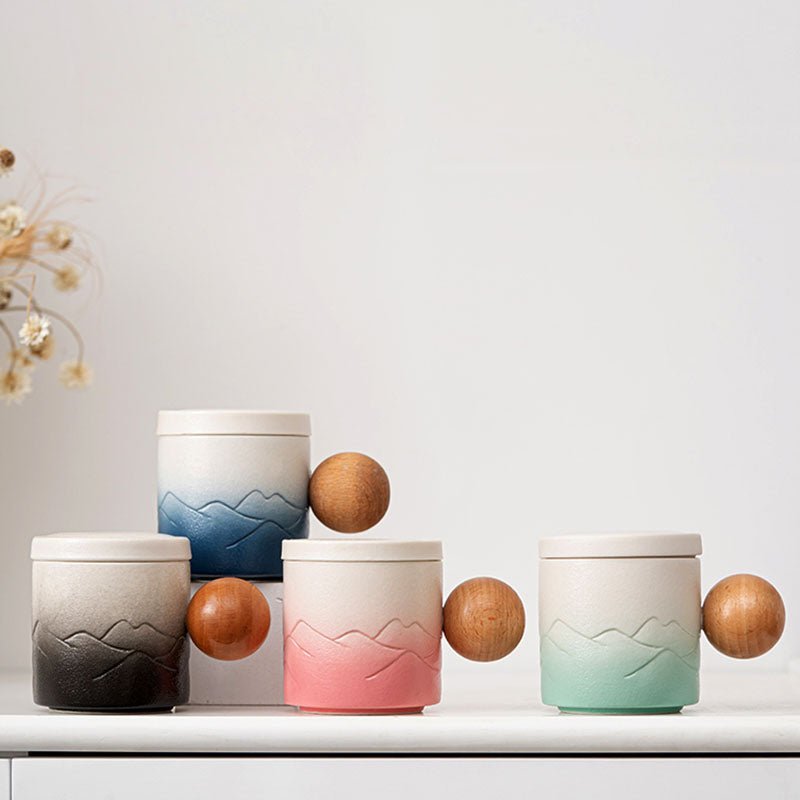
Large Tea Mugs: How to Choose the Right One for Daily Use
Reading time: about 9 minutes
A mug that looks perfect on a product page can feel wrong after two refills. The handle may crowd your fingers, the rim may cool the tea too fast, or the cup may be too tall to sit comfortably under a kettle spout. That is the real buying problem with large tea mugs: size is only useful if the shape works in daily use.
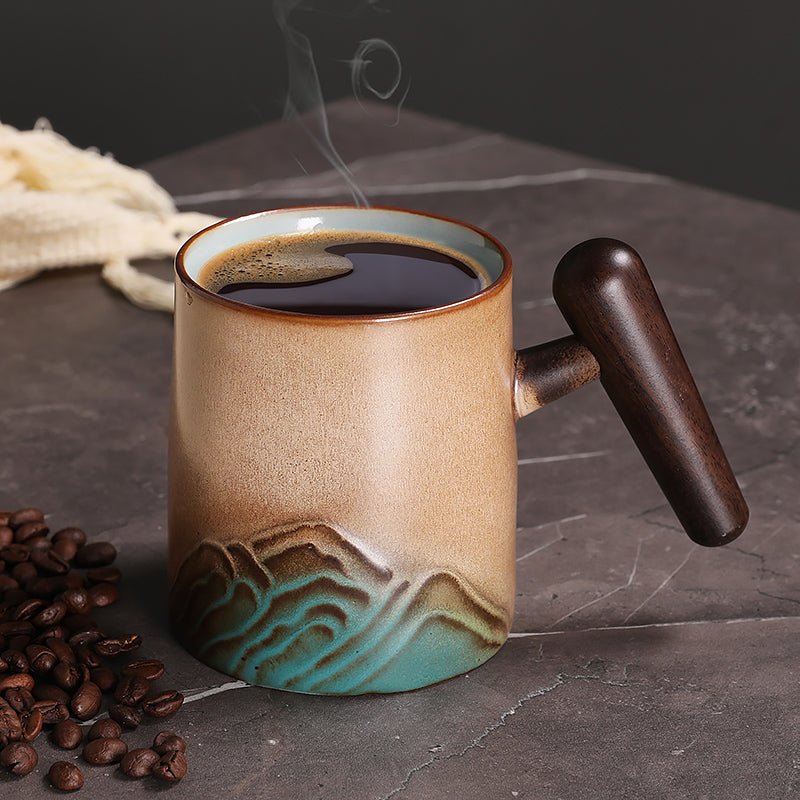
We sell and handle this category every day, so we pay attention to the details shoppers notice after the unboxing. A good large mug should be easy to hold with one hand, stable on a desk, and comfortable to drink from while the tea is still hot. If you want to browse the full range first, start with our tea mugs collection. If you already know you want a specific style, a few examples worth comparing are The Flow Coffee Tea Mug, White Golden Waves Tall Coffee Tea Mug, and Mountain Sea II Coffee Tea Mug with Wooden Handle.
What makes a large tea mug actually useful?
A large tea mug is not just a bigger cup. It should solve one of three everyday problems: your tea goes cold too quickly, you want a single long pour instead of constant refills, or you prefer a mug that can carry tea, milk, and a little extra headroom without splashing. In our experience, shoppers usually want a mug that feels generous but still behaves like a mug, not a bowl.
The best large tea mugs usually have three traits:
- A comfortable handle that leaves room for two fingers without forcing a tight grip.
- A stable base so the mug does not feel top-heavy when full.
- A rim that is smooth and easy to drink from, especially if you sip tea throughout the day.
That balance matters more than raw capacity. A very wide mug can look impressive, but if it heats unevenly or takes up too much desk space, it becomes a kitchen cabinet item instead of a daily one.
How do you pick the right size without overbuying?
Shoppers often assume bigger is always better. It is not. A large mug is a better fit only if you regularly pour enough tea to justify the extra volume. If you usually drink a small cup and then let it sit, a larger vessel can make the tea cool faster before you finish it.
Use this simple filter when comparing large tea mugs:
- Think about your serving size. If you brew one strong cup and sip slowly, a large mug makes sense. If you top up often, a standard mug may be enough.
- Check the footprint. A tall mug can save counter space, while a wide mug may feel more balanced but take up more room in a dishwasher rack.
- Match the mug to the drink. Loose-leaf tea with milk, chai, or a tea latte often benefits from more room than a small black tea service mug.
- Look at how you hold it. If your fingers feel cramped in the handle when the mug is full, the size is wrong no matter how nice it looks.
If you want a deeper buying framework, our guide Big Mugs for Tea: How to Choose the Right Large Mug covers the trade-offs between capacity, comfort, and shape. For a more tea-specific breakdown, Large Mugs for Tea: How to Choose the Right Size and Shape is a useful companion.
Which shape works better: tall, wide, or handled?
Shape changes the drinking experience more than many shoppers expect. A tall mug usually feels more compact on the counter and can keep the tea in a narrower column, which some people prefer for heat retention. A wider mug gives the tea more surface area, which can be nice if you add milk or want a calmer sip, but it may cool a little faster.
| Shape | Best for | Trade-off |
|---|---|---|
| Tall mug | Desk use, smaller cabinet footprint, generous serving size | Can feel top-heavy if the base is too narrow |
| Wide mug | Easy sipping, milk tea, relaxed home use | Takes more space in the cupboard and dishwasher |
| Handled mug with special finish | Daily use, gift buying, standout tableware | Needs more care if the handle has wood or a mixed-material detail |
For example, White Golden Waves Tall Coffee Tea Mug is the kind of shape shoppers usually choose when they want height without a bulky footprint. By contrast, Mountain Sea II Coffee Tea Mug with Wooden Handle appeals to people who care about the hand-feel as much as the look, especially if they want a mug that feels more distinctive than a plain diner-style cup.
What materials and finishes should you pay attention to?
Material matters because tea drinkers notice heat, weight, and surface finish every time they use the mug. Most buyers start with appearance and end up caring about how the mug behaves after a week on the sink, the office microwave, or the dishwasher rack. A smooth glazed mug is usually easier to clean. A mug with a textured exterior may feel more tactile, but it can show fingerprints or tea splash marks differently.
Here are the practical details we tell shoppers to check before buying:
- Glaze quality. Look for an even surface. Pinholes or thin spots can be a sign of inconsistent finish, especially around the rim and handle join.
- Handle attachment. The junction between handle and body is one of the most common stress points. If the handle looks thin or sharply angled, that area deserves a closer look.
- Finish compatibility. If a mug includes a wooden handle or accent, hand-washing is usually the safer choice because repeated dishwasher heat and moisture can age the material faster.
- Weight. Large mugs should feel substantial, not clumsy. A mug that is too heavy when empty is annoying before you even pour tea into it.
For shoppers comparing all-day use versus occasional serving, our article Best Tea Mugs for Daily Use: Size, Shape, and Materials gives a more detailed breakdown of what tends to hold up well on real kitchen counters.
What should you expect from a mug in real daily use?
We think this is where many product pages stay too vague. A large tea mug should survive ordinary life: morning brews, desk use, rinse cycles, and the occasional impatient grab from the rack. It should also stay pleasant after repeated washing. If a mug chips easily at the rim or develops stress marks near the handle, that matters more than a decorative pattern ever will.
In our store, we look for the kind of mug that works across real scenarios:
- Kitchen counter use: easy to fill without drips from a kettle or teapot.
- Office desk use: stable enough to sit next to a laptop without feeling precarious.
- Gift unboxing: a mug should look thoughtful right away, not like a generic spare cup.
- Dishwashing: smooth surfaces and simple curves usually clean more predictably than deeply ribbed designs.
One trade-off to accept: a decorative large mug is not always the best pick for someone who wants ultra-light drinkware. If you travel between rooms a lot, or if you want a mug that fits neatly under a small espresso machine or compact brewer, a smaller or simpler cup may be a better fit than a dramatic oversized mug.
Which large tea mugs fit different buyers best?
Different shoppers care about different details, and that is where a product comparison helps. Our team usually sorts the category into three buying profiles:
- The practical daily drinker. This person wants a mug that is easy to hold, easy to wash, and large enough for a full tea break. A balanced option like The Flow Coffee Tea Mug fits that use case well because it reads as everyday drinkware rather than a display piece.
- The style-first shopper. This person wants a mug that adds visual character to the kitchen or office. A tall silhouette or patterned glaze usually makes more sense here than a plain oversized cup.
- The gift buyer. This person wants something that feels more considered than standard supermarket drinkware. A mug with a distinct finish, like the wooden-handle design, tends to feel more personal out of the box.
If you are still deciding, our buyer-focused post Big Tea Mugs: How to Choose the Right Large Mug for Daily Tea is useful for narrowing the field without getting buried in generic advice. We also cover related size choices in Giant Tea Mugs: How to Choose the Right Large Mug for shoppers who already know they want a very generous cup.
How should you care for a large tea mug so it lasts?
Large mugs take more abuse than people realize. They are heavier when full, they get knocked against sinks and drying racks, and the widest ones often collect tea residue near the base of the interior curve. A simple care routine helps prevent the common problems we see: dulling around the rim, tea staining on light interiors, and small chips where mugs bang together in storage.
Keep the care routine practical:
- Rinse soon after use if you brew strongly colored teas like black tea or chai.
- Do not stack mugs tightly if the rims are delicate or glazed with a decorative edge.
- If the mug has a wooden handle, wash it gently and dry it right away.
- Watch for hairline cracks around the handle joint; that area takes the most stress over time.
Those small habits matter more than fancy storage. They are the difference between a mug that looks good for months and one that starts to feel worn after a short stretch of daily use.
Frequently asked questions
How big should a large tea mug be for daily use?
For daily use, the right size is the one that holds your usual pour without leaving too much empty space. If you like one long tea session, a larger mug is practical. If you only drink a small amount at a time, a very large mug may cool the tea too quickly before you finish.
Are large tea mugs good for loose-leaf tea?
Yes, especially if you brew tea that needs room for leaves, milk, or a little extra pour room. A larger mug makes it easier to use an infuser or brew directly in the cup. Just make sure the opening is wide enough for cleanup.
Can large tea mugs go in the dishwasher?
Many can, but care depends on the finish and any mixed-material detail. A plain glazed mug is usually straightforward to wash, while a mug with a wooden handle should be treated more carefully. If the mug has decorative accents, hand-washing is the safer choice.
What is the downside of choosing a very large mug?
The main downside is that it may feel bulky when empty and awkward when full. It can also take up more storage space and may not fit neatly under smaller brewers or narrow dish racks. A mug that is too large for your routine often ends up used less often.
Which large tea mug is best if I want something for both tea and coffee?
Choose a balanced shape with a comfortable handle and a finish that cleans easily. A versatile option like The Flow Coffee Tea Mug is the kind of mug shoppers often pick when they want one cup for both drinks instead of separate specialty mugs.
If you want the fastest way to narrow your choice, compare three things: handle comfort, mug shape, and how much care the finish needs. After that, browse our tea mugs collection and pick the mug that fits your tea routine instead of just your eye. If you want more sizing guidance first, start with Big Mugs Coffee: How to Choose a Large Mug That Works Daily and use the same logic for tea.
Read more
Large Mugs for Tea: How to Choose the Right Size and Shape
A practical buying guide for large mugs for tea, with size, shape, handle comfort, and cleaning trade-offs that matter in daily use. Use it to narrow down the right mug before you buy.
Read more
Massive Mugs for Tea: Size, Shape, and Materials That Work
Massive mugs for tea are useful when you want fewer refills, a steadier desk routine, or a gift that feels generous without being flimsy. This guide covers the sizes, materials, and handle details ...
Read more
Los kommentaar
This site is protected by hCaptcha and the hCaptcha Privacy Policy and Terms of Service apply.