
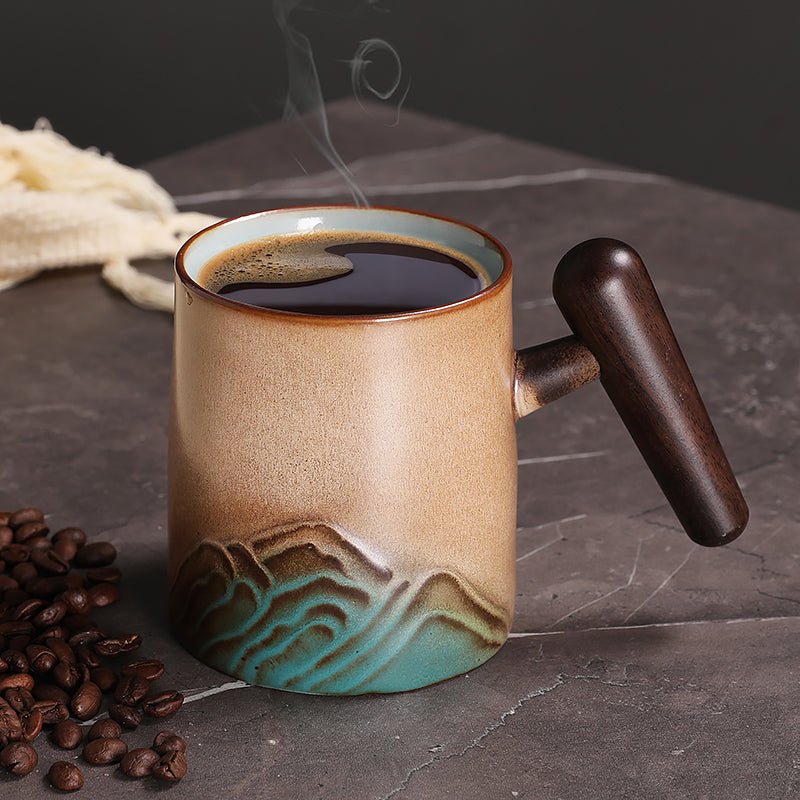
Large Coffee Cup Buying Guide: What to Check Before You Buy
Reading time: about 9 minutes
A large coffee cup sounds simple until you set it next to your coffee maker and realize the handle brushes the machine, the mug feels too heavy when full, or the rim is wider than you expected. We see that all the time in our store. Shoppers want more coffee in one cup, but they still want something comfortable to hold, easy to wash, and practical on a real kitchen counter or office desk.
If you are comparing options, the best place to start is our current large coffee cup selection and the broader all collections page. Then use the details below to narrow it down by size, material, and daily use. If you want the fuller decision framework, our buyer’s guide to large capacity coffee mugs and big coffee cups guide cover the basics from a buyer’s angle.
What size counts as a large coffee cup?
Most shoppers mean anything larger than a standard 8 to 10 oz cup. In practice, a large coffee cup usually starts around 12 oz and can run up to 16 oz, 18 oz, or more. The right size depends on how you drink coffee, not just how much you want in the mug.
We usually tell customers to think in terms of use, not just volume:
- 12 oz works well for a modest pour, small cappuccino-style drinks, or tea.
- 14 to 16 oz suits drip coffee drinkers who want fewer refills.
- 18 oz and above is better for oversized pours, long desk sessions, or people who add milk and still want room left at the top.
One trade-off shows up fast: the bigger the mug, the wider the base and the heavier the full cup can feel. That is fine on a kitchen table. It can be awkward in a car cup holder or when you are carrying it upstairs with one hand. A large coffee cup is not the best choice if you need a travel-friendly vessel. For that, a lidded tumbler usually makes more sense.
Which material should you choose for everyday use?
Material affects heat retention, weight, durability, and the feel of the rim. In our experience, most shoppers choosing a large coffee cup are deciding between ceramic, porcelain, and stoneware. Each has a slightly different personality.
| Material | What it feels like | Main trade-off |
|---|---|---|
| Ceramic | Solid, familiar, easy to pair with most kitchens | Can chip if knocked against a sink or counter edge |
| Porcelain | Refined, often lighter in hand, smooth rim | Can feel less forgiving if you prefer a heavier mug |
| Stoneware | Thicker, sturdy, more substantial for large pours | Usually heavier, especially when filled to the brim |
For many daily drinkers, ceramic is the practical middle ground. It handles morning coffee well, looks at home on a desk, and is usually straightforward to wash. Porcelain tends to feel a little more polished, which matters if you are buying a mug as a gift or want a cleaner tabletop look. Stoneware can be the best fit if you like a mug with more weight and heat staying power, but it is not ideal if you dislike heft.
We recommend checking the rim and the handle more carefully than the material name alone. A large cup with a thick, bulky rim can feel clumsy. A handle that is too narrow can make an otherwise good mug annoying to use with larger hands. If you are comparing ceramic styles, our coffee cup mug ceramic guide breaks down what buyers should inspect before purchasing.
How do you know if a large coffee cup will feel comfortable in hand?
This is where many shoppers get surprised. A mug can look perfect online and still feel off once you lift it. Comfort depends on the handle opening, balance, and the proportion between the cup body and the handle.
Here is what we look at in our store when judging comfort:
- Handle clearance — There should be enough room for your fingers without pressing knuckles against the body.
- Balance when full — A wide mug filled near the top should not feel top-heavy or awkward to tilt.
- Rim thickness — A thinner, smoother rim usually feels better for daily sipping than a chunky edge.
- Body shape — Straight-sided mugs tend to feel different from tapered mugs, even at the same ounce size.
A large coffee cup is not always the best option for someone who prefers one-handed sipping while standing at the sink, doing dishes, or heading out the door. If the handle is too small or the cup is too broad, it can feel more like a serving bowl than a mug. That is not a defect; it is just the wrong style for your routine.
Our team sees fewer returns when shoppers match the mug to the place it will live most often: the office desk, the breakfast table, or the nightstand for tea and cocoa.
What details should you check before buying?
Photos tell part of the story, but a few product details matter much more once the mug arrives. These are the specific points we use when reviewing a large coffee cup for our store:
- Exact capacity — Look for the ounce size, not just “large.” There is a meaningful difference between 12 oz and 18 oz.
- Dimensions — Height and width matter if the mug needs to fit under a drip machine, shelf, or cabinet.
- Glaze finish — A smooth glaze is easier to clean; textured finishes may show fingerprints or hold coffee marks more visibly.
- Dishwasher suitability — Daily use gets easier if the mug can handle regular dishwasher cycles without fading or roughening.
- Microwave use — Useful for reheating, but not every mug is equally comfortable to remove afterward if the handle gets hot.
- Base stability — A flat, stable base helps prevent wobbles on narrow desks and crowded counters.
Small defects show up more often in oversized mugs than in smaller ones. We watch for uneven rims, glaze pooling near the base, handle seams that feel rough, and minor wobbles when the mug is set down. None of those are dramatic on a product page, but they matter a lot in daily use. A mug that wobbles on a wood desk will annoy you every morning.
If you want a broader checklist for gift buying or daily use, our big mug coffee guide is a useful next read.
Is a large coffee cup good for coffee makers and office use?
Sometimes yes, sometimes not. A large coffee cup works well with many drip coffee setups and French press routines, but you need to confirm the fit. Measure the clearance under your machine’s spout or warming plate before buying. Some oversized mugs are too tall, while others are too wide to sit properly under the brew head.
For office use, large cups can be excellent. They cut down on refills and work well for long stretches at a desk. That said, they are not ideal for every workplace setup. A very wide mug can take up too much space beside a laptop or keyboard, and a heavy stoneware mug may be better left at a kitchen table than carried from room to room.
We often suggest this simple rule:
- Choose a larger cup if you pour once and sip slowly.
- Choose a slimmer mug if you need it to fit a coffee machine or narrow shelf.
- Choose a lighter material if you keep it on a desk all day and lift it often.
For shoppers looking for seasonal colors or gift-ready styles, our autumn coffee mugs guide is helpful if you want something that feels more intentional than a plain utility mug.
What should you expect from care and durability?
A good large coffee cup should handle daily washing without losing its shape or finish. In real use, that means surviving repeated dishwasher cycles, warm rinses, and the occasional clink against a sink basin. The bigger the mug, the more wear it can take from being stacked, stored, and lifted by the handle.
We always recommend checking care notes before checkout. A few practical habits help most mugs last longer:
- Do not slam a ceramic or stoneware mug into a metal sink.
- Let the mug cool before moving it from hot drink to cold rinse water.
- Wash printed or decorated surfaces gently if the finish is more delicate.
- Dry the base fully if you store mugs in a closed cabinet to avoid moisture marks.
Large mugs are not perfect for every buyer. If you need something ultralight, impact-resistant, or made for commuting, a travel mug may be the smarter purchase. A large coffee cup is better for home, office, gifting, and slow coffee routines than for carrying coffee in a bag.
Which large coffee cup style is best for gifting?
Gifting changes the equation. A mug that feels oversized to one person can feel generous and thoughtful to another. For gifts, we usually lean toward balanced shapes, smooth finishes, and colors that work in more than one kitchen style. A very unusual handle or an extremely oversized body can look fun online but be harder to love long term.
Good gift candidates tend to have these qualities:
- Neutral or seasonal color choices
- A comfortable handle that works for different hand sizes
- A capacity that is large without feeling excessive
- Easy-care instructions that do not complicate everyday use
If you are shopping for a holiday or host gift, our Christmas coffee cup buying guide offers a practical way to choose a mug or set that feels useful instead of decorative-only.
Frequently asked questions
How many ounces is a large coffee cup?
Most shoppers consider 12 oz and up to be a large coffee cup, with 14 to 16 oz being a common everyday sweet spot. Larger sizes like 18 oz or more work better for people who want fewer refills or add a lot of milk.
Is a large coffee cup too big for daily coffee?
Not if you drink slowly or want a bigger pour in one sitting. It can be too big if you prefer espresso-based drinks, need something lightweight, or use a narrow coffee machine with limited clearance.
Can I put a large coffee cup in the dishwasher and microwave?
Many can, but you should always check the product care notes. Dishwasher-safe and microwave-safe are useful for daily routines, but decorated mugs, metallic accents, or certain finishes may need gentler handling.
What is the best material for a large coffee cup?
For most buyers, ceramic is the easiest all-around choice. Porcelain feels a bit more refined, while stoneware offers a heavier, sturdier feel. The best one depends on whether you value lightness, texture, or heat retention more.
Why does a large mug sometimes feel awkward even if the capacity is right?
Shape matters as much as size. A wide body, thick rim, or small handle can make a technically correct mug feel clumsy in hand, especially when it is full. That is why we always check the proportions, not just the ounce count.
If you want to compare styles side by side, start with our large coffee cup products and keep this checklist in mind: capacity, handle comfort, base stability, care instructions, and whether the size fits your coffee maker or desk setup. Then choose the mug that fits your routine, not just the photo.
More from our blog
Read more
Camping Cup Buying Guide: Materials, Sizes, and Real Trade-Offs
A practical guide to choosing a camping cup for coffee, tea, and trail use. We cover materials, sizes, care, and the trade-offs that matter before you buy.
Read more
Coffee Mug With Teddy Bear: What Buyers Should Check Before Ordering
A coffee mug with teddy bear can be a sweet gift, but the details matter more than the theme. Here’s what to check for size, material, care, and everyday use before you buy.
Read more
Los kommentaar
This site is protected by hCaptcha and the hCaptcha Privacy Policy and Terms of Service apply.