

How Many Cups in a Coffee Mug? Real Mug Sizes Explained
Reading time: about 8 minutes
A mug on the counter looks simple until someone asks for a recipe measurement, a refill, or a gift for a coffee drinker who hates tiny cups. We hear that question a lot: how many cups in a coffee mug?
The short answer is that there is no single standard. A mug can hold roughly 1 to 2 cups, and sometimes more, depending on the mug size, shape, and how close you fill it to the rim. In our store, we treat mug capacity as a buying detail, not an afterthought, because a mug that feels perfect in the hand can still be the wrong size for a regular pour.
If you want to compare actual mug styles while you read, start with our all mugs collection. For a taller profile that suits a larger pour, take a look at the Mountain Tall Coffee Tea Mug.
How many cups does a coffee mug usually hold?
Most everyday coffee mugs hold between 8 and 12 fluid ounces, which works out to about 1 to 1.5 cups if you use the standard 8-fluid-ounce cup measure. Larger mugs often hold 14 to 16 ounces or more, which pushes them closer to 2 cups.
The tricky part is that “cup” can mean different things in different settings. In the kitchen, a standard measuring cup is 8 fluid ounces. In everyday conversation, people often call any full mug a cup of coffee even when the mug itself holds more than one measured cup.
That is why the question how many cups in a coffee mug has a practical answer rather than a fixed one:
- 8 oz mug: about 1 cup
- 10 oz mug: about 1.25 cups
- 12 oz mug: about 1.5 cups
- 14 to 16 oz mug: about 1.75 to 2 cups
If your coffee routine starts with a drip machine, those differences matter. A mug sized for 12 ounces can feel generous for black coffee, but it may be too small if you add milk, foam, or room for stirring.
Why does a mug’s shape change the answer?
Two mugs with the same ounce rating can feel very different in use. A wider mug spreads the liquid surface out, while a taller mug stacks the volume upward. That changes how hot the coffee stays, how easy it is to sip, and whether you can fit the mug under a machine spout.
We see this difference all the time when buyers compare a compact round mug with a tall one. A taller mug can hold more liquid without looking oversized on the desk. A wider mug can feel steadier and easier to stir, but it may cool faster because more of the surface is exposed.
Three things that affect real-world capacity:
- Rim width: A broad opening makes the mug feel less deep, even when the ounce count is the same.
- Wall thickness: Thick ceramic walls slightly reduce internal volume compared with thin-wall mugs of the same outside size.
- Fill line: Most people stop below the brim, so the usable amount is less than the listed capacity.
That is why a mug labeled as 12 ounces may only comfortably serve about 10 to 11 ounces in daily use, especially if you do not want coffee sloshing onto the saucer, desk, or carafe tray.
How do you convert coffee mug ounces to cups?
The simplest conversion is straightforward: 8 fluid ounces equals 1 cup. So if you know the mug’s ounce capacity, divide by 8 to get the number of cups.
| Mug capacity | Approximate cups | Best for |
|---|---|---|
| 8 oz | 1 cup | Small pour, espresso-based drinks, tea |
| 10 oz | 1.25 cups | Black coffee with a little room at the top |
| 12 oz | 1.5 cups | Standard daily coffee mug |
| 14 oz | 1.75 cups | Longer drink, milk added, larger hands |
| 16 oz | 2 cups | Big pour, soup-style use, desk mug |
That table is the cleanest way to think about it, but there is one caveat: manufacturers do not always mark capacity the same way. Some measure to the brim. Others use a more conservative working capacity. If you are buying a mug as a gift, a little extra headroom is usually safer than choosing the smallest possible size.
If you want a deeper comparison of large formats, our guide on Big Coffee Cups: How to Choose the Right Large Mug for Daily Use covers the trade-offs that matter at breakfast tables and office desks.
What size mug works best for daily coffee?
For most shoppers, the sweet spot is a 10 to 12 ounce mug. It is large enough for a normal coffee pour, but not so big that the drink gets cold before you finish it. It also tends to fit comfortably under home coffee machines and on crowded work desks.
That said, the best size depends on how you actually drink coffee:
- If you drink black coffee slowly, a 10-ounce mug keeps the serving manageable.
- If you add milk, cream, or foam, a 12-ounce mug gives you room to stir without spilling.
- If you want one mug for coffee and tea, 12 to 14 ounces is usually more versatile.
- If you regularly refill once the mug is empty, a smaller mug may be better than one oversized cup.
We often steer buyers away from very large mugs when they only want a standard morning pour. A huge mug can be awkward to hold, heavy when full, and less satisfying if you do not actually want two cups at once. Bigger is not always better.
What should you check before you buy a mug online?
Online photos can hide the details that matter most. A mug can look generous in a styled image and still turn out too small for your usual pour. Before you buy, check these points:
- Listed capacity: Look for ounces, not just the product name.
- Height and diameter: Tall mugs and wide mugs behave differently on the counter and in hand.
- Material: Ceramic is the most common for everyday mugs, but it can chip if stacked carelessly or knocked against a sink.
- Care instructions: Dishwasher-safe and microwave-safe are helpful for daily use, but always confirm the listing before assuming both.
- Handle size: A mug can hold the right amount and still feel awkward if the handle is too small for your grip.
We also watch for common defect modes in this category: a rough glaze spot near the lip, a handle seam that feels uneven, or a base that wobbles slightly on a flat counter. Those are small issues, but they show up fast once a mug gets used every morning.
If you are comparing gift-ready styles, our article on Christmas Coffee Cups: How to Choose the Right Mug for Gifts and Daily Use is useful because holiday mugs often trade capacity for decoration.
Which mug style fits a desk, kitchen, or gift best?
Different mug shapes solve different problems. We do not recommend trying to make one shape do everything.
A taller mug works well when you want a compact footprint on a desk or a bit more volume without a wide, bulky profile. A rounded everyday mug is easier to wash and easier to stir. A decorative mug is great as a gift, but it may not be the best choice if the recipient wants a plain workhorse mug for daily coffee.
In our store, we usually guide shoppers this way:
- Desk use: Choose a stable base and moderate height so it does not crowd the keyboard.
- Kitchen use: Choose a mug that fits under your machine and can handle frequent dishwasher cycles.
- Gift use: Choose a design that looks good on the shelf, but still has a practical handle and drinkable rim.
If you want a design-forward everyday option, compare our Green Waves Coffee Tea Mug with the more seasonal Christmas Coffee Tea Mug. They solve different buying problems even before you think about volume.
For a broader buying checklist on size and shape, our post Big Coffee Cups: What to Check Before You Buy a Large Mug covers what we inspect before adding oversized mugs to a shelf.
Can a coffee mug be too big or too small?
Yes. That is where most buyers get disappointed. A mug that is too small forces you into refills or leaves no room for milk. A mug that is too large can make a normal coffee serving feel lost in the cup, and the extra volume may cool before you finish it.
Here is the practical trade-off:
- Too small: Good if you want a concentrated pour, but frustrating for long mornings.
- Too large: Good if you drink slowly or add a lot of extras, but inefficient for standard drip coffee.
- Just right: Usually the one that matches your usual pour with a little extra room at the top.
We tell customers to think about the coffee they actually make on a Tuesday morning, not the biggest drink they ever pour on a weekend. That is the use case that matters.
Frequently asked questions
How many cups in a 12 oz coffee mug?
A 12 oz mug holds about 1.5 standard cups. In real use, the amount you comfortably drink is usually a little less because you leave space below the rim.
Is a coffee mug always 1 cup?
No. Many mugs are larger than 1 cup, and some are smaller. A standard measuring cup is 8 fluid ounces, while everyday mugs are often 10 to 16 ounces.
What size coffee mug is best for a regular cup of coffee?
For most people, 10 to 12 ounces is the most practical range. It gives enough room for a normal pour without making the mug oversized on a desk or in the hand.
Why does my mug look bigger than it measures?
Wide openings and thick handles can make a mug look larger than its actual capacity. The shape changes the visual impression even when the ounce count is modest.
Should I buy a bigger mug for milk coffee or lattes?
Yes, usually. Milk-based drinks need extra room for foam, milk, and stirring, so a 12 to 16 ounce mug is often more practical than a small standard cup.
If you are still deciding, start with the right size first and the design second. Our full mug collection makes it easy to compare everyday sizes side by side, and the product pages show the styles we actually sell for real kitchen use.
Read more
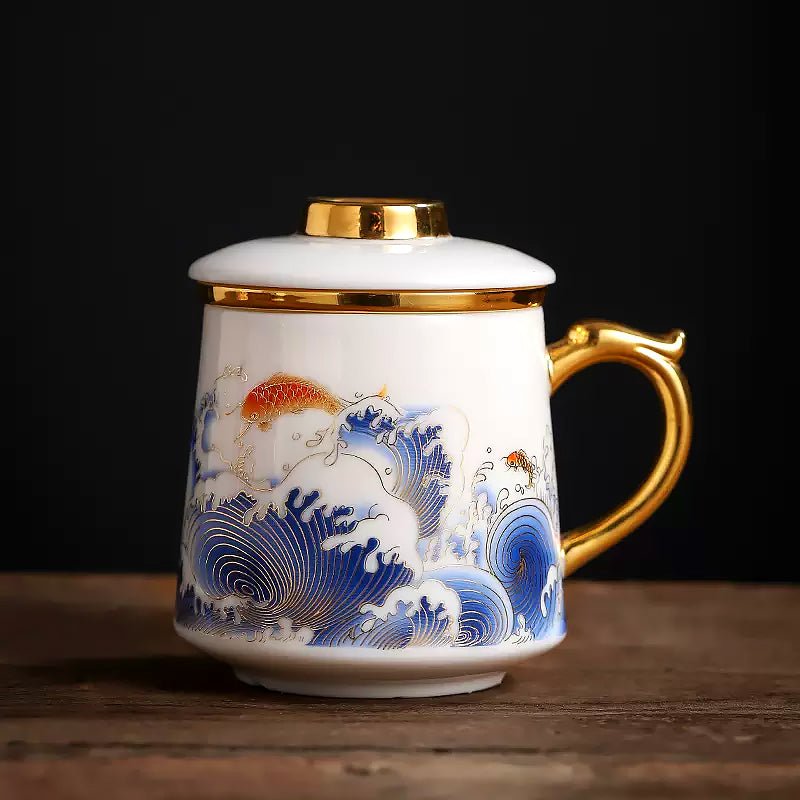
Business Coffee Mugs for Offices, Gifts, and Daily Desk Use
Practical guidance for choosing business coffee mugs that hold up on real desks, in meeting rooms, and in gift orders. We compare shape, size, comfort, and the trade-offs that matter before you buy.
Read more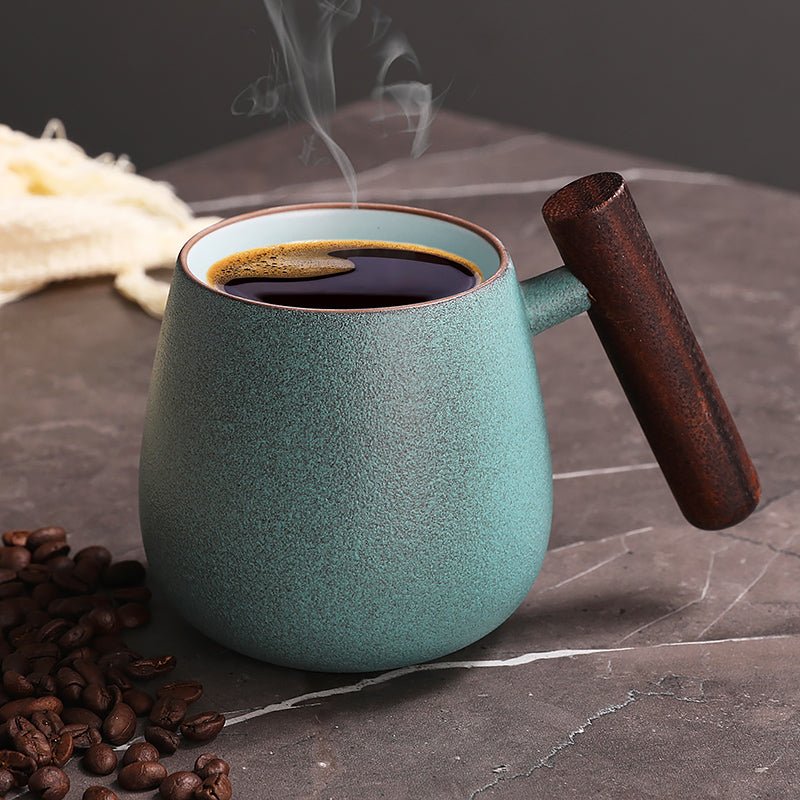
Personal Coffee Mugs: How to Choose the Right One for Daily Use
Personal coffee mugs work best when they fit your drink, your grip, and your routine. Here’s how we help shoppers compare sizes, handles, materials, and gift-friendly styles before buying.
Read more
Los kommentaar
This site is protected by hCaptcha and the hCaptcha Privacy Policy and Terms of Service apply.