
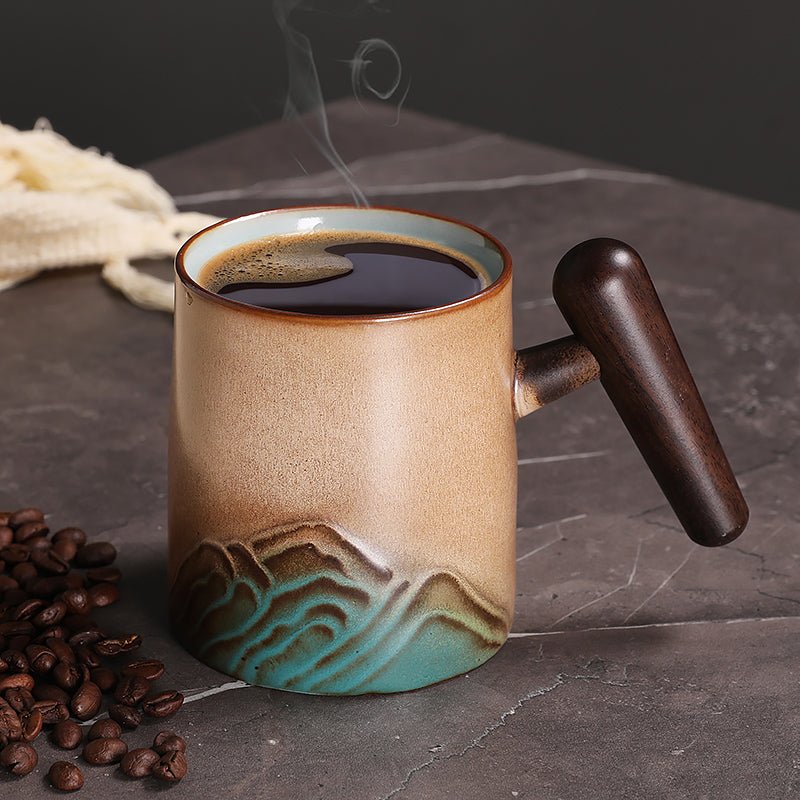
How Big Is a Typical Coffee Mug? Sizes, Use Cases, and Best Fits
Reading time: about 8 minutes
A 10-ounce mug looks ordinary on a shelf, but on a kitchen counter it usually turns into a very specific choice: enough coffee for a black pour, not always enough for a milky latte, and sometimes too small if you like room at the top for cream. That is why the question of how big is a typical coffee mug matters more than it sounds.
In our store, we look at mug size the same way buyers do in real life. We care about the ounces printed on the page, but we also care about the shape in your hand, the space on a desk, how it fits under a drip machine, and how it feels after a week of washing and refilling. A mug that looks right in photos can still be the wrong size for your routine.
If you want a broad starting point, browse all mugs in our collection. If you already know you prefer something with a sturdier feel, our The Rock Coffee & Tea Mug is a useful reference point when comparing everyday sizes.
How big is a typical coffee mug?
Most everyday coffee mugs sit in the 8 to 12 ounce range. That is the practical answer for home use, office desks, and gift buying. Once you get beyond that range, you are usually looking at a large mug or a specialty cup rather than a standard mug.
Here is the simplest way to think about it:
| Common mug size | What it usually feels like | Best for |
|---|---|---|
| 8 oz | Compact and tidy | Smaller black coffees, tea, espresso-based drinks with little room for milk |
| 10 oz | Most like a classic everyday mug | Drip coffee, tea, standard office use |
| 12 oz | Roomier without feeling oversized | Longer pours, coffee with milk, buyers who want a little extra headspace |
| 14 to 16 oz | Clearly large | Big morning drinks, cocoa, soup, or people who want one vessel for more volume |
The number on the spec sheet is only part of the story. A mug advertised at 12 ounces may not feel like a full 12 ounces once you factor in the curved interior, the thickness of the walls, and the room left below the rim so you do not spill on the way from counter to couch.
Why do two 10-ounce mugs feel so different?
Two mugs can share the same capacity and still feel completely different in use. One may be short and wide. Another may be taller and narrower. That changes how heavy it feels when full, how much surface area the drink loses heat from, and whether the mug feels balanced on a desk or crowded in the hand.
We also pay attention to details that shoppers do not always notice at first glance:
- Rim shape: a rolled rim feels different from a thin, sharp one.
- Handle clearance: if two fingers fit only tightly, the mug can be annoying when it is hot.
- Wall thickness: thicker walls usually feel sturdier, but they can make a mug heavier and reduce usable capacity.
- Base shape: a flat, stable foot sits better on a crowded table than a narrow base that wobbles on tile or wood.
This is why ounces alone never tell the full story. A 10-ounce mug with a wide bowl can look and feel bigger than a 12-ounce mug with taller walls and a smaller mouth.
Which mug size fits your daily drink?
Start with what you actually pour, not what looks nice in a product photo. If you drink black coffee, a standard 8 to 10 ounce mug is usually enough. If you add milk, foam, or extra water, 10 to 12 ounces tends to work better. If you want one mug for coffee, tea, and the occasional soup at a desk, 12 ounces or more is easier to live with.
Here is a practical breakdown from a buyer's point of view:
- Black coffee drinkers: 8 to 10 ounces is often the cleanest fit. It keeps the cup from feeling oversized and usually works well under smaller brewers.
- Latte and cappuccino drinkers: 10 to 12 ounces gives you more room for milk and foam without forcing a refill.
- Tea drinkers: 10 to 12 ounces is comfortable for most loose-leaf or bagged teas, especially if you like a longer sip time.
- Gift buyers: 10 or 12 ounces is usually the safest middle ground because it is familiar, easy to wrap, and not too specialized.
- People who want a large breakfast mug: 14 ounces and up starts to make more sense if the goal is fewer refills and a bigger hand feel.
If you prefer a mug with more presence on a desk or kitchen counter, compare that feeling against The Rock Coffee & Tea Mug. For a wider view of sizes and shapes, keep all mugs open while you compare.
For shoppers who are leaning larger, our earlier guides can help narrow the trade-off between size and daily comfort: Big Coffee Cups: How to Choose the Right Large Mug for Daily Use and Big Coffee Mug Buyer's Guide: Size, Comfort, and Daily Use.
What details matter besides ounces?
Ounces are useful, but they are not the whole buying decision. Three real-world details usually matter more after the first week of use: material, care, and how the mug ages.
Material changes the feel a lot. Stoneware usually feels heavier and more grounded in the hand. Porcelain is often lighter and a little finer at the rim. Standard ceramic mugs can land somewhere in between depending on wall thickness and finish. None of those materials is automatically best; the right one depends on how you use the mug and whether you prefer a solid or lighter feel.
Care instructions matter too. Many mugs are dishwasher safe, but printed graphics, metallic accents, and hand-finished glazes can wear faster if they are blasted through a rough cycle every day. If you want the finish to stay cleaner longer, hand washing is gentler. If you prefer convenience, put it on the top rack when the product guidance allows it and avoid sudden temperature swings.
Common defect modes are worth checking before you buy. We look for rough rim edges, glaze crazing, tiny chips on the foot ring, and handles that feel narrow or poorly centered. A mug can still be usable with a cosmetic flaw, but a bad rim or a wobbly base is not something to ignore.
One more practical point: a typical coffee mug is usually not the best choice for someone who wants a travel cup, a spill-proof lid, or an all-day cold drink. If you need something for commuting or a bag, a travel tumbler is the better tool. If you want a lot of volume for latte-style drinks or soup, a larger mug may be the better fit than a standard 10-ounce cup.
How do standard mugs compare with larger mugs?
Standard mugs are easier to store, easier to stack, and usually less awkward under a home brewer. Larger mugs give you more room, but they also bring trade-offs. They can feel heavy when full, they take more cabinet space, and they are not always the right match for a compact drip machine or a narrow desk setup.
That trade-off is the reason we do not push every shopper toward the biggest mug available. A large mug is not automatically better. For many buyers, the sweet spot is still a standard 10 or 12 ounce mug because it is flexible enough for coffee, tea, cocoa, and daily use without taking over the shelf.
If you are still deciding between a standard size and something larger, a deeper comparison can help: Big Coffee Cups: What to Check Before You Buy a Large Mug covers the practical checks we would make before choosing a bigger cup.
A standard mug is usually the wrong choice if you routinely drink a large milky coffee and hate refilling, if you need soup-bowl volume, or if you want a mug that doubles as a desk-side water cup. In those cases, a larger mug makes more sense. On the other hand, if you want a cup that stays balanced, fits a common mug shelf, and does not dominate your counter, standard size is the smarter buy.
What should you check before you buy?
Use this short checklist before you click add to cart:
- Check the listed capacity, not just the name. A mug can be called standard and still vary by a few ounces.
- Look at the rim-to-handle proportion. If the handle looks too tight for two fingers, the mug may not be comfortable when hot.
- Check whether the mug is better for hand washing or dishwasher use. Finish and graphics can change over time.
- Compare height and diameter with your brewer, cabinet, or desk setup. A mug that is too tall can be inconvenient fast.
- Think about your drink style. Black coffee, cappuccino, tea, and hot cocoa all use size differently.
We suggest buyers compare the numbers against the real place the mug will live: next to a machine, on an office desk, or by the sink after a long workday. That is usually where the right size becomes obvious.
Frequently asked questions
How many ounces is a normal coffee mug?
A normal coffee mug is usually 8 to 12 ounces. Ten ounces is a very common everyday size, and 12 ounces is often the point where a mug starts to feel noticeably roomier without becoming oversized.
Is a 12 oz mug considered large?
Usually no. Twelve ounces is often still treated as a standard or medium mug, especially for home use. It only starts to feel large when compared with smaller 8 ounce cups or more compact espresso-style mugs.
What is the best mug size for daily coffee?
For most people, 10 to 12 ounces is the easiest daily-use range. It gives you enough room for a full pour without making the mug bulky on a desk or hard to store in a cabinet.
Is a bigger mug always better?
No. Bigger mugs are useful if you want fewer refills or more room for milk, but they can also feel heavy and take up more space. If you only drink a small black coffee, a large mug can feel wasteful and awkward.
What should I buy if I am between 10 oz and 12 oz?
Choose based on how full you like the cup to feel. If you want a little headspace for milk or foam, go 12 ounces. If you prefer a tighter, more classic coffee feel, 10 ounces is the safer pick. If you are still comparing, start with all mugs and narrow by capacity and handle comfort.
Read more
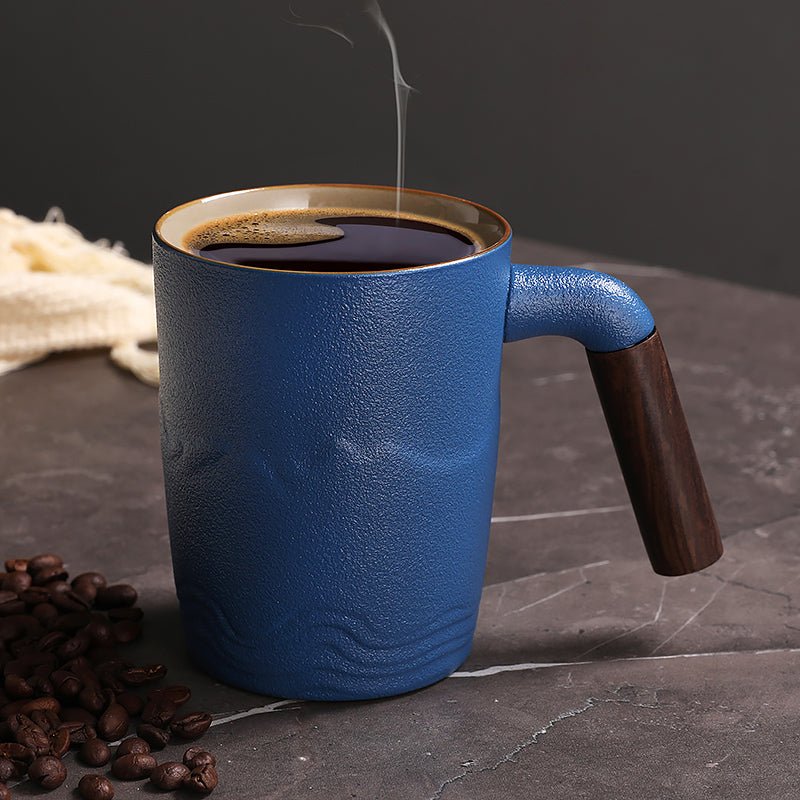
Create Your Own Coffee Mug: Choosing the Right Shape and Finish
Create your own coffee mug with the right shape, artwork placement, and care plan in mind. We compare round, tall, and gift-ready styles so you can choose a mug that looks good and still works on a...
Read more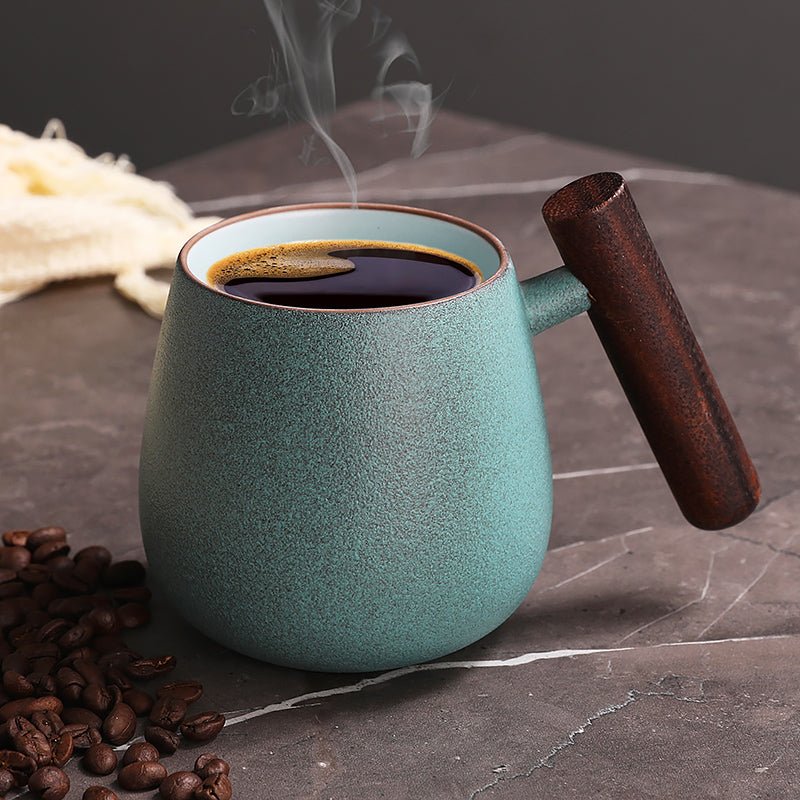
How Big Is a Typical Coffee Mug? Standard Sizes and Buying Tips
A typical coffee mug usually holds 8 to 12 ounces, but the right size depends on how you drink coffee at home, at work, or on the go. We break down common mug sizes, what they feel like in daily us...
Read more
Los kommentaar
This site is protected by hCaptcha and the hCaptcha Privacy Policy and Terms of Service apply.