
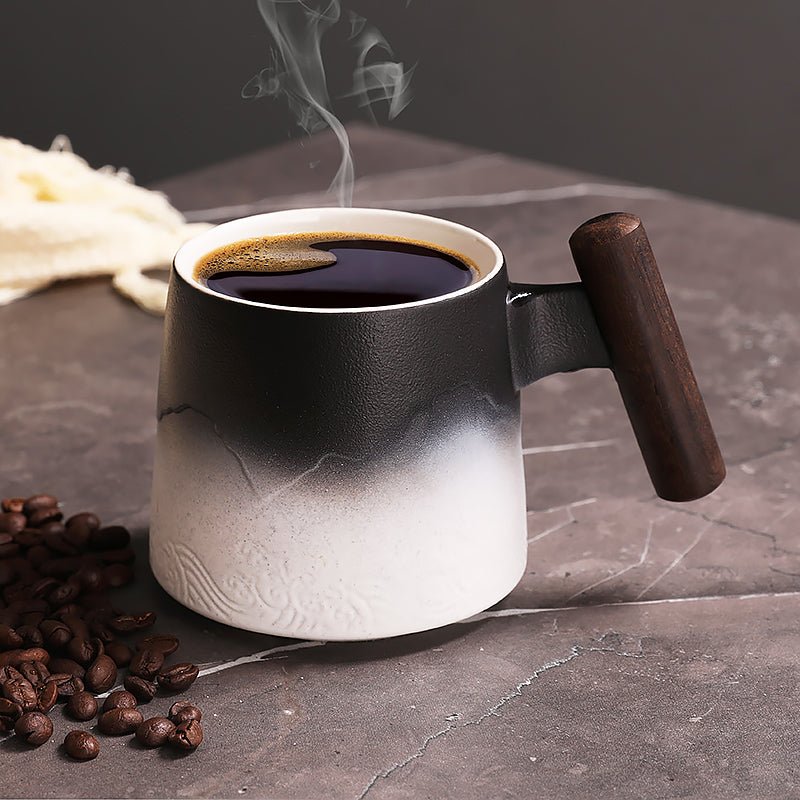
Drawing Coffee Mug Buying Guide: What Buyers Should Check
Reading time: about 9 minutes
A drawing coffee mug can look perfect on a product page and still feel wrong in real use. The artwork may sit too high on the curve, the handle may crowd your fingers, or the cup may be smaller than you expected once you pour an actual serving of coffee.
We see those issues often enough in our store to treat them as the real buying criteria, not the decorative ones. If you are comparing options for a gift, a desk mug, or a daily kitchen cup, the right call usually comes down to print quality, size, and how the mug will hold up through repeated washing.
What should you check first on a drawing coffee mug?
Start with the basics that affect daily use, not the artwork alone. A mug can have a great illustration and still be a poor purchase if the shape, capacity, or finish does not fit how you drink coffee.
- Capacity: Match the mug to your usual serving size. A 10 oz mug feels compact; a 15 oz mug gives more room for drip coffee, tea, or a larger pour with milk.
- Material: Ceramic is the standard everyday choice because it feels stable, holds heat reasonably well, and usually has a smooth printing surface. If you prefer lightweight drinkware, ceramic may feel heavier than you want.
- Handle clearance: Some handles look roomy online but feel tight in hand, especially if you have larger fingers or like to wrap your hand fully around the handle.
- Print placement: On a curved mug, a drawing can warp visually if it is too wide or too close to the handle. Good placement matters as much as the artwork itself.
If you are still deciding on size, our related guides on 10 oz coffee mug, 11 oz coffee mug, and 12 ounce coffee mug cover the size trade-offs in more detail.
How do you tell if the drawing will look good on the mug?
The best-looking drawings are not always the most detailed. A mug has a limited printable area, and the curve of the cup affects how the art reads from a few feet away.
In our experience, the most reliable designs do three things well:
- They keep the main illustration centered and readable from the front.
- They use clear line work or strong contrast so the image does not disappear against the glaze.
- They leave enough margin so the art does not run into the handle or wrap awkwardly around the mug body.
That matters more for a drawing coffee mug than for a plain cup because people buy it for the image first. A thin pencil sketch can be tasteful, but it can also look faint if the printing method is too soft or the color sits too close to the mug color. Bold line art usually holds up better on a white or light ceramic surface.
We also tell buyers to think about where the mug will live. A desk mug seen under office lighting needs clearer artwork than a mug used only at home in a breakfast nook. Small details can disappear fast once the mug is next to a keyboard, a monitor, and a half-finished notebook.
Which size works best for daily coffee?
Size changes the buying decision more than many shoppers expect. A mug that is comfortable for black coffee may feel clumsy once you add milk, foam, or a larger pour.
| Mug size | Best for | Trade-off |
|---|---|---|
| 10 oz | Smaller servings, tea, compact desks | Less room for a full coffee pour with extras |
| 11 oz | Classic everyday coffee use | Can feel small if you prefer large drinks |
| 12 oz | Balanced daily use and gift giving | Not ideal if you want a large oversized mug |
| 14 oz | Long mornings, more volume, milk-heavy drinks | Heavier when full |
| 15 oz | Large coffee servings and office use | Takes more shelf and dishwasher space |
| 16 oz | Big pours, lattes, and people who want fewer refills | Can feel too large for a small hand |
If you want a deeper size comparison, our guides on 14 oz coffee mug, 15 oz coffee mug, and 16 ounce coffee mug explain how those larger capacities behave in everyday use.
For most shoppers, 11 oz to 12 oz is the safest middle ground. It feels familiar, fits most hand sizes well, and works as a gift without sending the message that the mug is oversized or too niche. A 15 oz mug makes more sense if the person drinks a large morning coffee at a desk and does not want to refill often.
What materials and finishes age the best?
For a drawing coffee mug, the print is only part of the story. The base material and glaze decide how the mug feels after a month of use, not just how it looks on arrival.
We usually recommend looking for a smooth ceramic body with a clean glaze finish. That combination tends to handle everyday use well and gives the artwork a flatter, more consistent surface. A rough or highly textured surface can make a printed drawing look uneven, especially on fine line art.
There are trade-offs:
- Glossy finishes often make colors pop, but fingerprints and light reflections show more clearly.
- Matte finishes can feel more modern, but some fine details are harder to read at a glance.
- Thin-walled mugs may feel lighter, yet they usually lose heat faster than thicker ceramic mugs.
- Heavier mugs feel sturdy, but they may not suit someone who prefers a quick, one-handed desk mug.
We also watch for common defect modes that shoppers rarely think about until the mug arrives: a slightly off-center handle, a crooked printed design, a glaze pinhole, or a rim that feels uneven when you sip. Those are the kinds of flaws that turn a gift into a return, even when the artwork itself is good.
Is a drawing coffee mug a good gift?
Yes, but only if the drawing matches the person and the mug size is practical. A themed mug is easy to give and easy to use, which is why it works well for birthdays, coworker gifts, teacher gifts, and small thank-you presents. It fails when the design is too personal, too joke-driven, or too large for the recipient’s routine.
In the store, we think of gift buying in three simple buckets:
- Safe gift: Neutral artwork, 11 oz to 12 oz size, easy-to-hold handle, everyday ceramic finish.
- Specific gift: A drawing that matches a hobby, pet, or work style. Better for someone you know well.
- Display gift: More decorative than practical. Best for a shelf, studio, or occasional use, not for someone who wants a daily coffee mug.
This is also where our broader collection helps. If you want to compare styles rather than commit to one look, browse our full mug collection and check the size and artwork style together. That is often the fastest way to find a mug that feels intentional rather than random.
A drawing coffee mug is not the best pick for someone who wants insulated temperature retention, travel-lid convenience, or a very lightweight cup. In those cases, a travel mug or a different drinkware style will serve them better.
How should you care for the mug so the drawing lasts?
Care instructions matter because the most common damage is not dramatic breakage. It is gradual wear: dulling artwork, staining around the rim, or hairline chips from rough handling.
For everyday ceramic mugs, the safest routine is simple:
- Wash promptly after use so coffee oils do not sit on the surface.
- Use a soft sponge instead of an abrasive scrub pad.
- Dry the mug fully before stacking it with other cups.
- Avoid sudden temperature swings, like moving a very hot mug straight into cold water.
If the design is printed, repeated harsh scrubbing around the artwork is the fastest way to make a good mug look tired. We tell shoppers to treat the printed side like they would a favorite graphic tee: normal washing is fine, but repeated abrasion shortens the life of the image.
Dishwasher and microwave use depend on the specific mug construction and print method, so we do not assume every mug can handle both. If you are shopping for daily convenience, check the product details carefully rather than guessing. That single step prevents most buyer disappointment.
What should you compare before you add one to cart?
Before buying, compare the mug the way a real user will experience it at the sink, at the desk, and when opening the box.
- Artwork clarity: Can you read the drawing from arm's length?
- Size realism: Does the stated capacity match the way you actually drink coffee?
- Handle comfort: Is there enough room for a comfortable grip?
- Finish quality: Does the glaze look even, and does the print sit cleanly on the surface?
- Use case: Is this for daily coffee, display, or gifting?
That checklist is the fastest way to separate a mug that just photographs well from one that makes sense in daily life. For shoppers who want a more detailed buying lens, our article Coffee Mug Drawing: What Buyers Should Check Before Choosing One goes deeper on the practical checks we use before we recommend a design.
Frequently asked questions
What size is best for a drawing coffee mug for everyday use?
An 11 oz or 12 oz mug is usually the most practical everyday choice. It gives enough room for a standard coffee serving without feeling oversized, and it works well for both home kitchens and office desks.
Are drawing coffee mugs dishwasher safe?
Some are, but not all. The safest approach is to check the product details for the exact mug, because print method and finish can change how well it handles repeated dishwasher cycles.
Do printed drawings fade on coffee mugs?
They can fade or dull over time if the mug is scrubbed aggressively or exposed to rough washing. A smooth sponge and normal care will help the artwork hold up longer than abrasive cleaning.
Is a ceramic drawing coffee mug a good gift?
Yes, especially if you choose a neutral design and a familiar size like 11 oz or 12 oz. It is a safer gift than something highly personalized unless you know the person well.
What should I avoid when buying a drawing coffee mug?
Avoid buying by artwork alone. Check the capacity, handle comfort, print placement, and care instructions first, because those details determine whether the mug will actually be used every day.
If you want the shortest path to a good buy, start with the size guides, then compare the artwork and finish against the mug's daily use case. From there, browse our collection and pick the mug that fits the drink, the desk, and the person using it.
Read more
Custom Logo Coffee Mug Buying Guide for Real-World Use
We break down the practical details that matter before you order a custom logo coffee mug: size, print quality, artwork prep, and day-to-day care. Use this guide to choose a mug that looks right on...
Read more
Flower Coffee Mug: Materials, Size, and Buying Tips
A flower coffee mug should look good on the shelf and still feel right in daily use. We break down material, size, print quality, and the trade-offs that matter before you buy.
Read more
Los kommentaar
This site is protected by hCaptcha and the hCaptcha Privacy Policy and Terms of Service apply.