
Decaf Coffee Cup Comparison: Current 170, 200 & 270 ml
Reading time: about 9 minutes
A cup can look right in a product photo and still feel wrong after the first full pour. The usual mismatch is simple: the shopper pictured a short serving, bought a larger mug, and now reaches for a different cup every day. In our store, we start a decaf coffee cup comparison with three practical questions: how much you normally pour, how you hold the cup, and where you plan to use it.
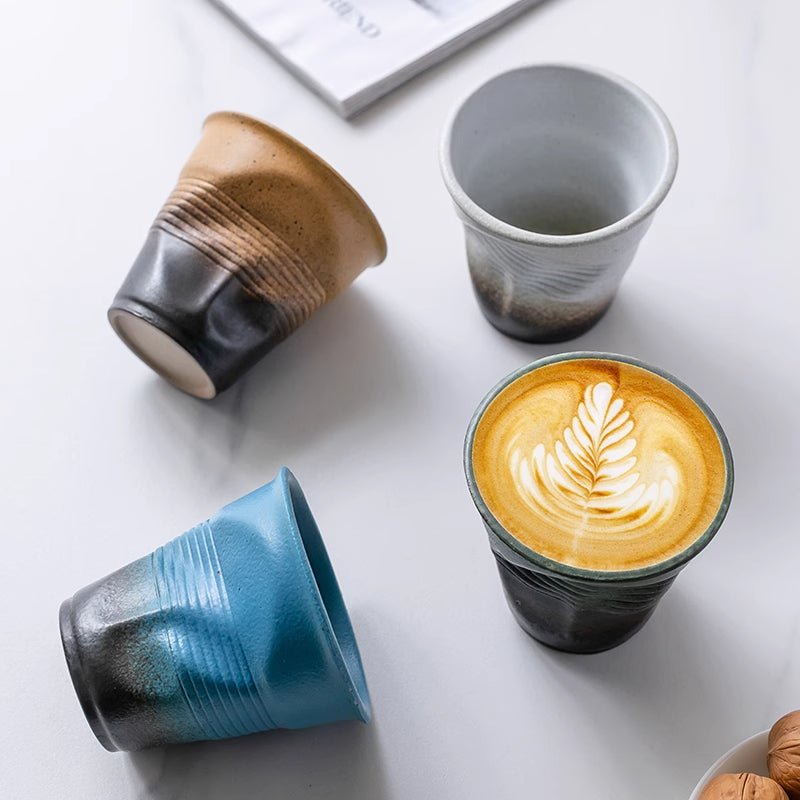
The current CoffeifyMug options cover three distinct capacities: the Retro Coffee Tea Cup at 170 ml, the Pleated Coffee Tea Cup at 200 ml, and the Emerald Coffee Tea Mug at 270 ml. None is automatically the best choice. Each one fits a different serving routine, and each becomes less useful when asked to do a job outside its capacity range.
Decaf coffee cup comparison: what changes between 170, 200 and 270 ml?
The listed capacity is the clearest difference, but it affects more than the amount held. It changes how much room you have above a normal pour, how long the cup may remain on your desk, and how substantial a filled cup feels in your hand. Treat the listed millilitres as comparison figures rather than a recommendation to fill a cup completely to the rim. A little headroom makes carrying and setting down the cup more practical.
| Current option | Listed capacity | Best starting point for | Main limitation |
|---|---|---|---|
| Retro Coffee Tea Cup | 170 ml | Short, measured servings | Limited room for anyone who regularly pours more than 170 ml |
| Pleated Coffee Tea Cup | 200 ml | A middle-size everyday serving | Neither the most compact nor the largest option |
| Emerald Coffee Tea Mug | 270 ml | Longer servings and more headroom | More cup than necessary for a deliberately small pour |
These three sizes are close enough that guessing from an image can be misleading. Measure 170, 200 and 270 ml into cups you already own. That quick counter test gives you a more reliable reference than judging capacity from styling alone.
Which cup fits a short, middle or longer serving?
Choose 170 ml for an intentionally compact pour
The Retro is the most direct match for someone who repeatedly prepares a short serving and does not want unused capacity dominating the experience. Its 170 ml listing creates a clear boundary: it suits a measured routine better than a habit of pouring freely from a large carafe.
It is not the practical choice for someone who routinely wants 200 ml or more in one serving. Filling close to the rim also reduces carrying headroom. If your current favourite cup is already larger and normally well filled, moving down to 170 ml may feel restrictive rather than tidy.
Choose 200 ml for a moderate everyday portion
The Pleated occupies the middle position. At 200 ml, it gives a little more flexibility than the Retro without moving all the way to a 270 ml mug. We often point shoppers here when their routine varies slightly from one serving to the next but they still prefer a relatively contained cup.
The trade-off is that a middle option does not solve every problem. It may still be too small for a 250 ml routine, while shoppers committed to compact servings may prefer the clearer fit of 170 ml. Select it because 200 ml reflects what you pour, not simply because it sits between the other two.
Choose 270 ml for a longer serving or more headroom
The Emerald is the largest current option in this comparison. Its 270 ml capacity suits shoppers who want a longer serving or who prefer leaving comfortable space between the liquid and the rim. It can also reduce the temptation to overfill a smaller cup when carrying it from a kitchen counter to an office desk.
It is not ideal if you prefer a short serving in a cup that looks and feels proportionate to that amount. A small pour can sit low in a larger vessel. Shoppers seeking still more capacity should move beyond these three products and browse our unique coffee mugs collection rather than forcing the 270 ml option to cover a much larger routine.
How should handle comfort affect the decision?
Capacity gets most of the attention online, but handle comfort is often what determines which cup stays in daily rotation. A larger filled cup generally asks more of the gripping hand than a smaller serving, yet comfort also depends on finger clearance, grip style and how you lift the cup. Product photography can help you inspect the handle, but it cannot reproduce the size of your fingers or your preferred grip.
Before ordering, use this practical handle check:
- Notice your normal grip. Do you place one finger through a handle, use two fingers, or support the body of the cup with your other hand?
- Compare the full serving, not the empty cup. Put your usual measured amount into a cup you own and carry it across the room. The filled feel is the relevant comparison.
- Inspect handle clearance in the product images. Look at the space between the handle and cup body, while remembering that exact hand fit cannot be guaranteed from a photo.
- Account for the setting. A grip that feels fine for a quick kitchen serving may be less convenient during repeated pick-ups at a desk.
If hand support and base shape matter more to you than these three capacities, our comparison of wide-bottom coffee mugs for daily routines covers a different set of buyer priorities. That may be a better route for someone specifically seeking a broad base rather than choosing mainly by serving volume.
What should you check at unboxing and during care?
We recommend inspecting any cup before putting it into regular use. Start at the rim, then check the handle connection and finally place the empty cup on a flat counter. Common category-level issues worth looking for include a chipped rim, a visible hairline crack near a handle joint, or a base that rocks on a level surface. These checks do not assume a defect; they simply catch handling or transit damage before the first serving.
- Run a fingertip carefully around the rim and stop if you find a sharp or rough area.
- Look at both handle attachment points under direct light.
- Set the cup on a dry, level surface to check that it sits as expected.
- Review the individual product page for current cleaning and use instructions.
- If dishwasher or microwave suitability is not explicitly confirmed, do not assume it.
- Avoid abrupt temperature changes unless the product instructions state that the cup is suitable for them.
For gifting, perform the same visual inspection before wrapping the box. Capacity also deserves attention: a 170 ml gift communicates a very different serving preference from a 270 ml mug. Styling may create the first impression during unboxing, but a size matched to the recipient's routine is more likely to remain useful.
Which option suits a kitchen counter, office desk or gift?
For a compact kitchen routine: Start with the Retro if the recipient or buyer measures a short serving and wants the cup to match it. The reason to choose it is the 170 ml capacity, not an assumption that every smaller cup will suit every hand.
For an office desk: The Pleated at 200 ml is the balanced option for someone who wants more than a short serving without stepping up to the largest cup here. Consider the path from the kitchen to the desk and leave enough headroom to carry it comfortably.
For a longer sit-down serving: The Emerald at 270 ml provides the most capacity of the three. It makes sense when the buyer already knows that 170 or 200 ml feels limiting. It is less convincing for someone who dislikes seeing a compact serving in a larger mug.
For a gift when the routine is unknown: The 200 ml Pleated is the middle choice, but middle does not mean universally correct. Check the recipient's current cupboard if possible. The cups they use most often provide better evidence than the cups displayed but rarely touched.
For someone who regularly wants substantially more than 270 ml: None of these is the right fit. A larger format will be more practical. Our 12 oz coffee mug comparison is a more relevant next step for shoppers considering a higher-capacity routine.
What three questions settle the choice?
Use this short checklist before opening a product page:
- What volume do I actually pour? Measure it rather than estimating by eye.
- How do I hold and carry the cup? Consider finger clearance, grip style and the feel of the filled serving.
- Do I want a compact cup or extra headroom? Choose 170 ml for a short routine, 200 ml for the middle ground, or 270 ml for the largest current option.
That decision points directly to the 170 ml Retro, 200 ml Pleated, or 270 ml Emerald. Confirm the current product details and care guidance on the selected listing before ordering.
Frequently asked questions
What is the best option in this decaf coffee cup comparison?
There is no single best size for every routine. Choose the Retro for a measured 170 ml serving, the Pleated for a moderate 200 ml serving, or the Emerald for 270 ml capacity and additional room. Your normal pour and preferred filled-cup feel should decide the result.
Is a 170 ml cup too small for daily use?
It is too small if you normally pour more than 170 ml or expect generous headroom with a serving close to that figure. It can be a precise fit for someone who deliberately keeps servings short and wants the vessel sized accordingly.
Is 200 ml a practical middle size?
Yes, for a buyer whose normal serving falls between the compact 170 ml option and the larger 270 ml mug. It is not automatically the safest choice if you already know that you prefer either a distinctly short or distinctly long serving.
Should I choose 270 ml just to get more flexibility?
Only if you will use the additional capacity or value the extra headroom. A 270 ml mug can feel unnecessarily large for a consistently short pour, so measure your usual serving before choosing on flexibility alone.
Can I confirm handle comfort from product photos?
Photos can show the handle's general form and its relationship to the cup body, but they cannot guarantee comfort for every hand. Compare the images with the grip you use on your current cup, and account for how the vessel will feel after it is filled.
Your next step is straightforward: measure one normal serving, note how many fingers you place through your current handle, and choose the closest listed capacity. Then review that product page for current photos, availability and care details, or compare the broader CoffeifyMug collection if none of these three capacities matches your routine.
More from our blog
Read more
Vintage Pottery Coffee Mugs Comparison: 3 Current Styles
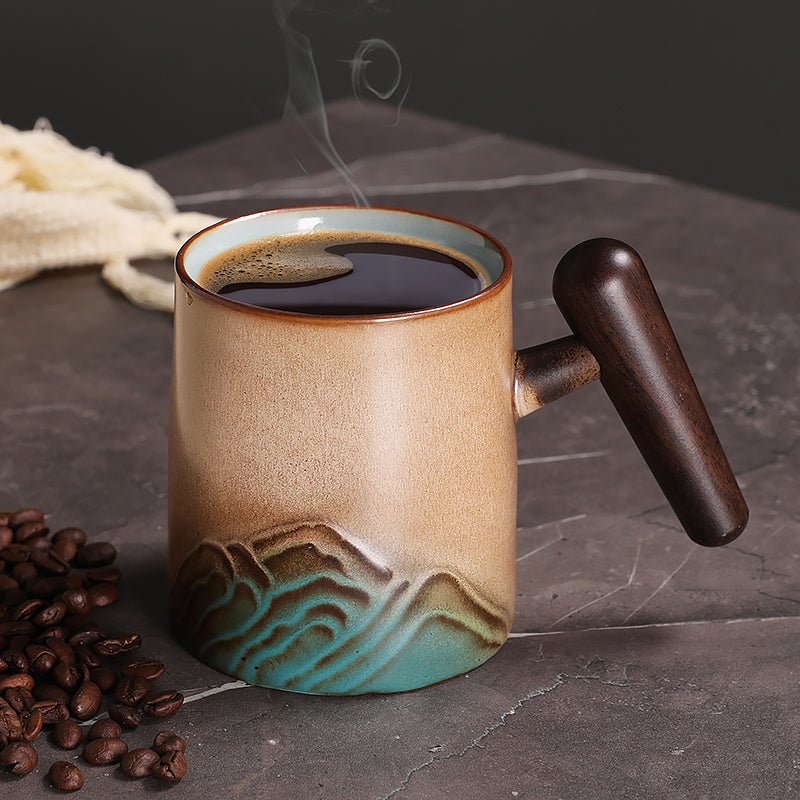
Compare CoffeifyMug's Retro, Mountain Sea, and Great Mountain designs by visual style, daily setting, gifting fit, and practical pottery checks. This guide separates confirmed product-page details ...
Read more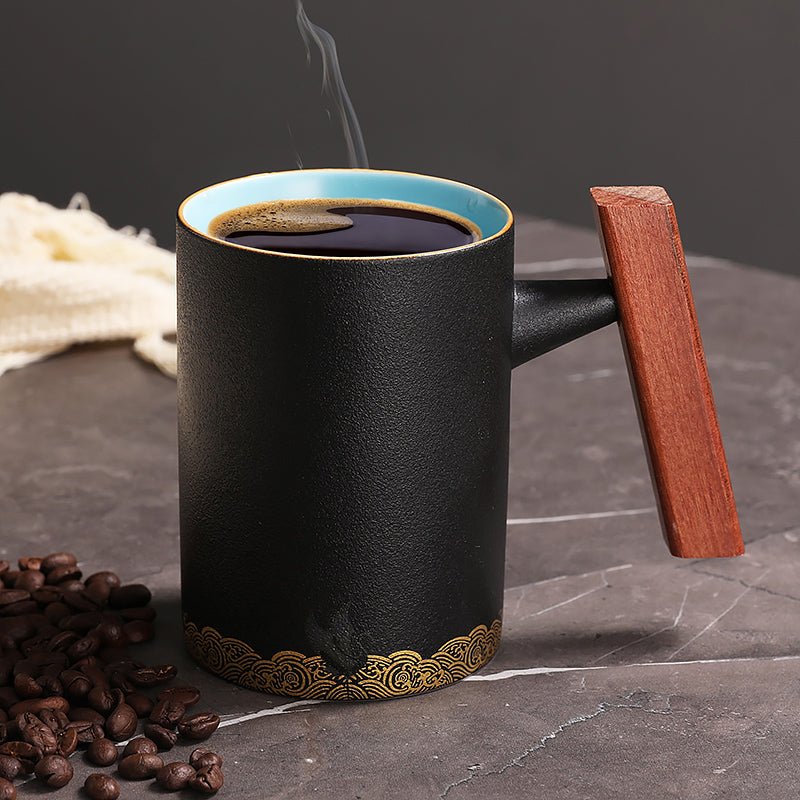
High Quality Ceramic Coffee Mugs Comparison: 3 Current Options
Compare The Crane, Golden Waves Kio, and Landscape Tall by visual style, daily routine, storage fit, care questions, and gifting potential. This guide also identifies the product details you should...
Read more
Los kommentaar
This site is protected by hCaptcha and the hCaptcha Privacy Policy and Terms of Service apply.