
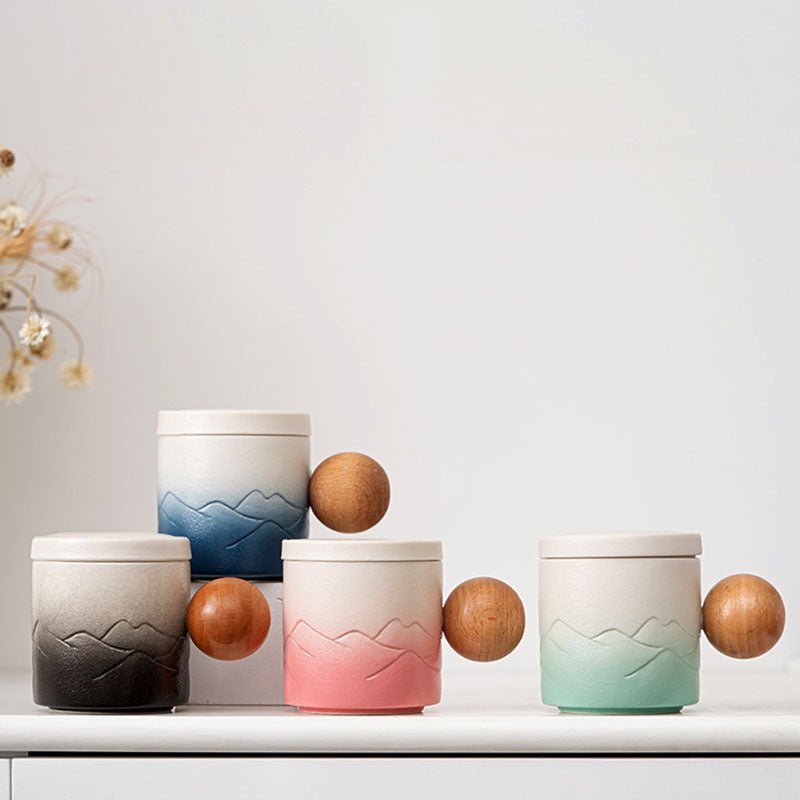
Coffee Mug Oz Guide: How to Choose the Right Size for Daily Use
Reading time: about 8 minutes
That small mug that looks fine on the shelf can feel cramped by the second refill. A bigger mug seems safer until it gets heavy in the hand, takes over a desk, or leaves the last sip lukewarm.
At CoffeifyMug, we see buyers make the same mistake over and over: they choose by the number on the label instead of how the mug works in daily use. The right coffee mug oz is not just about capacity. It is about how much you actually pour, how the handle feels, how fast the drink cools, and whether the mug fits the way you drink at home or at work.
What does coffee mug oz actually tell you?
The ounce number tells you the mug's capacity, usually the amount it can hold before you reach the rim or the maker's stated fill line. It does not tell you how comfortable the mug is, how stable it sits, or whether the opening feels too wide for a desk.
That is why two mugs with the same coffee mug oz can behave very differently. A wider mug can release heat faster and leave more room for milk or cream. A taller mug can feel narrower in the hand and easier to tip if the base is small. If a mug has a wooden handle, the feel changes again: the body may be ceramic, but the grip feels warmer and less slippery than a fully glazed handle.
We usually treat the ounce rating as the first filter, then check the shape, the handle, and the drink style. That is the practical part that matters once the mug is on a kitchen counter, an office desk, or a gift table.
How many ounces do most people actually need?
For most daily coffee drinkers, 10 to 12 oz is the most useful range. It is large enough for a normal pour, but not so large that the cup feels oversized before the coffee even goes in.
- 8 oz or smaller: Best for espresso drinks, short pours, or people who want a compact cup with a small footprint.
- 10 to 11 oz: A balanced everyday size for drip coffee, tea, and a standard mug that does not feel bulky.
- 12 oz: Good for larger morning pours, extra milk, or anyone who dislikes topping off a cup before finishing breakfast.
- 14 oz and above: Useful for long desk sessions or larger drinks, but the mug is usually heavier and can feel big in smaller hands.
If you are comparing close sizes, our separate guides on 10 oz Coffee Mug: Size, Fit, and What to Check Before You Buy, 11 oz Coffee Mug: Size, Fit, and What to Check Before You Buy, and 12 oz Coffee Mug Buying Guide for Fit, Comfort, and Daily Use break down what those sizes feel like in real use.
How do common mug sizes compare side by side?
| Size | Best for | What to watch |
|---|---|---|
| 8 oz | Espresso drinks and small servings | Can feel too small for drip coffee or long mornings |
| 10 oz | Compact daily coffee and tea | Less room for milk or foam than larger mugs |
| 11 oz | Balanced everyday use | Still worth checking handle clearance and base stability |
| 12 oz | Fuller pours and slower mornings | Can feel heavier when full, especially with thick ceramic |
| 14 oz | Big coffee drinkers and desk sessions | May cool more slowly but take up more space on the counter |
If you are shopping for a gift or comparing styles for your own kitchen, it helps to see the mug itself, not just the size label. Browse our all mugs collection and compare a few shapes before you decide.
Which mug style should you choose if handle comfort matters?
Handle comfort matters more than most shoppers expect. A mug can have the right coffee mug oz on paper and still feel awkward if the handle is too narrow, the opening is too wide, or the mug body is heavier than expected.
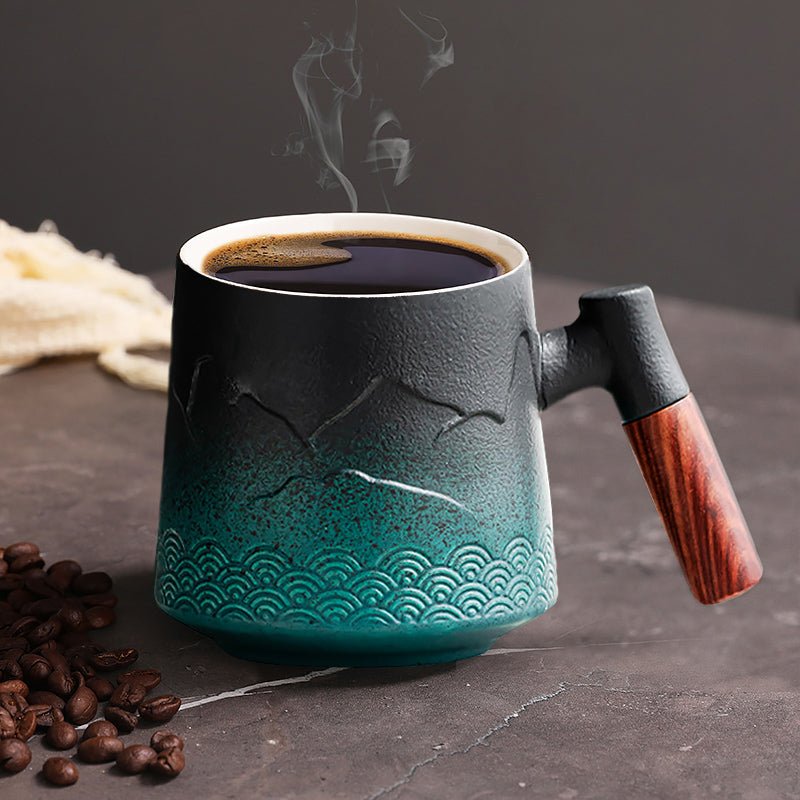
For a real-world comparison, look at the Mountain Sea II Coffee Tea Mug with Wooden Handle and the The Cloud Coffee Tea Mug Wooden Handle. The wooden handle changes the grip and the visual feel right away, which is useful if you like a mug that feels warmer in the hand. If you prefer something cleaner and more straightforward, The Rock Coffee Tea Mug is a useful comparison point because the silhouette is simpler and easier to assess at a glance.
In our experience, people choose faster when they picture the actual use case. A kitchen mug can be a little larger. A desk mug should be stable, easy to lift, and not so wide that it crowds a keyboard or notebook. A gift mug has another job entirely: it should look intentional the moment it is unboxed.
For wooden-handle styles, there is a small trade-off. The grip feels good, but the wood needs more care than a fully glazed handle. Keep it dry, do not leave it soaking, and dry it well after washing so the handle stays in good shape.
What trade-offs come with larger coffee mug oz sizes?
A bigger mug is not always a better mug. More capacity can mean fewer refills, but it can also mean more weight, more steam loss, and a larger footprint beside your coffee machine or laptop.
Here are the trade-offs we look for when we handle mugs in this category:
- Weight: A larger ceramic mug can feel dense once it is full, especially if you hold it by the handle only.
- Heat behavior: Wider openings cool faster. Narrower shapes hold warmth longer, but they can be less comfortable for milk-heavy drinks.
- Desk fit: Oversized mugs can crowd a coaster, keyboard, or notebook and make the workspace feel cluttered.
- Cleaning: A wide mug is easier to rinse, but a deep mug can leave residue at the bottom if you do not clean it promptly.
That is why we do not recommend choosing the biggest number by default. If you usually finish 8 to 10 oz before your coffee cools, a 14 oz mug is probably not the best match. If you refill once or like a long sit-down coffee, the larger size starts making more sense.
What should you check before you buy a coffee mug?
Before you buy, check the parts that affect daily use, not just the number on the product page. A mug should feel good empty and full, fit your hand, and sit flat enough that you trust it near a laptop or sink.
- Capacity: Match the oz rating to your normal pour, not to the biggest drink you make once in a while.
- Handle space: Make sure your fingers can fit comfortably without pinching against the mug body.
- Base stability: A flat, steady base matters more than most people think on a busy counter or office desk.
- Lip feel: A rough or overly thick rim can make even a good-looking mug less pleasant to drink from.
- Care routine: If the mug has wood or mixed materials, check how it should be washed and dried before you buy.
We also pay attention to the kinds of small defects that matter once the mug is in use: a handle that feels cramped, a glaze that looks uneven, or a base that does not sit as cleanly as it should. Those details are easy to miss in photos and hard to ignore on the first morning after delivery.
If you are torn between capacities, our size-specific posts on 10 oz Coffee Mug: What Fits, What Doesn’t, and What to Buy, 11 oz Coffee Mug: What Buyers Should Check Before They Buy, and 14 oz Coffee Mug: What Buyers Should Check Before They Buy can help you separate the sizes that sound good from the ones that actually fit your routine.
Frequently asked questions
How many ounces is a standard coffee mug?
Most standard coffee mugs fall around 11 to 12 oz, though you will see plenty of 10 oz and 14 oz options too. The useful question is not just what is standard, but what size matches your usual pour and drinking pace.
Is 11 oz or 12 oz better for everyday coffee?
For most people, 11 oz feels a little more compact, while 12 oz gives you more room for a full pour or extra milk. If you drink slowly or want a mug that feels generous without getting oversized, 12 oz is usually the safer choice.
Are wooden-handle coffee mugs hard to care for?
They are not hard to care for, but they do need a little more attention than all-ceramic mugs. Keep the wooden handle dry, avoid long soaking, and dry it promptly after washing so the wood stays in better condition.
What coffee mug oz is best for tea?
Tea drinkers often do well with 10 to 12 oz because it gives enough room for water, a tea bag, and a little extra space without feeling oversized. If you prefer a larger mug for long steeping sessions, 14 oz can work too, but it is not necessary for most people.
Is a 14 oz mug too big for a desk?
It can be, especially if your desk is already crowded with a laptop, mouse, and notebook. A 14 oz mug makes sense if you want fewer refills, but a 10 to 12 oz mug usually fits a tighter workspace better.
If you want the fastest next step, start with our all mugs collection, then compare the 10 oz and 12 oz guides if you are choosing between close sizes. That gives you the clearest read on fit, comfort, and the coffee mug oz that will actually work day after day.
Read more
Stackable Coffee Mugs with Stand: Fit, Care, and Buying Checks
A practical guide to stackable coffee mugs with stand, focused on counter fit, stable stacking, day-to-day care, and the trade-offs that matter before you buy.
Read more
Coffee Mugs Used on Psych: Best Shapes for Fans Who Actually Use Them
A Psych-inspired mug only earns counter space if it feels good in hand and survives daily use. We compare the best shapes, the trade-offs, and the CoffeifyMug picks that make sense beyond the fan r...
Read more
Los kommentaar
This site is protected by hCaptcha and the hCaptcha Privacy Policy and Terms of Service apply.