
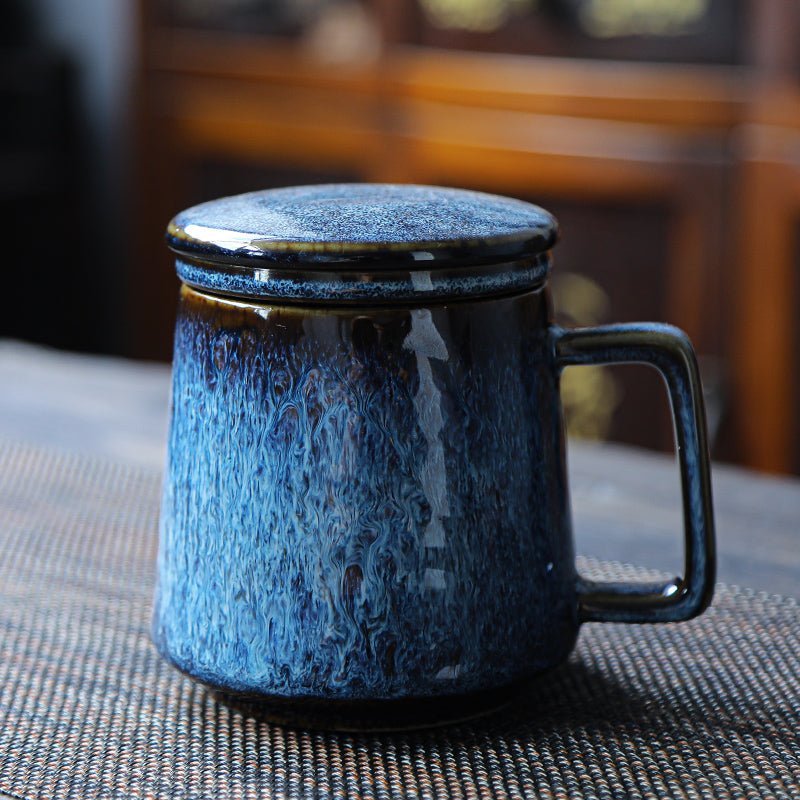
Coffee Mug Measurement: How to Compare Size, Fit, and Use
Reading time: about 8 minutes
A mug looks straightforward until it misses the one shelf, cup holder, or coffee machine it needs to work with. We see that in our store all the time: a shopper likes the color, then realizes the mug is too tall for the brewer or too wide for the cabinet space.
Coffee mug measurement solves that problem before you buy. Ounces matter, but they are only part of the picture. Height, mouth diameter, base width, and handle clearance all change how a mug behaves on a real kitchen counter or office desk.
How do you measure a coffee mug correctly?
We measure mugs from the outside and, when possible, by usable fill. That gives a clearer picture than the label alone. A mug can be advertised as 11 oz or 12 oz and still feel very different in the hand depending on wall thickness and shape.
Start with a ruler or tape measure and check these points:
- Height: measure from the bottom to the rim, not including any lid.
- Top diameter: measure the widest part of the opening.
- Base diameter: measure the part that actually sits on the shelf or table.
- Handle clearance: measure the inside space between the handle and the mug body.
- Capacity: fill with water to the level you would actually drink, not to the brim.
That last point matters. A mug with a full-rim capacity can spill easily, so the usable amount is often lower than the number on the product page. For daily use, usable fill is the number that affects whether your coffee reaches the top when you walk from the counter to your desk.
Which dimensions matter more than ounces?
Ounces tell you the rough capacity. The other measurements tell you whether the mug fits the way you live. In our experience, buyers usually feel the height and handle shape first, then notice the ounce count later.
| Measurement | Why it matters | Common problem if ignored |
|---|---|---|
| Capacity | Sets how much coffee, tea, or milk drink the mug can hold | You buy too small for refills or too large for a short pour |
| Height | Determines cabinet, shelf, and machine clearance | The mug does not fit under a brewer or upper shelf |
| Top diameter | Affects cooling speed, foam surface, and drinking feel | A wide mug cools faster and can feel bulky |
| Base diameter | Shows how stable the mug is on a desk or tray | A broad base can crowd a crowded dish rack; a narrow base can feel less steady |
| Handle clearance | Decides how comfortably fingers fit through the handle | The handle pinches or is hard to grip with one hand |
A taller mug is not automatically better, and a wider mug is not automatically more comfortable. A tall, narrow cup can save shelf space, but it may be harder to wash by hand. A wide, low mug can feel solid on a work desk, but it may be the wrong pick if your coffee machine has a low spout.
If you want a tighter comparison between common sizes, our 11 oz Coffee Mug: Size, Fit, and What to Check Before You Buy and 12 Ounce Coffee Mug Buying Guide for Daily Use and Better Fit articles are helpful starting points. For a smaller footprint, the 10 oz Coffee Mug: Size, Fit, and What to Check Before You Buy guide shows where compact mugs make sense and where they fall short.
What mug size fits your daily routine?
The right coffee mug measurement depends on how you actually use it. A mug for a slow weekend pour does not need the same shape as one that lives next to a laptop, a drip machine, or a sink full of dishes.
Here is the simplest way we narrow it down:
- Short coffee or espresso-style drinks: a smaller mug keeps the drink concentrated and less likely to cool too fast.
- Daily drip coffee: a mid-size mug usually gives the best balance of capacity and easy handling.
- Milk-heavy drinks: a slightly wider opening gives foam room and makes stirring easier.
- Tea: a taller mug can hold heat well, but it may feel less convenient under a cabinet or shelf.
- Desk use: choose a stable base and a handle that clears your fingers without forcing a tight grip.
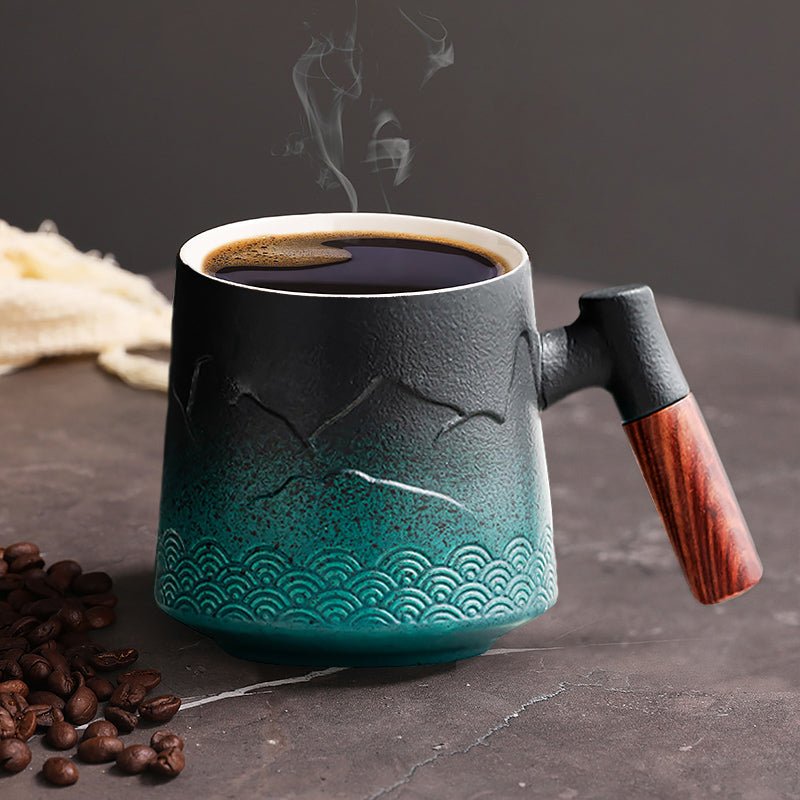
Our product pages show how those differences play out in real mugs. The Christmas Coffee Tea Mug is a good example of a seasonal mug that still needs to work as a regular coffee cup, not just as a display piece. The Green Waves Coffee Tea Mug is a clean option if you want something that looks calm on a desk without taking over the space. The Mountain Sea II Coffee Tea Mug with Wooden Handle adds a different grip and a different feel in hand, which is useful if you care about how the mug handles during a full pour.
That wooden-handle style is not the best choice for everyone. If you want a mug you can treat like a plain ceramic cup and move through high-heat dishwasher cycles without thinking, an all-ceramic option is simpler. A wooden handle brings character and a warmer touch, but it also means a little more care and a little less rough-and-ready convenience.
Which materials and shapes change the measurement you feel?
Two mugs can share the same ounce rating and still feel completely different. Wall thickness, rim shape, and handle design change the real-world experience more than most shoppers expect.
These are the details we look for when we inspect mugs:
- Wall thickness: thicker ceramic walls usually feel sturdier and hold heat longer, but they also add bulk and weight.
- Rim shape: a rolled rim feels more durable in the hand; a sharper rim can feel less forgiving when you sip.
- Shape profile: straight-sided mugs often stack and store more cleanly, while tapered mugs can look larger than they really are.
- Handle attachment: the point where the handle joins the body is where stress cracks often start if the mug gets knocked around.
- Finish: a glossy glazed interior is easier to rinse clean than a textured surface that holds residue from milk or tea.
These are also the spots where defects show up first. We check for wobble on a flat surface, uneven glazing at the rim, and any rough edge where the handle meets the body. Those issues do not always affect the mug on day one, but they matter if you want something that stays pleasant through repeated use and washing.
A mug with a big footprint is not automatically better for daily use. It may take up more rack space and collect water in the dishwasher if the shape traps pooling. A smaller, straighter mug may dry faster and store more neatly, but it may not feel right if you like a large pour with room for milk.
What should you check before you buy?
Before you pick a mug, compare the product photo to the real spaces in your home. That sounds basic, but it is the fastest way to avoid a bad fit.
- Measure the clearance under your coffee machine, shelf, or cabinet.
- Check the mug height and base width, not just the ounce count.
- Look at the handle opening and decide whether you want two fingers or three through the grip.
- Think about cleaning. If you want simple dishwasher care, avoid styles that need extra attention.
- Decide whether the mug is for everyday use, gifting, or display.
Our full collection is the easiest place to compare styles side by side before you narrow down the size. If you are choosing between the most common capacities, our size guides for 11 oz, 12 oz, and 10 oz mugs are the quickest way to compare fit, comfort, and everyday use without guessing.
There is one trade-off worth saying plainly: a mug that fits perfectly on the shelf is not always the mug that feels best in the hand. If you prioritize one, you often give up a little of the other. That is normal. The goal is to choose the shape that matches the way you actually drink coffee, not the one that looks best in a product photo.
Frequently asked questions
How many inches tall is a standard coffee mug?
There is no single standard, but many everyday mugs land in a range that fits comfortably on a kitchen shelf and under most cabinet setups. Height matters more than most shoppers expect because a mug that is just a little too tall can be a daily annoyance. Always compare the mug height to your brewer and storage space before buying.
Is a 12 oz mug really 12 oz when you pour coffee into it?
Not always. The listed capacity is often close to the brim, while the usable amount is the level you can actually drink without splashing over the edge. If you like milk, foam, or a full walk to your desk, leave some headroom.
What mug size fits under most coffee machines?
That depends on the machine, but low-spout brewers usually leave less room than people expect. Measure from the tray to the spout or brew head, then compare that number to the mug height. A wide mug can still fit if it is short enough.
Are wooden-handle mugs harder to clean?
They usually need more care than all-ceramic mugs. The wooden handle is better treated gently, especially if you want it to keep its finish over time. If you want the easiest possible cleaning routine, a plain ceramic mug is the safer choice.
What should I prioritize if I am buying a mug as a gift?
Pick a size that is easy to hold, easy to wash, and unlikely to be fussy in a busy kitchen. A mid-size ceramic mug is usually the safest gift choice because it works for coffee, tea, and desk use without demanding special handling.
If you want the fastest next step, start with the mug collection, compare height and handle clearance on each product page, then choose the size that matches your brewer, shelf, and daily pour. The right coffee mug measurement is the one that fits the space you actually use.
Read more
Coffee Mugs With Coffee Sayings: How to Choose One That Fits
Coffee mugs with coffee sayings work best when the message, size, and shape match how the mug will actually be used. Here’s how we help shoppers pick a mug that looks good on the desk and still fee...
Read more
Tommy Bahama Coffee Mugs: What to Buy and What to Skip
Tommy Bahama coffee mugs usually sell on look first, but the real decision comes down to shape, glaze, handle comfort, and size. We break down what fits daily use, what does not, and which resort-s...
Read more
Los kommentaar
This site is protected by hCaptcha and the hCaptcha Privacy Policy and Terms of Service apply.