
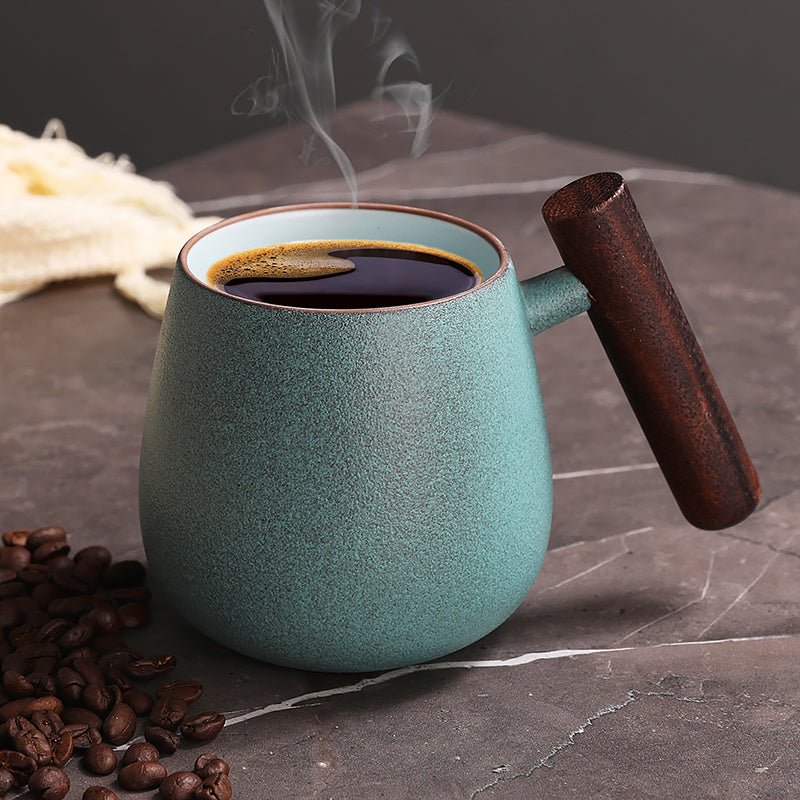
Ceramic Wide Bottom Coffee Mugs Capacity Guide for Daily Fit
Reading time: about 9 minutes
A mug can look generous on a product page and still feel cramped once a full coffee, milk, and walking room at the rim are accounted for. The reverse happens too: a large mug may spend most mornings half full because its owner brews a shorter serving. This ceramic wide bottom coffee mugs capacity guide focuses on that practical mismatch so you can compare the current listings by the amount you actually pour and how often you want to refill.
In our store, we treat listed capacity as a starting point rather than a promise that every last milliliter will be comfortable to carry. Ceramic wall thickness, the curve below the rim, foam, ice, and the space needed to move the mug all affect daily use. The most reliable buying decision begins with your finished drink volume, not the size of your brewer's water tank or the amount printed on a coffee bag.
Ceramic wide bottom coffee mugs capacity guide: which listing fits your pour?
Start with the capacity displayed on each live product page. The Round Coffee & Tea Mug, Spittoon Coffee & Tea Mug, and The Rock Coffee & Tea Mug are separate current options, so confirm the selected capacity on the individual listing before checkout. Product selections can change, and a product name alone does not establish how much liquid it holds.
| Planned serving | Metric equivalent | Capacity target | Likely daily pattern |
|---|---|---|---|
| 8 US fl oz | About 237 mL | At least 300 mL | One short coffee with practical rim space, followed by a fresh refill |
| 10 US fl oz | About 296 mL | More than 300 mL | A medium pour that needs extra room for milk or carrying |
| 12 US fl oz | About 355 mL | About 400 mL or more | One standard-length serving with modest headroom |
| 14 US fl oz | About 414 mL | About 500 mL | A longer desk drink with room left below the rim |
| 16 US fl oz | About 473 mL | More than 500 mL for generous headroom | A long serving that nearly fills a nominal 500 mL vessel |
The ounce conversions above are general measurement guidance: one US fluid ounce is approximately 29.57 mL. They are not additional product specifications. Use them to interpret the capacity currently shown on each linked page, then browse the unique coffee mug collection if none of the available capacities leaves enough room for your recipe.
How much headroom does coffee, milk, foam, or ice require?
Nominal capacity can mean the volume close to the top of a vessel. That is different from a comfortable working fill. We generally plan around 30 to 60 mL of open capacity for a still drink, with more room for foam, ice, stirring, or carrying the mug from a kitchen counter to a desk. This is a practical planning allowance, not a stated fill line for any specific product.
- An 8 oz pour in a 300 mL mug: The arithmetic leaves about 63 mL. That is a sensible amount of theoretical room for a small addition of milk and careful carrying.
- A 10 oz pour in a 300 mL mug: Only about 4 mL remains on paper. That is effectively no usable headroom once measurement variation and stirring are considered.
- A 12 oz pour in a 400 mL mug: About 45 mL remains. This is a more practical pairing for black coffee or a modest addition, though tall foam can still need more space.
- A 14 oz pour in a 500 mL mug: About 86 mL remains, giving ice, milk, or movement more room.
- A 16 oz pour in a 500 mL mug: The theoretical remainder is only about 27 mL. A larger vessel is the better fit if you want foam or routinely walk with a full mug.
These calculations deliberately stop short of claiming exact usable volume. A curved interior or thick rim can change how a nominal capacity feels in practice. If your recipe lands within a few milliliters of the listed maximum, move up rather than counting on a brim-level pour.
Which current mug fits a one-pour or refill routine?
A short coffee followed by a fresh refill
For someone who prepares roughly 8 oz at a time, look for the current product with at least 300 mL of listed capacity. A smaller serving leaves useful room and encourages a fresh second pour instead of one long drink cooling on the desk. Check the capacity selector on the Round Coffee & Tea Mug product page against that target. This routine is not a good match for a buyer who expects a full 10 or 12 oz serving plus milk without refilling.
A 12 oz coffee intended to last through a meeting
A planned 12 oz serving needs approximately 355 mL before milk or foam. Look for a current listing at about 400 mL or above, then verify that exact capacity on the Spittoon Coffee & Tea Mug page. The extra nominal volume reduces the chance of filling to the rim. The trade-off is that an 8 oz serving will sit lower in the mug and may look smaller than expected.
A 14 to 16 oz drink with fewer refills
Long coffee or tea sessions call for the largest suitable capacity among the current options. Compare your required volume with the capacity shown for The Rock Coffee & Tea Mug. A 14 oz recipe fits more comfortably in a nominal 500 mL vessel than a 16 oz recipe does; the latter leaves only about 27 mL by calculation. Buyers who need a true 16 oz drink plus substantial foam, milk, or ice should consider a capacity above 500 mL rather than expecting a brim-full mug to work well.
What changes at a kitchen counter, office desk, or gift unboxing?
- At the kitchen counter: Measure the finished drink after brewing and additions. A machine setting labeled by cup count may not match US fluid ounces, so a measuring cup gives a better basis for comparison.
- At an office desk: Decide if you value a smaller fresh refill or one longer serving. A full 500 mL drink contains roughly 200 grams more liquid than a full 300 mL drink, before the mug's own weight is added.
- For a gift: Match the recipient's repeated habit. A large-capacity mug is not automatically more useful for someone who drinks 8 oz at a time, has limited cabinet clearance, or prefers a light vessel.
- For commuting: Do not assume a wide bottom will fit a vehicle cup holder, and do not treat an open ceramic mug as spill resistant. A travel mug with a compatible base and secure lid is a better category for driving.
Capacity is only one part of physical fit. The base footprint, handle clearance, cabinet height, and room beside a keyboard still matter. Our ceramic wide-bottom mug shape and fit guide covers those variables without turning them into unsupported capacity claims. For a broader comparison of common serving labels, use the 8 oz, 12 oz, 15 oz, and large mug size guide.
How should ceramic care and condition affect the size decision?
The following points are general ceramic handling guidance, not product-specific dishwasher, microwave, or durability promises. Use the live listing and any instructions supplied with the mug as the authority for that individual product.
- Inspect the rim and handle after delivery. Look for chips, a crack line that catches a fingernail, or damage where the handle joins the body. Do not use a damaged drinking vessel.
- Check the base on a flat counter. A wide profile does not guarantee that a mug cannot wobble. Packing damage or debris on the foot ring can affect contact with the surface.
- Follow the stated care method. Ceramic should not automatically be assumed dishwasher or microwave safe because decoration, glaze, and attached details can change compatibility. If no machine-washing instruction is provided, hand washing is the conservative choice.
- Avoid abrupt temperature changes. Moving a cold ceramic mug directly to very hot liquid can create thermal stress. Let the vessel approach room temperature first, especially after cold storage.
- Dry the base before storing it. Water can remain around an unglazed foot ring after a sink wash or dishwasher cycle. Drying that area keeps cabinet shelves and stacked pieces cleaner.
A larger capacity also means a heavier full mug and potentially a longer drinking time. If hand comfort, quick drinks, or frequent fresh refills matter more than maximum volume, the smaller suitable listing is the more practical purchase.
What should you check before adding a mug to the cart?
- Measure the liquid in your normal finished drink, including milk or water added after brewing.
- Add at least 30 to 60 mL of planning room, and allow more for ice, foam, stirring, or walking.
- Compare that total with the capacity currently displayed on the Round, Spittoon, or The Rock product page.
- Check the listed dimensions and care information rather than inferring them from the capacity or product photograph.
- Choose by refill behavior: smaller for short fresh servings, mid-capacity for a typical 12 oz routine, and larger for long drinks with fewer trips to the kitchen.
A nominal 20 oz serving is approximately 591 mL, so a 500 mL mug cannot hold it. Buyers with that routine should use our 20 oz coffee mug fit guide and shop for a genuinely larger listed capacity.
Frequently asked questions
Which mug capacity is best for a 12 oz coffee?
A 12 US fl oz coffee is about 355 mL, so a listed capacity around 400 mL provides roughly 45 mL of theoretical headroom. This ceramic wide bottom coffee mugs capacity guide recommends checking the current Spittoon listing against that target, while recognizing that foam or generous milk may require more space.
Is a 300 mL mug big enough for a 10 oz pour?
Not comfortably. Ten US fluid ounces is about 296 mL, leaving only around 4 mL in a nominal 300 mL vessel before accounting for measurement variation, milk, or movement. A 300 mL option is better suited to an 8 oz routine.
Will a 500 mL mug hold a full 16 oz drink?
It can hold 473 mL in purely numerical terms, but that leaves only about 27 mL below the nominal capacity. That is limited headroom for foam, ice, stirring, or carrying, so a capacity above 500 mL is a better daily fit for a full 16 oz recipe with additions.
Which capacity works best for iced coffee?
Choose the largest current capacity that also fits your storage and handling needs because ice displaces part of the liquid volume. Measure the coffee, milk, and ice together once at home; do not assume that a 16 oz recipe fits comfortably in a nominal 500 mL mug.
Are these ceramic mugs dishwasher and microwave safe?
Use the care statement on the individual product page or the instructions supplied with the mug. We do not make a blanket dishwasher or microwave claim for ceramic because glaze, decoration, and construction details can affect compatibility.
Write down your finished serving volume and required headroom, then compare those two numbers with the live capacity on each product page. The current unique coffee mug collection is the practical next stop for checking available options, dimensions, and care details before ordering.
Read more
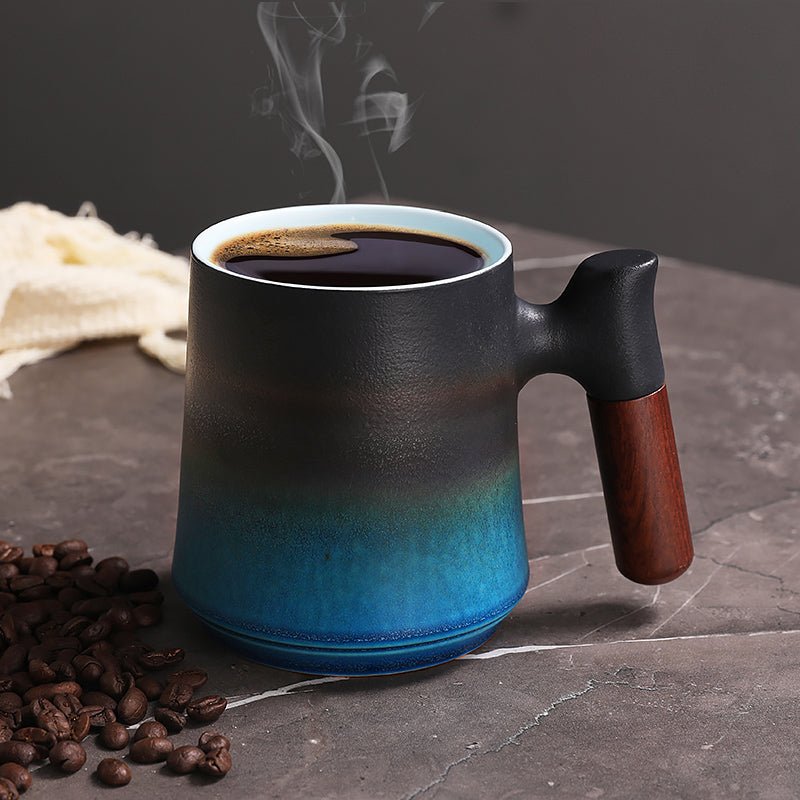
Hot Cocoa Mug Capacity Guide: 400 ml vs 480 ml Daily Fit
Compare The Gradient and The Flow at 400 ml with The Rock at 480 ml. See the nominal headroom for 250-400 ml servings, refill implications, and the routines each size fits.
Read more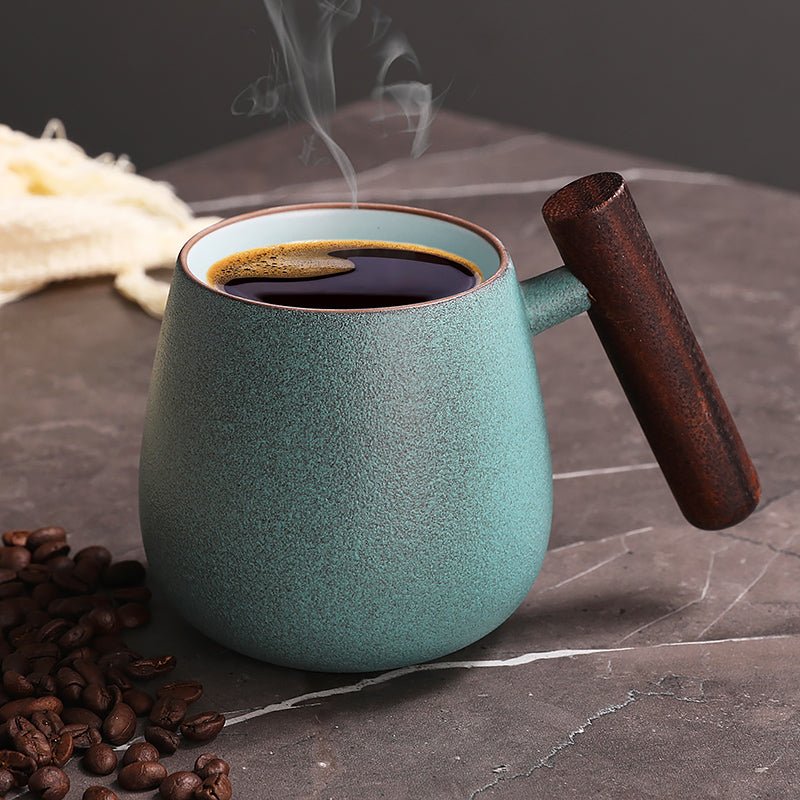
12 Oz Ceramic Coffee Mugs Capacity Guide: Daily Pour Fit
Compare a nominal 12 oz capacity with black coffee, milk, tea, ice, and refill routines. See how CoffeifyMug's current Landscape Tall, Round, and Mountain Tall product pages fit into a measured pre...
Read more
Los kommentaar
This site is protected by hCaptcha and the hCaptcha Privacy Policy and Terms of Service apply.