
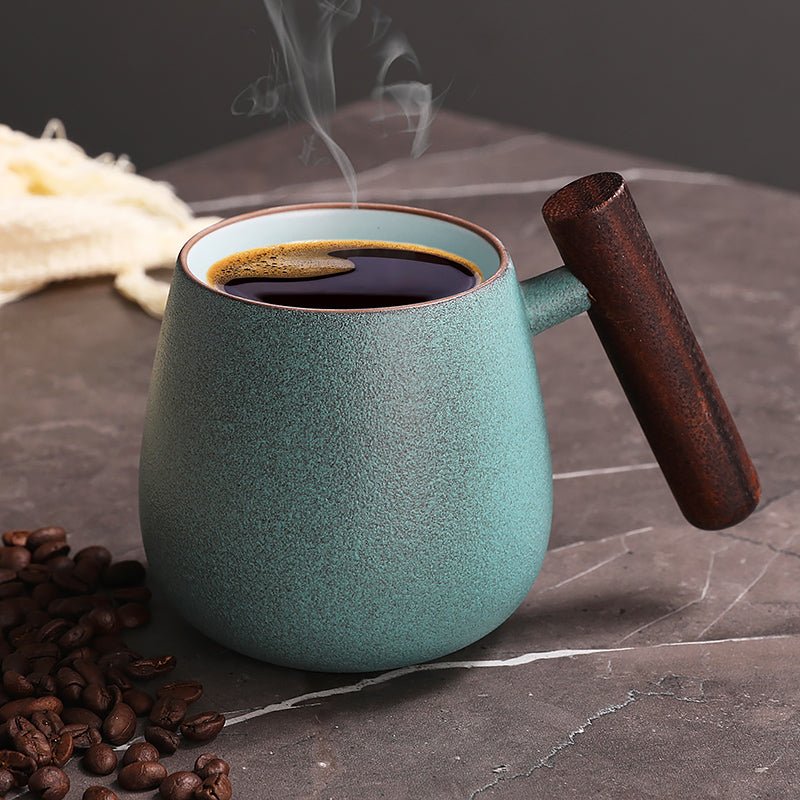
Cacao Cup Daily Use Guide: 250 ml, 390 ml, or 400 ml?
Reading time: about 10 minutes
A cup that looks generous on a product page can become awkward the first time a whisked cacao drink reaches the rim, splashes on the counter, or leaves too little room for foam. At the other extreme, a short 180 ml serving can feel lost inside a 400 ml vessel. This cacao cup daily use guide compares three everyday drinkware options using the facts that matter during a normal week: listed capacity, visible opening, recipe headroom, storage, cleaning, and the distance between the kitchen and your desk.
What does the cacao cup daily use guide reveal at 250 ml, 390 ml, and 400 ml?
The three options are separated more by the jump from 250 ml to the larger sizes than by the 10 ml difference between 390 ml and 400 ml. From handling and selling this category, we have learned that shoppers often focus on maximum capacity while overlooking working capacity. A mug filled to its stated limit may leave no practical space for stirring, walking, foam, ice, or toppings.
| Option | Verified catalog detail | Useful daily scenario | Main limitation |
|---|---|---|---|
| Ball Handle Coffee Tea Mug | 250 ml; listed 11.2 cm diameter | Measured cacao servings around 180 to 220 ml | Limited headroom for larger recipes, ice, or thick toppings |
| Round Coffee Tea Mug | 390 ml | Longer desk drinks and recipes around 300 to 350 ml | More cup than needed for a short serving |
| Spittoon Coffee Tea Mug | 400 ml | Larger cacao, iced drinks, or recipes needing extra surface room | Only 10 ml more capacity than the 390 ml option |
Capacity does not prove cabinet fit or grip comfort. The Ball Handle listing includes a diameter of 11.2 cm, but shoppers should confirm on the live page whether a stated diameter refers to the mouth or the widest part of the form. Compare the product photographs carefully, then use the unique coffee mugs collection to place the silhouettes side by side.
Is the 250 ml Ball Handle practical for a measured morning cacao?
The 250 ml Ball Handle is the most natural match for someone who prepares a consistent, shorter drink. A 200 ml recipe leaves 50 ml of theoretical space, while a 220 ml recipe leaves 30 ml. That margin is useful for carrying the cup from the counter, but the actual usable room depends on how the listed capacity was measured and how vigorously you stir.
- Best fit: A measured 180 to 220 ml hot cacao served at the kitchen table or a settled desk.
- Less suitable: A recipe already close to 250 ml before adding foam, marshmallows, spices, or cream.
- Grip trade-off: The distinctive ball-style handle is part of the design. A shopper who prefers a conventional multi-finger loop should inspect the product images rather than assuming both grips feel the same.
- Storage trade-off: Lower liquid capacity does not automatically mean a narrow footprint. The listed 11.2 cm diameter deserves a quick check against crowded shelves.
This option also makes sense for buyers who dislike seeing a small drink sitting at the bottom of an oversized mug. It is not our first recommendation for iced cacao because ice takes up space quickly, and it is not a substitute for a lidded travel cup if the drink will move through a commute.
Do the 390 ml Round and 400 ml Spittoon suit longer drink sessions?
The Round 390 ml and Spittoon 400 ml are the more forgiving choices for recipes that exceed the useful range of a 250 ml cup. Their 10 ml capacity difference is too small to be the deciding factor for most recipes. Shape, visible opening, grip, shelf space, and how the cup looks with your usual serving should carry more weight.
- Choose the Round 390 ml for a 300 to 350 ml drink when you want more capacity than the Ball Handle without selecting solely for the largest number.
- Choose the Spittoon 400 ml when the 400 ml listing and its visible form suit a larger cacao, an iced recipe, or a topping-heavy serving.
- Choose neither for an espresso-sized portion, a very crowded workstation, or a bag commute requiring a secure lid.
A larger cup can reduce refills during a long work session, but it also means more liquid to carry and more opportunity for the final portion to cool before you finish. Material, wall thickness, room temperature, and starting temperature all affect heat retention, so we would not promise that either larger option keeps cacao hot for a particular duration.
How much empty space should a cacao recipe leave?
Start with the volume of the finished recipe, not the amount of milk or water at the beginning. Melted ingredients, added cacao, foam, and toppings can change the final level. These simple calculations show why nominal capacity should not be treated as the recommended fill line:
- A 200 ml drink in a 250 ml cup leaves 50 ml on paper.
- A 220 ml drink in a 250 ml cup leaves 30 ml on paper.
- A 330 ml drink leaves 60 ml in the 390 ml cup and 70 ml in the 400 ml cup.
- A 350 ml drink leaves 40 ml in the 390 ml cup and 50 ml in the 400 ml cup.
For a recipe near 12 ounces, the two larger options deserve attention because 12 fluid ounces is roughly 355 ml. Our 12 oz ceramic coffee mugs daily use guide covers the practical implications of that serving range. Do not assume that the listed maximum capacity always provides comfortable walking or stirring room.
How does the visible opening affect whisking, cooling, and spills?
A broad-looking opening can be useful when stirring cacao paste into liquid because it gives the utensil more working room and makes the surface easy to see. The same exposed surface can also make splashes easier during a walk to the office and may allow faster cooling, all else being equal. Wall construction and material still matter, so opening shape is only one part of the result.
- For whisking: Look for enough visible room to move the whisk without repeatedly striking the rim. A smaller handheld stirrer may be more practical than a full kitchen whisk.
- For toppings: More visible surface can display foam, grated chocolate, or marshmallows, but those additions consume headroom.
- For desk use: A large exposed drink surface is easier to bump with a sleeve, notebook, or charging cable.
- For cleaning: An accessible interior is generally easier to reach with a soft sponge. Inspect the photos for curves or narrowed areas where cacao residue could collect.
We use visible opening as a comparison cue, not as a precise measurement. Unless a live listing explicitly labels a number as mouth width, an overall diameter should not be silently treated as the opening diameter.
What should you check after cacao nights and dishwasher cycles?
Cacao residue becomes more stubborn after it dries. A brief rinse soon after use is the most useful routine, especially around the rim, interior curves, and the base of any handle. Product-specific care instructions should always override general advice.
- Rinse promptly. Use warm water to remove loose cacao before it forms a dry film.
- Use a soft sponge. Avoid abrasive pads or aggressive metal utensils unless the current care instructions explicitly allow them.
- Verify appliance compatibility. Do not infer dishwasher or microwave safety from the words coffee mug or tea mug. Check each live product page and any label supplied with the item.
- Inspect after unboxing. Look for a rough or chipped drinking rim, a base that rocks on a level counter, and hairline cracking around a handle attachment where one is present.
- Avoid forced stacking. A cup that does not nest naturally can place pressure on the rim or handle. Measure the usable shelf space instead.
For a gift, perform the same inspection before wrapping. A sculptural handle or unusual profile can make an appealing unboxing moment, but it can also be a poor match for someone with limited cabinet space or a strong preference for conventional handles.
Are these traditional cacao vessels or everyday mugs used for cacao?
We are comparing these products as everyday drinkware that can hold cacao. The product names and listed capacities do not establish them as traditional, ritual, certified, ceremonial, or purpose-built cacao vessels. Buyers seeking a vessel tied to a specific cultural practice should verify provenance, maker information, materials, and intended use through an appropriate specialist rather than inferring those qualities from shape.
Which cup belongs on your kitchen counter, office desk, or gift table?
A short, repeatable kitchen-counter recipe
If you make roughly 180 to 220 ml each morning, the 250 ml Ball Handle mug keeps the serving proportional and leaves calculable headroom. It is not the best fit if your recipe regularly expands toward 250 ml before toppings.
A long drink beside a keyboard
If your finished cacao is closer to 300 to 350 ml, the 390 ml Round mug provides more working room and may reduce refill trips compared with the 250 ml option. Keep it away from the edge of a crowded desk, and use a lidded vessel instead if spill protection is the priority.
An iced or topping-heavy cacao
If ice, foam, or marshmallows consume part of the vessel, the 400 ml Spittoon mug provides the largest listed capacity of the three. Its 10 ml advantage over the Round mug is small, so choose it because the form and visible opening fit your routine, not because 400 sounds dramatically larger than 390.
A gift for someone whose serving habits are unknown
A larger mug can be more flexible across cacao, coffee, and tea, but unusual proportions are personal. Check cabinet space, preferred grip, and typical drink volume before ordering. Our coffee mug gift idea daily use guide offers a practical way to screen those details before the gift is wrapped.
Frequently asked questions
What does this cacao cup daily use guide recommend for a 200 ml drink?
The 250 ml Ball Handle is the closest capacity match. A 200 ml drink leaves 50 ml of theoretical headroom, although the real margin depends on how the listed capacity is measured and whether you add foam or toppings.
Is 390 ml noticeably smaller than 400 ml for everyday cacao?
The difference is only 10 ml, so it is unlikely to change the fit of a normal recipe. Compare the visible opening, overall form, grip, and storage requirements instead of choosing by that small capacity gap alone.
Can these cacao cups go in the dishwasher or microwave?
Do not assume appliance compatibility without checking the current product listing and supplied care information. Materials, finishes, and decorative details can require different treatment, and those properties are not established by capacity or product name.
Are the Ball Handle, Round, and Spittoon mugs traditional cacao cups?
They are presented here as everyday drinkware suitable for serving cacao, not as traditional or purpose-built vessels. Their names, shapes, and capacities do not establish cultural provenance, certification, or ritual use.
Which size is better for iced cacao?
The 390 ml and 400 ml options provide more nominal room for ice than the 250 ml cup. Estimate the finished liquid and ice volume together, then leave enough unfilled space to stir and carry the drink without reaching the rim.
Use this 30-second countertop check before ordering
- Measure the finished volume of the recipe you actually drink.
- Add room for stirring, walking, ice, foam, or toppings.
- Compare the visible opening and handle style in the product images.
- Check the 11.2 cm listed diameter on the Ball Handle against your shelf, and verify dimensions for any other option on its live page.
- Confirm current care instructions before planning dishwasher or microwave use.
For a measured short serving, start with the 250 ml Ball Handle. For recipes around 300 to 350 ml, compare the Round 390 ml and Spittoon 400 ml by form rather than their 10 ml difference. Then review the CoffeifyMug unique mug collection with your recipe volume and cabinet measurements in hand.
More from our blog
Read more
Ceramic Coffee Mugs With Large Handles Shape and Handle Guide
Compare current Ball Handled, Mountain Sea II wooden-handle, and The Flow mug options by visible shape, listed dimensions, capacity, grip form, care routine, and real desk, kitchen, or gift fit.
Read more
Ceramic Sculptural Mug Daily Use Guide: Practical Trade-Offs
Compare 250, 310, and 400 ml ceramic sculptural mugs by pour size, grip, desk space, cleaning, storage, and gift fit. See where The Flow, Ball Handle, and Handbag styles work well and where a simpl...
Read more
Los kommentaar
This site is protected by hCaptcha and the hCaptcha Privacy Policy and Terms of Service apply.