
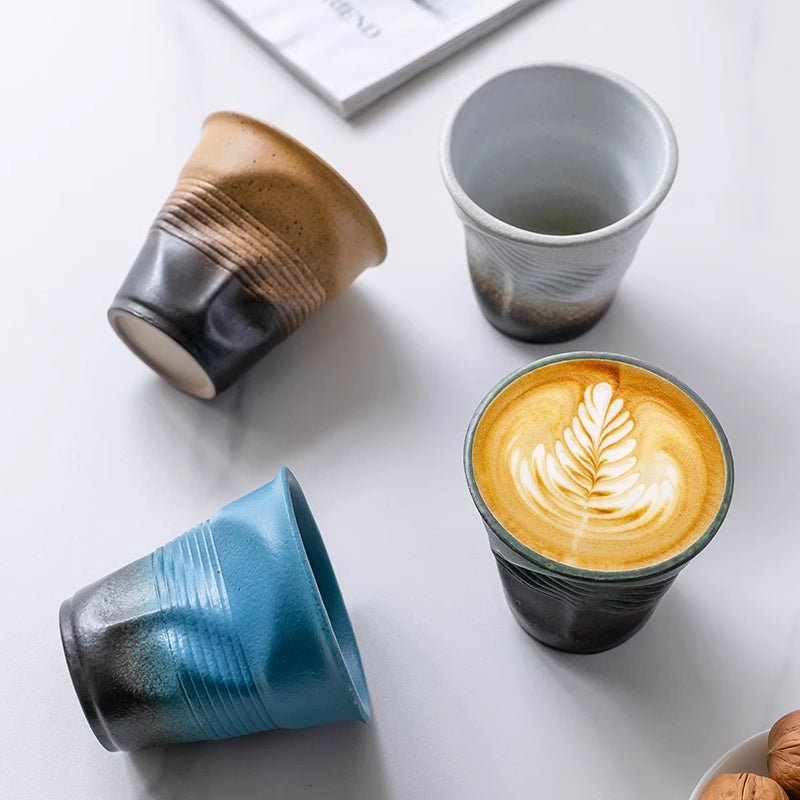
Breakfast Coffee Cup Comparison: 170, 200 or 350 ml?
Reading time: about 9 minutes
A cup that feels perfectly sized for a quick first coffee can become frustrating during a slow breakfast if it needs two refills. The reverse is also true: a large mug may hold more than you want, take longer to finish, and occupy useful space beside a plate, phone or laptop. This breakfast coffee cup comparison focuses on three current CoffeifyMug options with verified listed capacities: the Retro Coffee Tea Cup at 170 ml, the Pleated Coffee Tea Cup at 200 ml, and the Landscape Tall Coffee Tea Mug at 350 ml.
We sell cups to shoppers with very different morning habits, and capacity is usually more useful than a vague label such as small, regular or large. The right choice depends on how much you pour, how often you are willing to refill, and how the vessel sits in your actual breakfast setup. Shoppers who want to compare more shapes after reading can also browse our unique coffee mugs collection.
Which current cup matches a short, standard or extended breakfast?
| Current option | Listed capacity | Best-fitting routine | Main trade-off |
|---|---|---|---|
| Retro Coffee Tea Cup | 170 ml | A short serving, quick breakfast or deliberate refill routine | More likely to need a refill during a long meal |
| Pleated Coffee Tea Cup | 200 ml | A measured middle-size serving without moving to a tall mug | Only 30 ml more than the 170 ml cup, so the capacity change is modest |
| Landscape Tall Coffee Tea Mug | 350 ml | A longer breakfast, larger pour or fewer trips back to the kitchen | More volume and a taller profile than some compact setups need |
The differences are clearer in millilitres. The 200 ml Pleated cup adds 30 ml over the 170 ml Retro cup. The 350 ml Landscape Tall mug adds 150 ml over the Pleated and 180 ml over the Retro. Those numbers do not tell you how full you must pour the vessel, but they do show the available capacity before allowing any space below the rim.
Do not choose solely from the largest number. A 350 ml mug is useful if you genuinely want a longer drink. It is not the most efficient choice for someone who routinely prepares a short coffee and dislikes seeing unused space above it. Likewise, 170 ml is not ideal for a shopper who already knows that one compact serving never lasts through breakfast.
Breakfast coffee cup comparison by capacity and refill preference
Refill preference is the most practical dividing line among these three products. In our experience, shoppers often know whether they mind getting up again even when they are unsure of their preferred capacity. Start with that behavior.
- Choose 170 ml for a short serving and intentional refills. The Retro cup fits a routine where coffee is prepared in smaller portions or where a fresh second pour is preferable to one larger serving. It is less suitable for taking one drink to an office desk and staying there through a long call.
- Choose 200 ml for a modest increase without jumping to 350 ml. The Pleated cup sits close to the 170 ml option, so it suits buyers who want a little more capacity while keeping the serving measured. The 30 ml difference is real but not dramatic.
- Choose 350 ml to reduce refill pressure. The Landscape Tall mug provides substantially more listed capacity. It suits a slow breakfast, a larger coffee or tea serving, or a morning spent moving between the table and a home workspace. It is not the best match if you prefer compact portions or routinely leave larger drinks unfinished.
Remember that listed capacity and normal serving volume are not identical. Filling any cup to its maximum can leave too little carrying clearance below the rim. If you normally add milk or another ingredient, include that volume in your decision rather than sizing the cup only around the initial coffee pour.
How much breakfast-table space does each profile need?
Capacity does not prove external footprint. A 170 ml cup can have a broad body, while a taller vessel can distribute its volume vertically. Exact width, base diameter and handle projection must come from the current product listing or a direct measurement; we do not treat capacity as a substitute for dimensions.
For breakfast-table planning, footprint means the full space the vessel occupies, including the handle, not just the circular base. This matters on a narrow counter, a crowded placemat or a desk where the handle can interfere with a mouse, notebook or plate. Use these checks before ordering:
- Measure the available area from the edge of your plate to the edge of the table or placemat.
- Check the product page for current dimensions and compare the widest external measurement, including the handle where provided.
- For the Landscape Tall mug, also check vertical clearance if it will be stored under a low shelf or used near an overhead cabinet.
- Leave enough open space to lift the cup without contacting a plate, cutlery or another vessel.
The Retro and Pleated options carry less liquid than the 350 ml Landscape Tall mug, but we would not promise that either has the smallest external footprint without verified measurements. If base stability and width are more important than volume, our comparison of wide-bottom coffee mugs for daily routines addresses that more specific shape preference.
Who should choose the 170 ml Retro cup?
The Retro Coffee Tea Cup is the clearest match for a shopper who treats breakfast coffee as a short, focused serving. Its verified 170 ml capacity is useful for portioning a smaller drink, serving tea in moderate amounts, or making a fresh refill instead of letting one larger drink sit.
A realistic reader situation is a compact kitchen table where breakfast lasts ten minutes and the coffee setup remains close by. In that routine, refilling is easy and the smaller capacity is not a burden. It can also suit someone who prefers the visual proportion of a compact cup with a shorter serving.
The limitation is straightforward: 170 ml may feel restrictive during a long breakfast or at an office desk away from the kitchen. It also leaves less room for additions once the base drink is poured. If your usual prepared drink is near the cup's full listed capacity, moving up is more practical than carrying it close to the rim.
Is the 200 ml Pleated cup meaningfully different?
The Pleated Coffee Tea Cup occupies the middle position, but it is much closer in capacity to the Retro than to the Landscape Tall mug. At 200 ml, it provides 30 ml more than the 170 ml option and 150 ml less than the 350 ml option.
That makes it suitable for a buyer who finds 170 ml slightly tight but does not want a large mug. Picture a measured morning serving with a little room for milk, provided the total prepared volume remains comfortably below the rim. The Pleated cup offers a logical next step without doubling the feel of the serving.
It is not the strongest option for someone whose main goal is minimizing refills. An extra 30 ml may help at the margin, but it will not transform a compact serving into a long one. Shoppers comparing the 200 ml option with larger drink formats may also find our Americano cup comparison of 200, 270 and 350 ml sizes useful.
When does the 350 ml Landscape Tall mug make more sense?
The 350 ml Landscape Tall Coffee Tea Mug is the practical choice for buyers who want one larger serving at the table. It has more than twice the listed capacity of the 170 ml Retro cup, with 180 ml of additional room. That difference is large enough to change the routine, especially for someone who carries a drink from the kitchen to another room.
It fits slower breakfasts, larger prepared drinks, and mornings when a refill would interrupt work or conversation. The taller format may also appeal to shoppers who prefer a mug profile rather than a compact cup profile.
There are limits. More capacity means more potential drink weight when full, and a tall vessel may be unnecessary for a short coffee. It can also require more vertical storage clearance. A buyer who values compact portions, quick cooling or frequent fresh pours may be happier with 170 or 200 ml even if 350 ml appears more versatile on paper.
What should you check for care, storage and arrival condition?
Current product pages should remain the source of truth for material, finish, microwave suitability and dishwasher directions. Those details can change by product, so we do not apply one care claim across all three cups without confirmation. Before the first wash, read the specific listing and any care information supplied with the item.
For routine handling, a few careful steps apply to most reusable drinkware without making unsupported product promises:
- Rinse coffee or tea residue before it dries, especially around interior curves or textured exterior details.
- Use a non-abrasive sponge unless the product instructions permit a stronger cleaning method.
- Avoid sudden temperature changes unless the current listing specifically confirms that use.
- After delivery or gift unboxing, inspect the rim, base and handle connection under good light for chips or hairline cracks.
- Do not continue using a cup with a damaged drinking rim, a loose handle or a crack that changes during washing.
Storage deserves attention too. Do not assume cups are stackable unless the product page says so or their shape clearly supports it. Pleated or decorative profiles can contact neighboring items differently from plain-sided mugs, while a tall mug may need a higher shelf. These are ordinary ownership details, but they often matter more over time than a small capacity difference.
Frequently asked questions
What is the best choice in this breakfast coffee cup comparison for fewer refills?
The 350 ml Landscape Tall mug has the largest verified listed capacity, so it is the strongest candidate for reducing refills. Choose it if you normally finish a larger drink; otherwise, the extra room may not add practical value.
Is a 170 ml breakfast coffee cup too small?
It is not too small for a short serving, a quick breakfast or someone who likes a fresh second pour. It may be limiting if you add a significant amount of milk, take your drink away from the kitchen, or expect one serving to last through a long meal.
Is there a big difference between 170 ml and 200 ml?
The verified difference is 30 ml. That can provide useful extra clearance or room for a modest addition, but it is a relatively small step compared with moving from 200 ml to 350 ml.
Does the 350 ml mug have the largest table footprint?
Not necessarily. Capacity alone cannot establish base width or full external footprint, and the handle must be included in any space comparison. Check current product dimensions and photos before choosing for a narrow table, counter or desk.
Can these cups go in a dishwasher or microwave?
Confirm the current care instructions on each product page before using either appliance. We do not apply a shared dishwasher or microwave claim to all three options without product-specific evidence.
Your next step: choose 170 ml if you prefer a short serving and do not mind refilling, 200 ml if you want a modest middle size, or 350 ml if a longer drink and fewer refills matter most. Then measure your available table and storage space, verify the current care details on the selected product page, and compare the remaining styles in our unique coffee mugs collection.
More from our blog
Read more
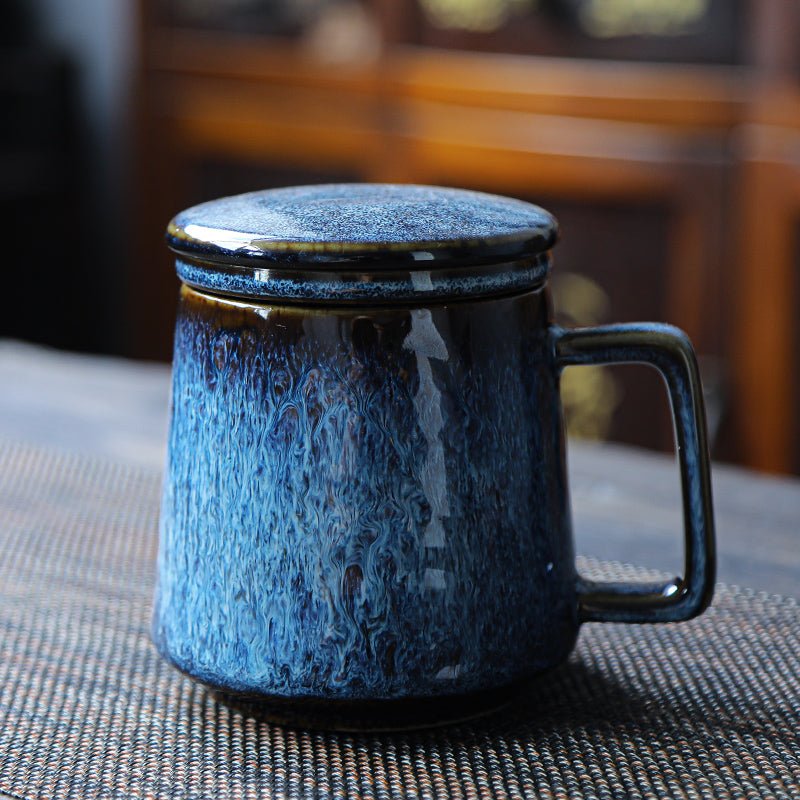
Abstract Coffee Mug Comparison: Rhombus, Gradient, or Flow?
Compare the 250 ml Rhombus with the 400 ml Gradient and Flow mugs. See which capacity and visual form makes the most sense for short coffee breaks, long desk sessions, tea, or gifting.
Read more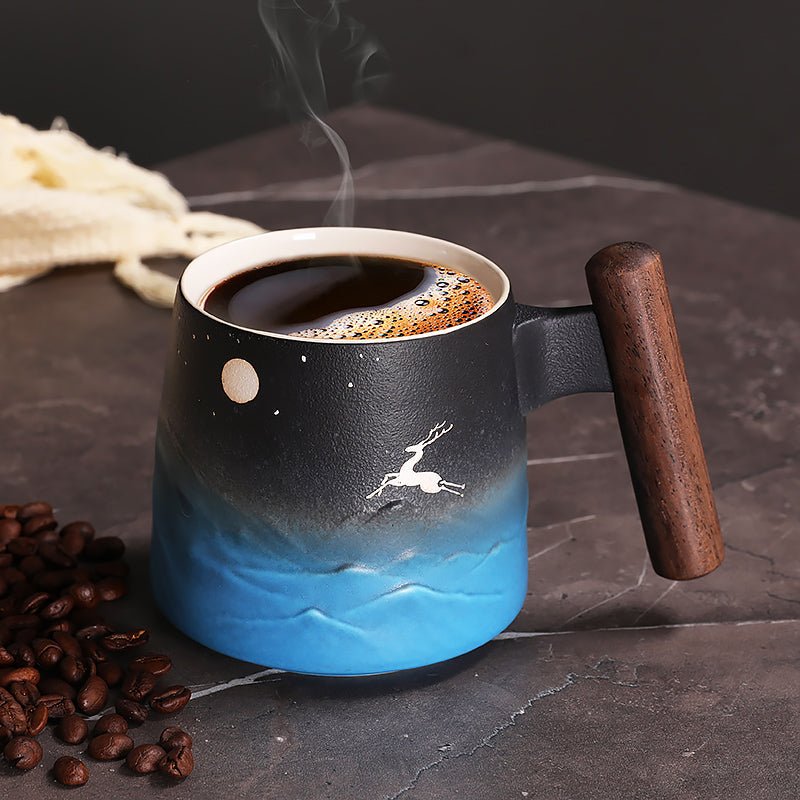
Rustic Ceramic Coffee Mugs Comparison: 3 Current Options
Compare three current rustic ceramic mug designs by motif, handle style, care demands, gifting fit, and daily routine. This guide also explains which product details to verify before ordering.
Read more
Los kommentaar
This site is protected by hCaptcha and the hCaptcha Privacy Policy and Terms of Service apply.