
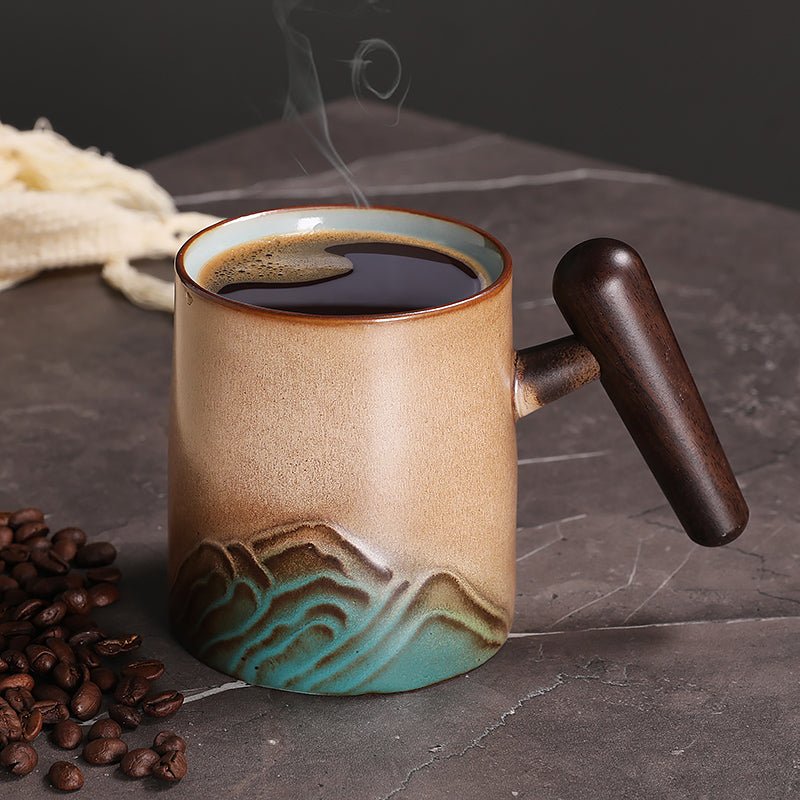
Beer Coffee Mugs: Size, Shape, and Buying Guide
Reading time: about 10 minutes
A mug that looks great on a shelf can feel wrong at 7 a.m. if the handle is tight, the wall is too thin, or the cup tips when it is full. That is the real test for beer coffee mugs: not the look alone, but how they sit in your hand, how they hold heat, and how they hold up after dishwasher cycles and desk use.
If you are comparing styles, start with our Mountain Tall Coffee Tea Mug, the Green Waves Coffee Tea Mug, and our all mugs collection to see how different shapes and finishes fit a daily routine. We also cover a practical pre-purchase checklist in Beer Coffee Mugs: What to Check Before You Buy, plus size-specific context in 16 oz Coffee Mugs: How to Choose the Right Mug for Daily Use and 12 oz Coffee Mugs: How to Choose the Right Mug for Daily Use.
What are beer coffee mugs, and why do shoppers look for them?
Most people use the phrase beer coffee mugs to describe mugs with a stein-like feel: a generous body, a sturdy handle, and a shape that looks more substantial than a standard diner mug. Some buyers want the visual style. Others want the practical part: a bigger pour, a better grip, and a mug that feels solid on a kitchen counter or office desk.
In our experience, the category attracts three types of shoppers. First, people who like a fuller cup of coffee and do not want constant refills. Second, gift buyers who want something a little more distinctive than a plain white cup. Third, shoppers who prefer a mug that feels stable and easy to hold, especially if they use a big spoon, add milk, or work at a desk where a smaller mug disappears fast.
The trade-off is simple. A beer-style mug is usually less compact than a standard cup. That can be a strength on a home counter and a weakness in a tight cabinet, a crowded office drawer, or a travel setup. If you want spill resistance or portability, a lidded travel mug is the better category.
Which size and shape should you choose for daily use?
Size affects more than capacity. It changes how hot the drink stays, how the mug feels in your hand, and whether it fits under a drip machine or near a monitor without crowding the space. That is why we treat capacity, handle clearance, and base stability as a package, not as separate details.
| Use case | What usually works best | What to avoid |
|---|---|---|
| Black coffee at home | 12 to 14 oz if you want a lighter feel and faster heat control | Very tall mugs that are awkward to sip from quickly |
| Milk drinks and larger pours | 14 to 16 oz with a comfortable handle and wider opening | Thin handles that pinch after the mug warms up |
| Desk use | A stable base and a shape that does not crowd a laptop or notebook | Bulky mugs with a wide footprint that take over the workspace |
| Gifting | A distinctive silhouette and finish that looks intentional when boxed | Overly ornate shapes that are hard to store or clean |
We usually point shoppers back to our size guides when they are stuck between two capacities. If you are comparing daily-use options, the difference between 16 oz Coffee Mugs: How to Choose the Right Mug for Daily Use and 12 oz Coffee Mugs: How to Choose the Right Mug for Daily Use is not just volume. A 16 oz mug often feels more relaxed for long mornings, while a 12 oz mug can be easier to finish while the drink is still at a good temperature.
Shape matters too. A narrower opening tends to hold heat a little longer, but it can make stirring milk or sugar less comfortable. A wider mouth gives you easy access and a more open drinking feel, but it cools faster. A tall, beer-mug-like profile can also shift the center of gravity upward, which is fine if the base is flat and the mug is well balanced, but less ideal if the bottom is narrow or uneven.
Which material is best: ceramic, stoneware, or glass?
For everyday coffee use, ceramic and stoneware are usually the safest middle ground. They feel familiar, they handle routine desk and kitchen use well, and they are easy to pair with most kitchen styles. A good ceramic mug often has a smooth glaze, a comfortable lip, and enough wall thickness to feel solid without becoming overly heavy.
Stoneware tends to feel more substantial. That is a plus if you like a mug with weight and presence. It can also hide small cosmetic variation better than a highly polished finish. The downside is that a heavier mug can feel tiring if you carry it around the house or refill it often.
Glass beer-style mugs have their own appeal. They show the color of the drink and can look sharp for serving, but they are less forgiving with temperature swings. If a mug goes from very hot to very cold too quickly, thermal stress becomes a concern. That makes glass a better fit for careful use at home than for a rough office environment.
Our practical rule is this: choose the material that matches the mess level of your day. If the mug will live on a kitchen counter and go through ordinary dishwasher cycles, ceramic or stoneware is usually the easier choice. If it is mostly for display or occasional serving, glass can make sense. If it needs to travel, neither is the best category, because insulated travel drinkware is built for a different job.
What should you inspect before buying beer coffee mugs?
We see the same issues come back in returns and customer questions. They are rarely dramatic. They are usually small things that make the mug annoying to use every day.
- Handle clearance: Make sure your fingers fit without touching the body of the mug. A handle that looks nice in photos can feel cramped once the mug is full and warm.
- Base stability: Check whether the bottom sits flat. A slight wobble on a counter is a bad sign, especially for a larger cup.
- Lip comfort: A thick or uneven rim can feel clumsy when you sip. The best mugs disappear in use instead of drawing attention to the edge.
- Glaze consistency: Look for even coverage, especially around the handle join, the foot ring, and the inside bottom where residue can collect.
- Dishwasher and microwave compatibility: Read the product care notes. Printed designs, metallic accents, and some specialty finishes should not be treated like plain dinnerware.
- Cabinet fit: Measure shelf height if you stack mugs or keep them under low shelves. A mug that is pleasant to hold can still be awkward to store.
The common defect modes are predictable. Hairline cracks often start at the handle join if the mug was stressed in shipping or made with a weak attachment point. Chips usually show up on the rim or foot if the mug is stacked carelessly. Uneven glazing can leave a rough feel where the lips or fingers touch the mug most often. None of these are dealbreakers if caught early, but they are worth checking before you commit.
In our store, the mugs that earn repeat orders are not the flashiest ones. They are the ones that feel balanced in the hand, wash cleanly, and do not demand special treatment every morning.
Which beer coffee mug works best at home, in the office, or as a gift?
The right answer changes with the setting. A mug that is great for your kitchen may be wrong for a desk, and a good gift mug may be slightly different from the one you would pick for yourself.
- Home: Choose comfort and heat retention first. A slightly heavier mug is often fine because it stays put on the counter and handles repeated use.
- Office: Prioritize a stable base and a handle that does not crowd the hand. You want a mug that works near a keyboard, not one that owns the desk.
- Gifting: Pick a shape that looks clean out of the box and is easy to explain. A mug with a strong silhouette usually feels more intentional than a generic cup.
If you are buying for a gift basket, the Christmas Coffee Tea Mug is a useful example of how seasonal styling can make a mug feel more personal without changing the basic job it needs to do. For a brighter everyday look, the Green Waves Coffee Tea Mug shows how color and pattern can change the mood of the same essential form. That is the real buying decision for many shoppers: style first, but only after the mug proves it can be used every day.
A beer coffee mug is not the best pick if you want something ultralight, stackable, or commute-friendly. It is also not ideal for people who dislike hand washing specialty finishes or who need a cup that slides into a compact cabinet with no fuss. For those cases, a standard 12 oz mug or a travel mug can be the smarter purchase.
How do you care for beer coffee mugs so they last?
Care depends on the material and the finish, but the habits are consistent. Avoid sudden temperature changes. Do not move a mug from a freezer-cold shelf straight into boiling liquid. Let it warm naturally if you can. That matters more with glass and thinner ceramic walls.
For everyday cleaning, use a normal dishwasher cycle only if the product page says the mug is dishwasher safe. If the mug has a printed graphic, metallic trim, or a hand-finished glaze, hand washing is the safer default. A soft sponge protects the finish better than a harsh scrub pad, especially around the handle seam and the lip.
Storing mugs upright helps reduce rim chips. If you stack them, make sure the contact points are clean and dry. Moisture trapped between mugs can leave marks, and rough stacking can chip the glaze at the top edge. That is a small habit, but it extends the life of any cup that sees daily use.
We also tell shoppers to rinse out coffee residue before it dries in a deep well. Dark drinks can leave a film faster in darker glazed interiors, and a quick rinse makes the next wash easier. That is one of those routine details a generic product page rarely mentions, but it matters if you use the same mug every morning.
Frequently asked questions
Are beer coffee mugs good for everyday coffee?
Yes, if the mug has a comfortable handle, a stable base, and a size that matches how much you actually drink. They are especially useful for longer mornings or larger pours. They are less useful if you want something compact or travel-friendly.
What size beer coffee mug should I buy?
For most daily coffee drinkers, 12 to 14 oz is the easiest starting point. If you make larger milk drinks or want fewer refills, 16 oz can make more sense. The right answer depends on how hot you like your coffee to stay and how much space you have on the counter.
Can beer coffee mugs go in the dishwasher?
Only if the product care instructions say they can. Plain ceramic and stoneware often handle dishwashers well, but printed designs, metallic accents, and specialty finishes may need hand washing. If you are not sure, treat the mug gently and wash by hand.
What is the biggest downside of beer coffee mugs?
They can be bulky. That can be a problem in small cabinets, crowded desks, and quick cleanup routines. They also may not fit under all coffee machines, so height and footprint matter as much as capacity.
Are beer coffee mugs a good gift?
Yes, especially when the mug has a distinct shape or finish and comes across as useful rather than novelty-only. The best gifts are practical enough to use daily and attractive enough to feel special when unboxed. A mug that looks good and cleans easily is usually the safest choice.
If you want the fastest next step, compare a few shapes in our all mugs collection, then check size and care details on the product page before you choose. Start with the mug that matches your cabinet space, hand size, and daily coffee routine, not just the photo.
Read more
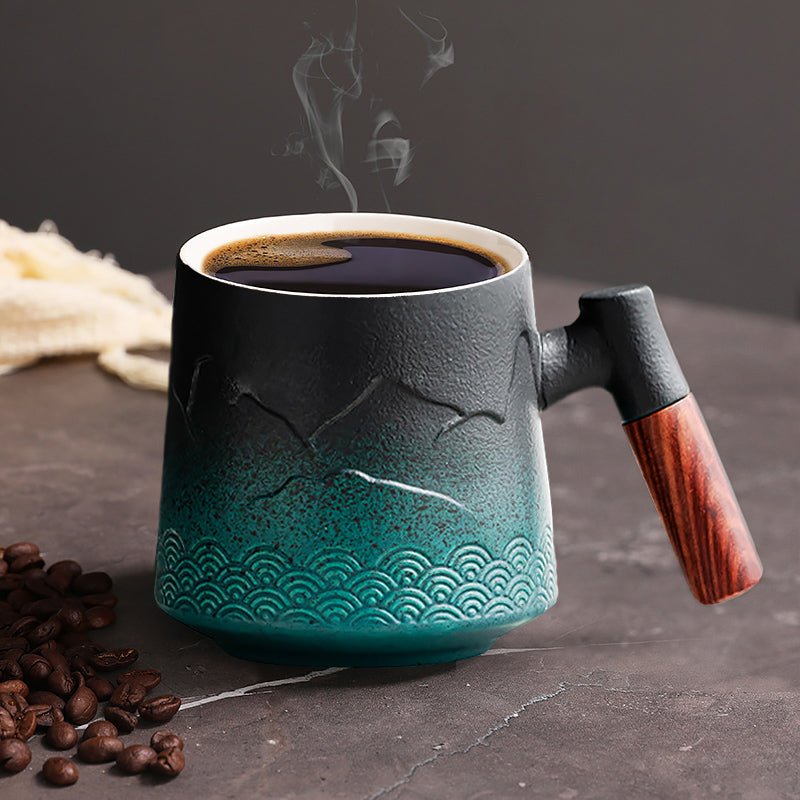
Tea Handle Buying Guide: Comfort, Grip, and Real-World Trade-Offs
We break down what a tea handle should feel like at a desk, in the kitchen, or as a gift, then compare wooden handles, ball handles, and the checks we use before we list a mug.
Read more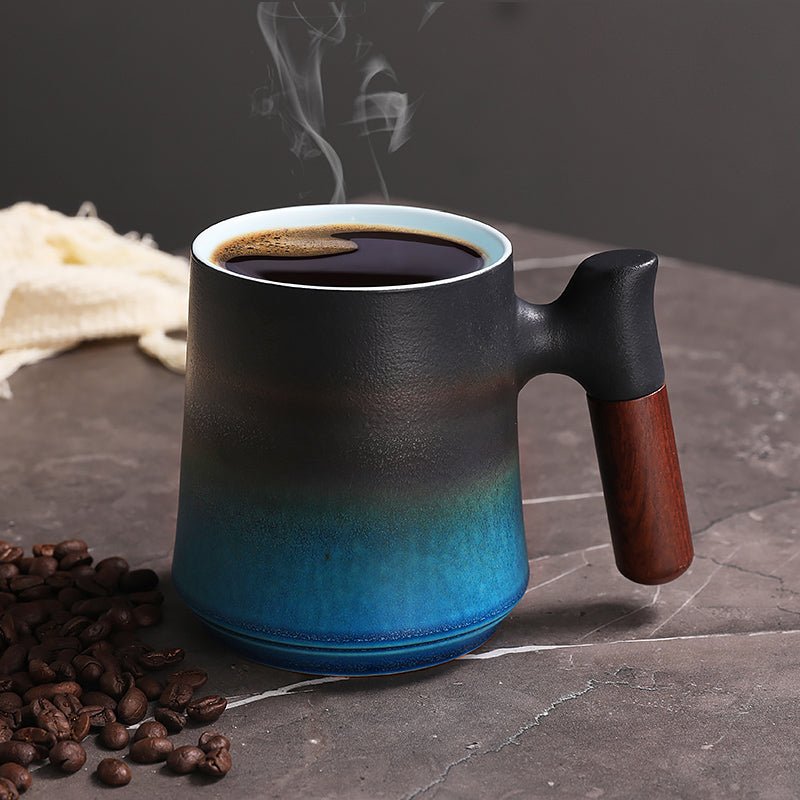
Coffee Mug Printing: How to Choose the Right Mug and Print
Coffee mug printing looks simple until the artwork has to clear the handle, stay crisp on a glossy glaze, and still hold up at a desk or in a dishwasher. We break down what buyers should check so t...
Read more
Los kommentaar
This site is protected by hCaptcha and the hCaptcha Privacy Policy and Terms of Service apply.