
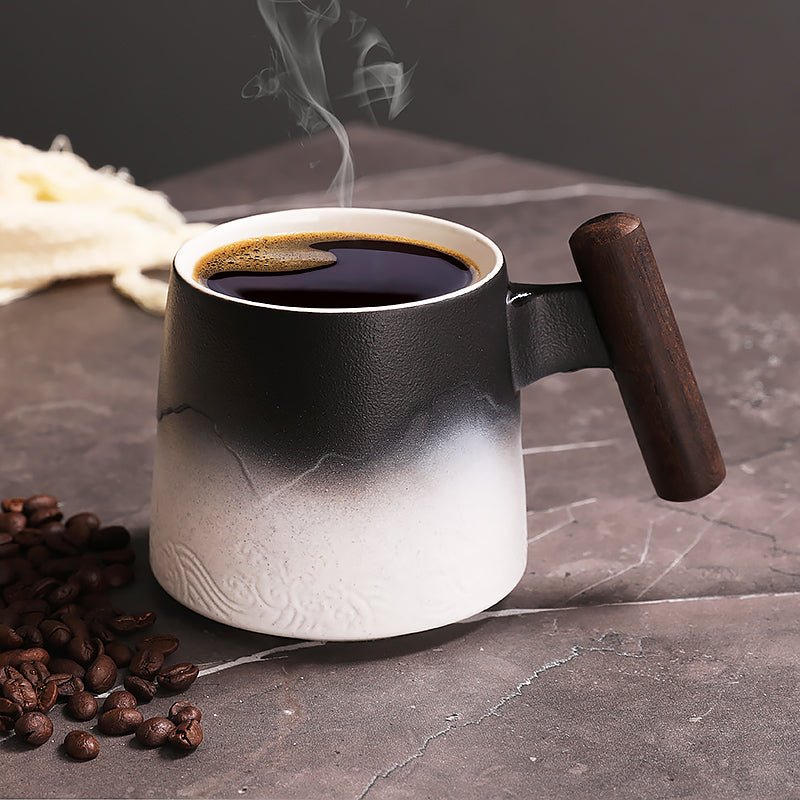
20 oz Ceramic Coffee Mug Buying Guide: Fit, Heat, and Care
Reading time: about 8 minutes
A 20 oz ceramic coffee mug changes the morning routine fast. You can pour a full coffee without stopping at the rim, add milk or foam without making a mess, and carry the mug from counter to desk without feeling like you need a second cup right away.
The trade-off is just as real. Ceramic gives you a clean taste and a familiar feel in the hand, but it is heavier than thinner cups, cools faster than insulated steel, and it can chip if it gets knocked against a sink edge or stacked carelessly in a cabinet. In our store, we see buyers make the same mistake over and over: they focus on volume first and only think about grip, weight, and care after the mug arrives.
If you are comparing options, our 20 oz Coffee Mug: What to Check Before You Buy guide covers the general size questions, while our Ceramic 20 oz Coffee Mug: What Buyers Should Check Before Buying article goes deeper on the material side.
What does a 20 oz ceramic coffee mug feel like in daily use?
In real life, a 20 oz ceramic mug usually feels like a large home mug rather than a travel mug. It is built for the kitchen counter, the office desk, the gift box, and the slow refill pattern that comes with working from home or sitting through a long call.
Compared with a standard 11 oz or 12 oz cup, you are getting more headroom for coffee, tea, or hot chocolate. That is useful if you add cream, drink bigger pours, or simply do not want to get up for a refill. The downside is that the mug itself is larger and heavier, especially once full.
- More room for milk, foam, or whipped toppings without crowding the rim.
- More weight in the hand once the mug is full, which matters if you sip one-handed.
- More surface area exposed to air, so coffee can lose heat faster than in a double-wall insulated mug.
- More clearance needed in a cabinet, on a mug tree, or under some coffee makers.
If you tend to drink smaller servings, our 10 oz Coffee Mug: Size, Fit, and What to Check Before You Buy and 11 oz Coffee Mug: Size, Fit, and What to Check Before You Buy posts are worth a look before you commit to something oversized.
What should you check before buying one?
Size alone is not enough. We check the same details every time we handle a ceramic mug because those are the things that decide whether it becomes a daily favorite or a shelf piece.
| Buyer check | What to look for | Why it matters |
|---|---|---|
| Handle shape | A handle that fits at least two fingers comfortably without pressing into the knuckles | A full 20 oz mug can feel awkward if the handle is too small or too close to the body |
| Rim thickness | A smooth, even rim with no sharp edge or obvious wobble | A good rim improves the drinking feel and reduces the chance of chips in shipping or use |
| Base stability | A flat foot ring and a mug that sits level on the counter | A wide, even base helps prevent tipping on a desk or crowded breakfast table |
| Finish and glaze | Even glaze coverage, no pinholes, and no rough spots near the handle joint | Uneven glaze and rough seams are common quality issues that show up after a few washes |
| Care label | Clear guidance for microwave and dishwasher use | Printed decoration, metallic trim, or delicate finishes may need gentler care |
We also look for hairline cracks near the handle, tiny chips at the rim, and uneven foot rings. Those are the common defect modes that can turn a good-looking mug into a short-lived one. If you want a broader buying checklist, the article 20 oz Coffee Mug: What to Check Before You Buy is the best place to start.
How does ceramic compare with insulated steel or smaller mugs?
Ceramic is the better pick if you want a clean-tasting mug for home, a nicer feel in hand, and a surface that looks good on a kitchen counter or office desk. It is not the better pick if your coffee needs to stay hot for hours in a car, backpack, or jobsite setup. For that, insulated steel is usually the smarter category.
We see buyers compare ceramic mugs to insulated options like the ones discussed in our YETI Coffee Mug 20 oz: What Buyers Should Check Before Ordering article. The comparison is simple:
- Ceramic is better for taste, presentation, and a traditional coffee break.
- Insulated steel is better for heat retention and commuting.
- Smaller mugs are better if you pour less coffee, want lighter weight, or need more cabinet space.
Our rule of thumb is straightforward: if the mug lives on your desk or counter, ceramic makes sense. If it has to travel, metal usually wins.
That is why a 20 oz ceramic coffee mug is strong for home use but weak for a car cup holder. It is also not the best choice if you want a mug that can survive being tossed in a bag without much thought. Ceramic rewards careful handling.
Who is a 20 oz ceramic mug best for, and who should skip it?
This size works well for people who actually use the capacity. If you drink a large drip coffee, a long tea pour, or a mug of cocoa while working from home, the extra room is useful. If you gift mugs for birthdays, housewarmings, or office swaps, the larger format also feels more substantial when someone opens the box.
- Best for: home coffee drinkers, tea drinkers, office desks, and gifts that should feel useful rather than decorative.
- Best for: people who add milk, cream, or toppings and want space above the drink line.
- Not ideal for: commuters, drivers, and anyone who needs a mug to fit a standard cup holder.
- Not ideal for: buyers who want the lightest possible mug or a compact cabinet-friendly shape.
If you keep reaching for smaller portions, a 10 oz or 11 oz mug may fit your routine better. If you are buying for a shopper who wants something easy to hold with smaller hands, the reduced size can be a better everyday match than a large ceramic cup.
How should you care for it so it lasts?
Care is where a good mug either stays in rotation or gets pushed to the back of the cabinet. Ceramic is durable enough for daily use, but it does not forgive impact the way steel does.
- Check the care label before the first wash. If the finish is printed or decorated, do not assume every mug can handle the same dishwasher cycle.
- If the mug is dishwasher safe, use the top rack when possible and avoid forcing it against other mugs or bowls.
- Let the mug cool before rinsing it under cold water. Sudden temperature changes can stress ceramic and shorten its life.
- Inspect the rim, handle joint, and base after a few uses. A small chip or crack is easier to spot early than after a full break.
- Store it so the handle is not under pressure from stacked dishes. Repeated contact is a common source of scratches and chips.
Microwave use is usually fine for plain ceramic, but only if the mug is marked for it and has no metallic accents. If the mug has a special glaze or printed art, repeated microwave and dishwasher cycles can dull the finish faster than hand washing. That is a trade-off worth accepting only if the mug is still right for your routine.
Frequently asked questions
Will a 20 oz ceramic coffee mug fit under most coffee makers?
Not always. Many 20 oz ceramic mugs are taller and wider than standard mugs, so clearance can be tight under low spouts or compact brewers. If you use a coffee machine every morning, measure the space above your drip tray before you buy.
Is a 20 oz ceramic coffee mug microwave safe?
Often yes, but only if the mug is marked microwave safe and has no metallic decoration. Plain glazed ceramic is usually fine for reheating, but the handle and body can still get hot, so use care when removing it.
Does ceramic keep coffee hot as long as stainless steel?
No. Ceramic holds heat better than paper or very thin cups, but it loses heat faster than insulated stainless steel. If long heat retention is your main goal, an insulated mug is the better buy.
What handle size should I look for?
Look for a handle that lets at least two fingers sit comfortably without squeezing. A too-small handle is one of the fastest ways to make a large mug annoying to use, especially when the mug is full.
Can I put a 20 oz ceramic coffee mug in the dishwasher every day?
Usually yes if the mug is labeled dishwasher safe, but decoration and finish matter. Daily dishwasher use is harder on printed artwork, and crowded racks can chip rims or handles if the mug bumps other items.
What should you check before ordering?
Before you add a mug to cart, check three things: capacity, comfort, and care. If the mug is the right size but the handle is cramped, it will not stay in use. If the mug looks great but cannot handle your dishwasher or microwave routine, it will become inconvenient fast.
- Confirm the listed capacity and compare it with the drinks you actually pour.
- Check photos for handle thickness, rim shape, and the overall base width.
- Review the care instructions so you know whether you can wash it with the rest of your kitchenware.
- Think about where the mug will live: kitchen counter, office desk, gift box, or travel bag.
If you want to compare current options, start with our products page and then scan the full collection to match shape, finish, and use case. That is usually the fastest way to find a 20 oz ceramic coffee mug that fits the way you actually drink coffee.
More from our blog
Read more
Uglie Mugs Coffee House Buying Guide for Real Shoppers
A practical look at uglie mugs coffee house style: what to check for size, comfort, glaze quality, and care before you order. We also cover the trade-offs so you can choose a mug that fits real dai...
Read more
Chicago Bears Coffee Mug Buying Guide: Size, Material, and Gift Fit
A Chicago Bears coffee mug should do more than show team colors. We break down size, material, print quality, and gift fit so you can pick one that works on a real kitchen counter or office desk.
Read more
Los kommentaar
This site is protected by hCaptcha and the hCaptcha Privacy Policy and Terms of Service apply.