
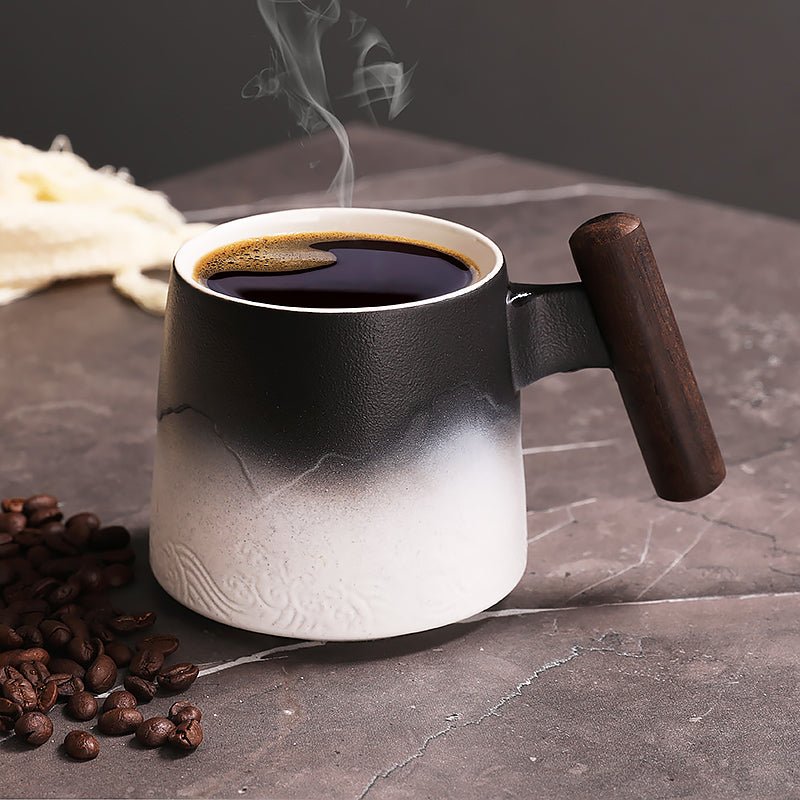
20 Ounce Coffee Mugs: What Buyers Should Check Before Ordering
Reading time: about 10 minutes
A full mug at the desk is one thing. A mug that still feels balanced after three refills is another. That is the real reason shoppers start comparing 20 ounce coffee mugs: they want more capacity without jumping all the way to a bulky oversized cup that crowds a keyboard, dishwasher rack, or cabinet shelf.
Best next step if you are comparing 20 ounce coffee mugs now
If you are here because you want a larger mug without another long compare loop, these are the fastest next routes from this page:
- Pick a Mug Fast if you want the shortest compare before choosing.
- Start with the Landscape Tall Mug if you want a taller large-mug route first.
- Try the 2-Mug Starter Set if you want the cleanest first comparison across fuller everyday profiles.
- Open the Product Image Gallery if you want a quick visual check before using a cart route.
If you want the measurement side first, 16 oz Coffee Mugs, and 24 oz Coffee Mug can help you compare nearby sizes before using a cart route.
We see this all the time in our store. Buyers want a mug that works for long mornings, tea breaks, soup at lunch, or a generous cocoa serving, but they still want an everyday shape that is comfortable to hold. That balance is where 20 ounces makes sense for many people — and where the details matter.
If you are comparing options, our own guide on 20 oz Coffee Mug: What to Check Before You Buy goes deeper into size, handle feel, and material choices. For shoppers who want to compare against smaller cups too, 16 oz Coffee Mugs: What to Check Before You Buy is a useful side-by-side starting point.
Why do buyers choose 20 ounce coffee mugs instead of smaller ones?
The short answer is simple: convenience. A 20 ounce mug gives you more room for coffee plus milk, tea with room for cream, or a bigger pour that does not need a second refill right away. That can matter on a workday morning, during a meeting-heavy afternoon, or on the couch when you want one mug to last.
We usually recommend this size to shoppers who:
- Drink large single servings of coffee or tea
- Add milk, creamer, or foam and still want room at the top
- Want a mug that can double as a soup or hot chocolate cup
- Prefer fewer refills over a smaller, lighter cup
There is a trade-off, though. A 20 ounce mug is not the best choice if you want a very light cup for quick espresso drinks, a narrow office drawer, or a crowded cabinet with limited shelf height. It also may feel too large for people who prefer small, hot servings that stay concentrated and easy to finish before cooling.
What should you check before buying a 20 ounce mug?
Capacity is only part of the story. Two mugs can both be labeled 20 ounces and still feel completely different in hand. In our experience, the practical details are what make one mug a keeper and another one end up pushed to the back of the cabinet.
| What to check | Why it matters | What to watch for |
|---|---|---|
| Material | Affects heat retention, weight, and care | Ceramic feels classic but can chip; stoneware is often heavier; stainless steel keeps heat longer but changes the drinking feel |
| Wall thickness | Changes how hot the mug feels outside and how long it holds temperature | Very thin walls may get hot quickly; overly thick mugs can feel heavy on the wrist |
| Handle size | Controls comfort, especially for larger hands | A narrow handle can be fine empty but awkward when the mug is full |
| Rim shape | Changes sipping comfort | A rough or uneven rim is noticeable every day |
| Dishwasher safety | Determines how easy it is to live with | Decorative finishes may need hand washing even if the body is sturdy |
We also look for the common defect modes that shoppers only notice after a few uses: a handle that sits too close to the body, a lip that feels sharp, glaze inconsistencies, or a base that rocks slightly on a counter. Those are the small things that make a mug feel cheap even if the photo looks good online.
For a broader comparison across big mugs, our A buyer's guide to large capacity coffee mugs helps you decide if 20 ounces is the sweet spot or if you need something larger.
Which material is best for everyday use?
For most shoppers, ceramic is the default choice because it feels familiar, looks clean on the counter, and works well for coffee at home or at the office. Our own Ceramic Coffee Mugs: What to Look For Before You Buy article breaks down what makes a ceramic mug feel sturdy instead of flimsy.
Here is the practical version:
- Ceramic: Good for daily coffee, desk use, and gifting. Usually microwave friendly if unadorned and made with simple glaze work. Can chip if knocked against sinks or crowded shelves.
- Stoneware: Often thicker and heavier. Feels substantial in hand, but may be too heavy for people who do not want added weight when the mug is full.
- Porcelain: Typically lighter and smoother. Nice for a cleaner, more refined look, though not always the best choice if you want a heavy-duty feel.
- Stainless steel: Better for heat retention and travel-adjacent use, but it is not the same drinking experience as a ceramic coffee mug and can be the wrong fit for someone who wants a classic kitchen mug.
If you want a mug mainly for the microwave, ceramic is usually the easiest path. If you want something for keeping coffee hot longer at a desk, a thicker wall and heavier body may help. If you need a mug for rough handling or outdoor use, a ceramic 20 ounce mug is probably not your best choice.
How does a 20 ounce mug feel in the hand and on the desk?
This is where a lot of shoppers make the right or wrong choice. A 20 ounce mug should feel stable, not clumsy. It should sit flat on the table, clear your coffee machine drip tray, and leave enough room for your fingers inside the handle without brushing the hot body.
In real use, a good mug works across a few common scenes:
- Kitchen counter: easy to refill without sloshing over the rim
- Office desk: wide enough to hold a proper coffee portion, but not so wide that it takes over your work area
- Gift unboxing: clean finish, useful capacity, and a shape that feels intentional rather than oversized for the sake of size
We tell shoppers to think about two measurements even when product pages do not spell them out clearly: overall height and handle clearance. A tall 20 ounce mug may not fit under some coffee machines or cabinet shelves. A mug with a small handle opening can be frustrating if you like to drink with two fingers through the loop or if you have larger hands.
That is also why some buyers decide a 20 ounce mug is not the right fit after all. If you want a very compact cup for tight storage or a lightweight mug for quick morning use, smaller sizes can make more sense. If you want a mug that doubles as a soup bowl or a long meeting cup, 20 ounces earns its place.
What care details should you check before you order?
Care instructions are part of the buying decision, not an afterthought. A mug that is easy to clean gets used more often. A mug that needs special handling tends to sit unused, especially in shared kitchens.
- Check dishwasher compatibility. Decorative printing, metallic trim, and some specialty glazes may need hand washing.
- Check microwave use. Plain ceramic is usually the simplest option, but any metallic decoration changes that.
- Check the glaze surface. A smooth glaze is easier to clean after coffee oils or tea stains.
- Check the base. A raw or unfinished base can leave marks on some counters and may feel rough on shelves.
- Let the mug cool before washing. Sudden temperature swings are hard on ceramics over time.
We pay attention to those details because they change the real ownership experience. A mug that survives daily dishwasher cycles, dries cleanly, and does not pick up stains easily is the kind of mug people keep in rotation. A mug with delicate decoration may still be a nice gift, but it may not be the best choice for a busy office kitchen or a home where the dishwasher runs every night.
Are 20 ounce coffee mugs good for gifts?
Yes, if the recipient actually drinks large servings. A 20 ounce mug can feel thoughtful when it is paired with coffee beans, tea, cocoa mix, or a small gift set. It is especially useful for people who work long hours at a desk, enjoy oversized drinks, or prefer a mug that can handle both morning coffee and afternoon tea.
That said, the gift only lands well if the style and size match the person. A big mug can feel generous. It can also feel impractical if the recipient prefers compact cups or has limited cabinet space. For seasonal buyers, our article on Christmas Coffee Mugs: How to Choose Gifts, Sets, and Everyday Favorites offers a few ways to think about gifts that get used instead of stored away.
If you are buying for a desk setup, our guide to Best Coffee Mugs for Daily Use, Gifts, and Office Desks can help you balance style with actual everyday use.
What should you skip if you want a mug you will actually use daily?
We have handled enough mugs to know that not every attractive mug is a practical one. A good daily mug is boring in the best way: easy to hold, easy to clean, and not fussy about where it lives.
Skip a 20 ounce mug if it has any of these issues:
- An awkwardly small handle that looks fine in photos but feels tight when full
- Heavy decorative elements that make washing and stacking annoying
- A very wide body that will not fit under your coffee machine or in your cabinet
- A rough rim or uneven glaze you can feel as soon as you sip
- Special care requirements that do not fit your routine
If your main goal is an everyday mug for family use, office coffee, and simple cleanup, our store generally steers shoppers toward straightforward ceramic styles over novelty shapes. That is also why many people browse our full collection after reading a size guide — they want to compare shape, finish, and handling together instead of buying based on capacity alone.
Frequently asked questions
How big is a 20 ounce coffee mug in real use?
A 20 ounce coffee mug is large enough for a generous single serving with room for milk, foam, or cream. In practice, it feels closer to a deep everyday mug than a travel cup, which makes it useful for home, office, and desk use. It is not the best choice if you want a small, quick espresso-style cup.
Are 20 ounce coffee mugs too big for everyday coffee?
Not if you drink large servings or want fewer refills. They can feel oversized if you usually drink a standard drip coffee in a smaller cup, or if you prefer a mug that feels light in the hand. For many shoppers, the size is ideal for morning coffee that lasts longer than a 12 or 16 ounce mug.
What material is easiest to maintain?
Simple ceramic is usually the easiest for daily maintenance. It is common, familiar, and often dishwasher friendly when the finish is uncomplicated. If the mug has metallic accents, hand washing may be safer and microwave use may not be appropriate.
Can I use a 20 ounce mug for soup or hot chocolate?
Yes, many shoppers use this size for soup, hot chocolate, and tea as well as coffee. The wider capacity works well for drinks that need toppings or extra room. Just make sure the mug has a comfortable handle and a stable base if you plan to carry it from kitchen to couch.
What is the biggest downside of choosing a 20 ounce mug?
The main downside is size. It can be too large for small cabinets, some coffee machines, and shoppers who prefer a lighter mug with a smaller serving. If storage space or hand comfort matters more than capacity, a smaller mug may be the better buy.
If you are still deciding, start with one question: do you want more capacity, or do you want a lighter, more compact cup? If capacity wins, compare the options in our full collection and look for a 20 ounce mug with a comfortable handle, smooth rim, and care instructions that fit your routine.
More from our blog
Read more
Double Wall Glass Coffee Mugs: What Buyers Should Check Before They Buy
Double wall glass coffee mugs keep drinks looking clean and help protect your hands from heat, but not every set is built the same. Here’s what we check in our store before recommending one.
Read more
Ceramic Travel Coffee Mugs: What Buyers Should Check Before Ordering
Ceramic travel coffee mugs can give you a cleaner taste and a more cup-like drink on the move, but the trade-offs are real. Here’s what we check in our store before recommending one for commuting, ...
Read more
Los kommentaar
This site is protected by hCaptcha and the hCaptcha Privacy Policy and Terms of Service apply.